

Google Discover

Preferred Sources
There is a “before” and an “after” in many things in life, times that crystallize following an event which – afterwards – makes what we had experienced before take on a new and different meaning. The words, nor the protagonists or the content, do not change, but it is the event that transforms into a watershed and makes the fragment already seen significant and intense, making it take on the role of teaching and message.
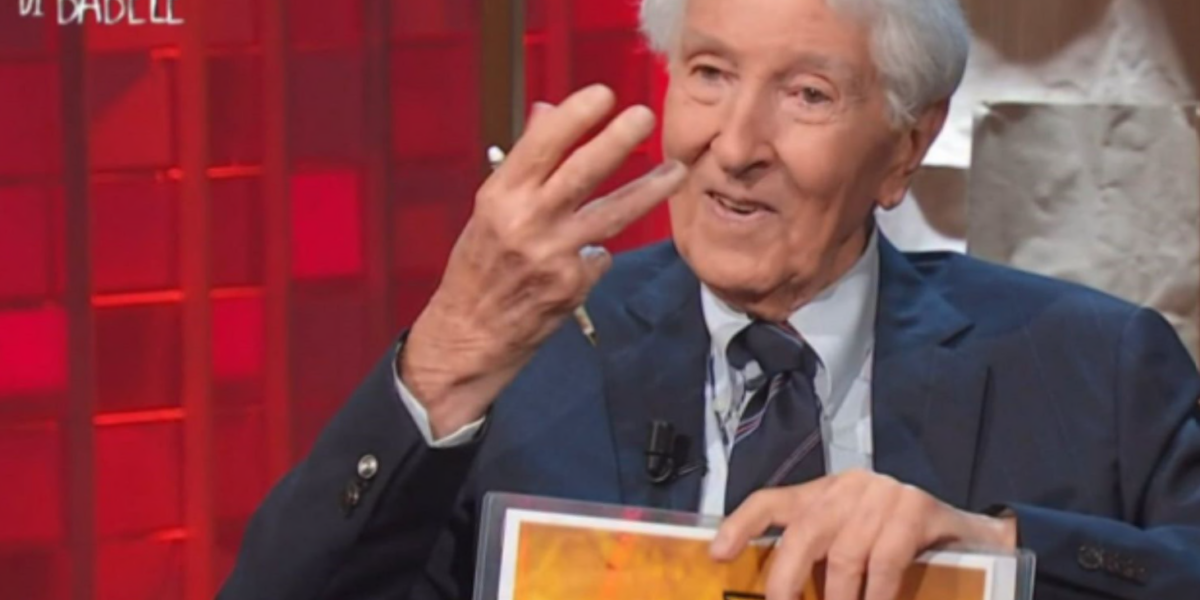
This was the case on Monday for the special “The Tower of Babel – Corrado Augias the greeting of a Master”, with which the journalist, accompanied by Andrea Salerno, wanted to make his posthumous greeting to the public who had followed him for over three years on La7. A greeting reciprocated by the affection of 1,567,000 viewers and for which the network boomed with a 10% share, surpassing “The State of Things” which stopped at 7.6% or the debut of “Salotto Paolantoni On Air” with a modest result of 2.8%.
A final episode that represented Augias’ moral legacy, with a lineup of meetings and stories already broadcast previously, but which, in light of his passing, seemed new and designed to bear witness to his thoughts even after his death.
We do not know if, when the interview with Cardinal Matteo Zuppi focused on the “end of life” was broadcast, Corrado Augias had already planned the times and methods of his exit from the scene of life, but the dialogue between the man of faith and the lay thinker which, a few months ago, could have appeared to be a comparison between two visions of equal depth, restores the certainty of Augias’s lucid and matured conviction, founded on a stringent logic that does not allow pain to undermine the dignity of man.
The lineup of the special continued with another theme dear to Augias, the value of civil commitment, with an interview with Ezio Mauro, full of period footage, in which the massacre of the Fosse Ardeatine was retraced. A conversation which, already a historical testimony, today has sounded like an indication to find – among conflicting signals – the right path, following here too, the thread of logic, freedom, ethics, humanity, to learn to resist the conditioning or flattery of power.
The value of memory, however, was retraced in the meeting with Ascanio Celestini and the ideas taken from one of his shows. Here too, the indication was precise, to cultivate memory as a tool for understanding the present, the memory that must monitor contemporaneity, so that experiences become contaminated with the wisdom sedimented by past experiences.
And the choice of La7 which avoided rhetorical documentaries by relying on Augias himself for how he wanted to be remembered, confirmed, even in the social interactions that were flocking at the same time, that the nickname “Maestro” was not the result of mere flattery, but recognition of excellence, of the value of example, of wisdom, a tribute not at all affected by the crude diminutive attributed to him by those who only biasedly interpret free thought.