

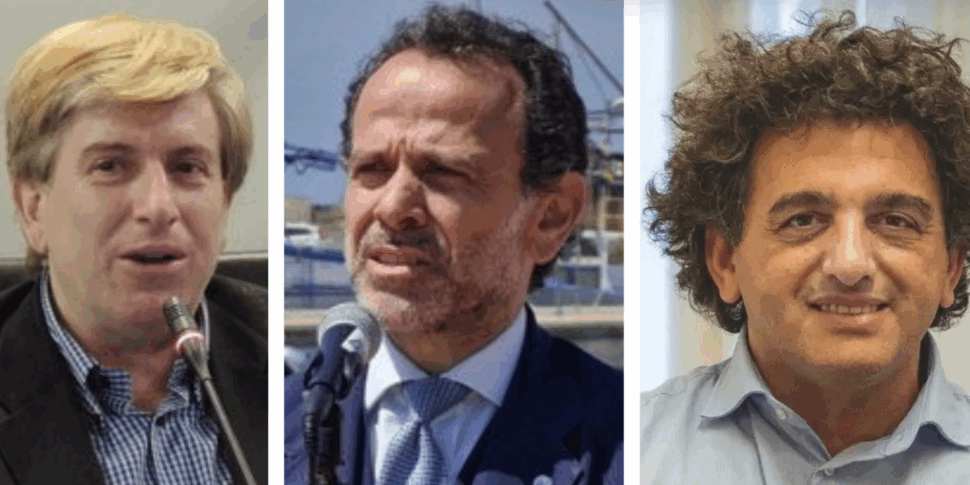
Net of the judgments of merit, a figure appears incontrovertible: the proposal to establish a dignity income, made by the candidate for the presidency of the Easter Tridico Region, had the method of reviving an election campaign substantially short of topics in Calabria. Political forces are divided into the idea of institutionalizing a form of income support for less well -off bands. And the academic world, which is then the same from which Tridic comes, instead what do you think? Marcello Minenna, an economist and outgoing councilor of the Occhiuto junta, spoke of a “unattainable proposal because there is no money”.
Not everyone, however, seem to think so. “The income of dignity – the professor Domenico Marino, an ordinary of economic policy at the Mediterranean of Reggio Calabria, reasoned – is useful in Calabria because it attenuates a poverty that is high in this region: according to Istat, the relative is at 27 percent. The error that should not be made, however, is that recorded with the citizenship income, that is, trying to solve two problems with a single tool: the fight against poverty and reintegration into the world of work.
Dignity income must be paid for a defined time and resemble an entrance salary to the person looking for employment, as it already happens in other parts of the world. The important thing is that the time span is limited to avoid leading to assistance. Then there is the aspect linked to poverty or the need to ensure a subsidy to those who pay in conditions of absolute or relative poverty to offer less disadvantaged living conditions. In the latter case it is not a question of ensuring money, but goods or services ». As for the roofs, “with the social fund, a lot of money is spent in advertising campaigns useful only to enhance the deeds of our politicians. In reality, no one has ever seriously evaluated it. From 2019 to today, employment has not grown despite having been engaged billions of euros for professional training. At this point a part of the flow of money available could be directed – naturally after the start of a serious control system – to finance dignity income. I repeat: the tool must not be distorting and must not create addiction, but it can be an incentive to young people who choose to stay here and work in this land ». And Francesco Aiello, an ordinary of economic policy at UniCal, is also expected on the same line: “If the potential beneficiaries of dignity income are selected with stringent criteria and live in conditions of manifest economic difficulties, it is clear that an income integration produces an immediate relief effect. An analogy can be drawn from the business world: when conditions of competitive disadvantage or crisis emerge, public intervention through tax concessions, lost -end contributions or other forms of financial support allows to mitigate the inconvenience and to guarantee the survival of the activity “.
The complete article is available on the paper and digital edition