

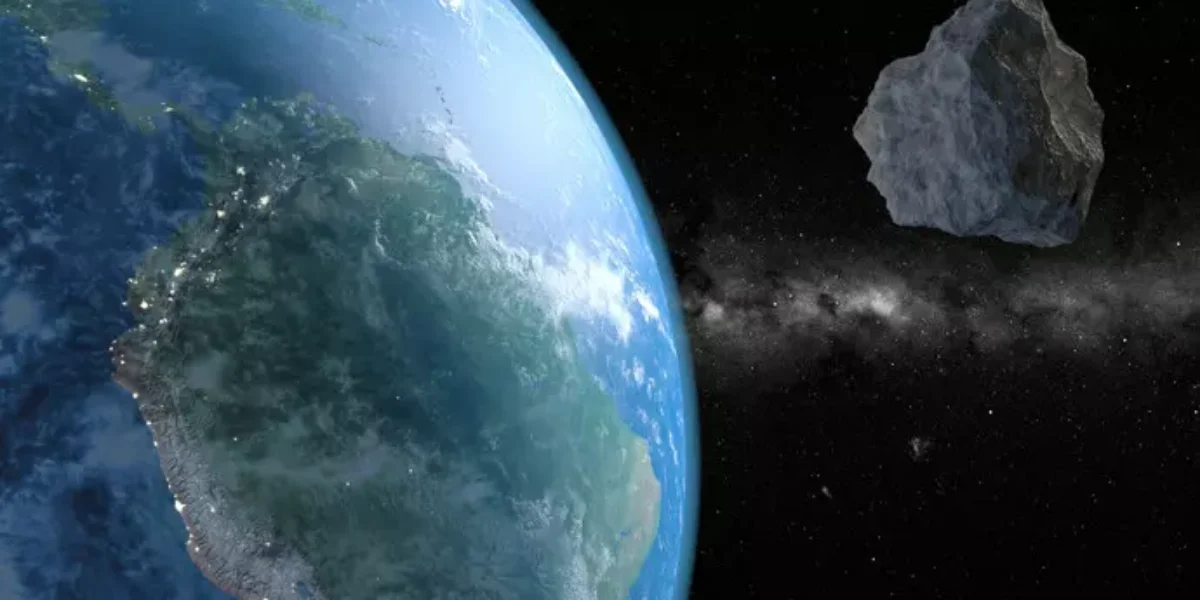
The Earth has captured a new mini-moon that will keep it company until December: it is 2026 QQ8, a celestial body just 2 meters in diameter that was observed for the first time in August, after entering orbit around our planet in April. The discovery was announced by the Minor Planet Center of the International Astronomical Union.
Earth’s new mini-moon: how far away it is and when it will be gone
This object takes 359 days to complete one orbit around the Sun: it approaches Earth approximately once every ten years, but this time it came so close that it was captured by our planet’s gravitational force.
According to the Minor Planet Center, during this stay, the minimum distance between QQ8 and Earth will be approximately 568,000 kilometers. This is a distance approximately 177,000 kilometers greater than that between the Earth and the Moon.
Even if QQ8 were to come close enough to collide with Earth, it would almost certainly be destroyed in the atmosphere before reaching the surface.
A small asteroid or space debris? Astronomers’ observations
The nature of 2026 QQ8 was not immediately clear: initially, in fact, astronomers took into consideration the hypothesis that it could be a fragment of artificial origin, perhaps belonging to an old rocket or satellite.
To obtain more information, new observations were then conducted with the University of Hawaii’s 2.2-meter telescope and the Lowell Discovery Telescope.
The results allowed us to exclude the space debris hypothesis, indicating instead a natural origin. 2026 QQ8 could therefore be a small asteroid, although for now the Minor Planet Center defines it generically as an “object”.