

Google Discover

Preferred Sources
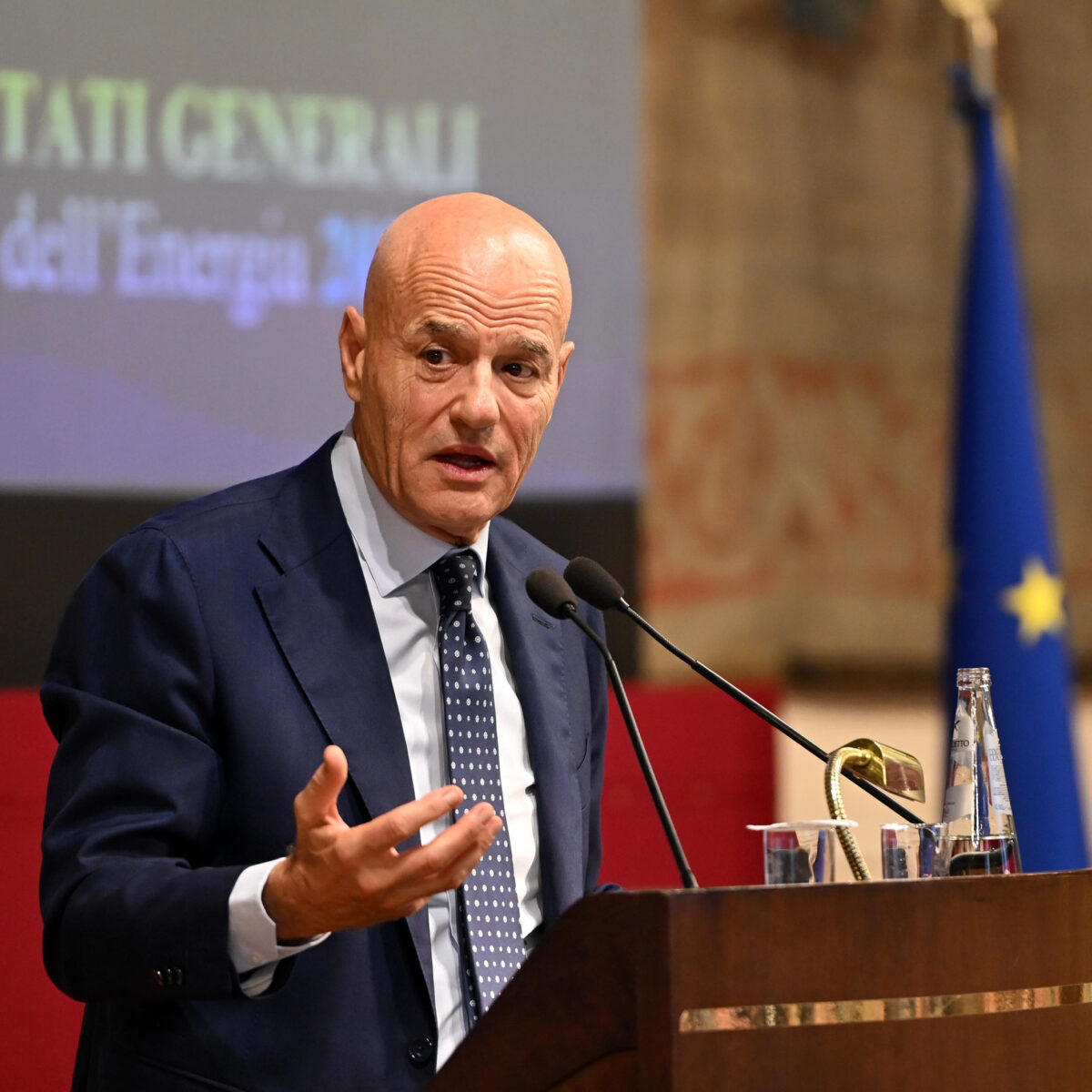
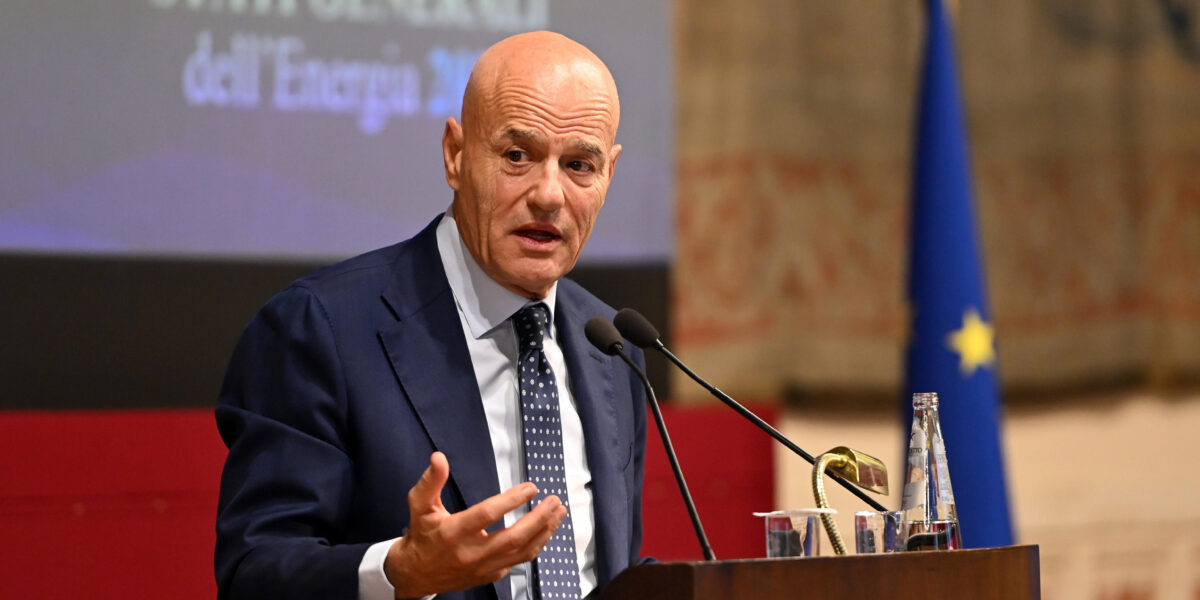
Gas supplies for the winter in Italy may not be enough. “We expect difficulties, it obviously depends a lot on the climate, none of us can know this” warns Eni’s CEO, Claudio Descalzi, specifying however that “if there is a mild winter, this impact will be less”. And this is confirmed by the Minister of the Environment and Energy Security, Gilberto Pichetto Fratin: “If the current climate remains, I believe there will be no problems”. The climate, today, is one of the variables that affect the energy situation in Italy and beyond. And it was one of the arguments at the center of the 2026 General States of Energy, organized by Forza Italia in the Chamber in which a complete 360 degree parterre participated, from politics to businesses to sector bodies.
Climate change is “a key factor” also for Enel’s CEO, Flavio Cattaneo. «The weaknesses of the Italian electricity system are linked to the country’s dependence on gas, also amplified by geopolitical contingencies, and the key factor of climate change: look at the last few months in Europe, where in addition to the gas problem there has been that of water scarcity» without which «there is no hydroelectric but also nuclear power in France which exports electricity to Italy, because difficulties arise with the cooling systems of nuclear power plants. We must therefore urgently invest in electricity generation, above all by increasing renewables and accelerating authorizations, but also by thinking about new floating regasifiers. You have to know how to respond quickly, times are tight.”
«Minister Pichetto has done everything but the system needs to be rethought today to be ready for these needs – added the manager – We need the wind and the sun, but we don’t have enough energy and we will consume more. We must invest even more in electricity generation, in regasifiers, in gas generation, such as repowering.” Looking ahead, «let’s see how we get to 2030, the timeframe is very tight, it’s not something that only concerns Italy and the first to move has advantages. Politics must take note of this.” For Descalzi, however, in the energy sector today “the problem is the few refineries”, and “it is late” contrary to what Brussels thinks to invest in traditional refineries in Europe also because “we don’t know how to recover the investment”.
The president of Unem, Gianni Murano, disagrees: «The crisis in European refining is the result of aggressive policies» but “in Italy we have a refining park that allows us to be independent. At a European level it is possible to make investments provided that we have a strategy on refining» he said. From the CEO of the GSE, Vinicio Vigilante came the request for «the development of renewable energies and the energy transition, with constant accompaniment and simplification for the benefit of territories, businesses, citizens, local authorities also to contain bill costs”.
The deputy prime minister and foreign minister, Antonio Tajani, thanked “the energy world for the sacrifices it has made” and in particular “for having decided to put a cap on fuel” (Descalzi confirmed that there is an intention to extend “the cap on fuel until the end of the year”). Tajani defended the energy world by saying that he shudders when he hears “the attacks, when a contribution is asked with insults. We cannot tax a company’s profits twice. Soviet culture does not belong to me.”
A country that imports a large part of the energy it consumes “pays twice: in price and in uncertainty” underlined the President of Arera, Nicola Dell’Acqua. As for nuclear power, “we need to think totally as a system, encouraging dialogue and communication” said the director of the Mase Nuclear Division Nicola Ippolito. The implementing decrees of the nuclear bill will arrive in about ten days, Pichetto confirmed.