

Google Discover

Preferred Sources
«A small rash, growth control, two drops of blood for iron. A normal pediatric visit for a one year old in the heart of New York. Then, on the table, the bill: 1,212.86 dollars. This was documented by the direct experience of an Italian professional, whose bill reignited the debate on the crazy costs of the US healthcare model. Fortunately mitigated by private insurance which reduced the family’s expenditure to just 40 dollars, the episode however reveals the mechanism of a system which spends more than double compared to Italy in relation to GDP, but which records double the number of avoidable deaths”.
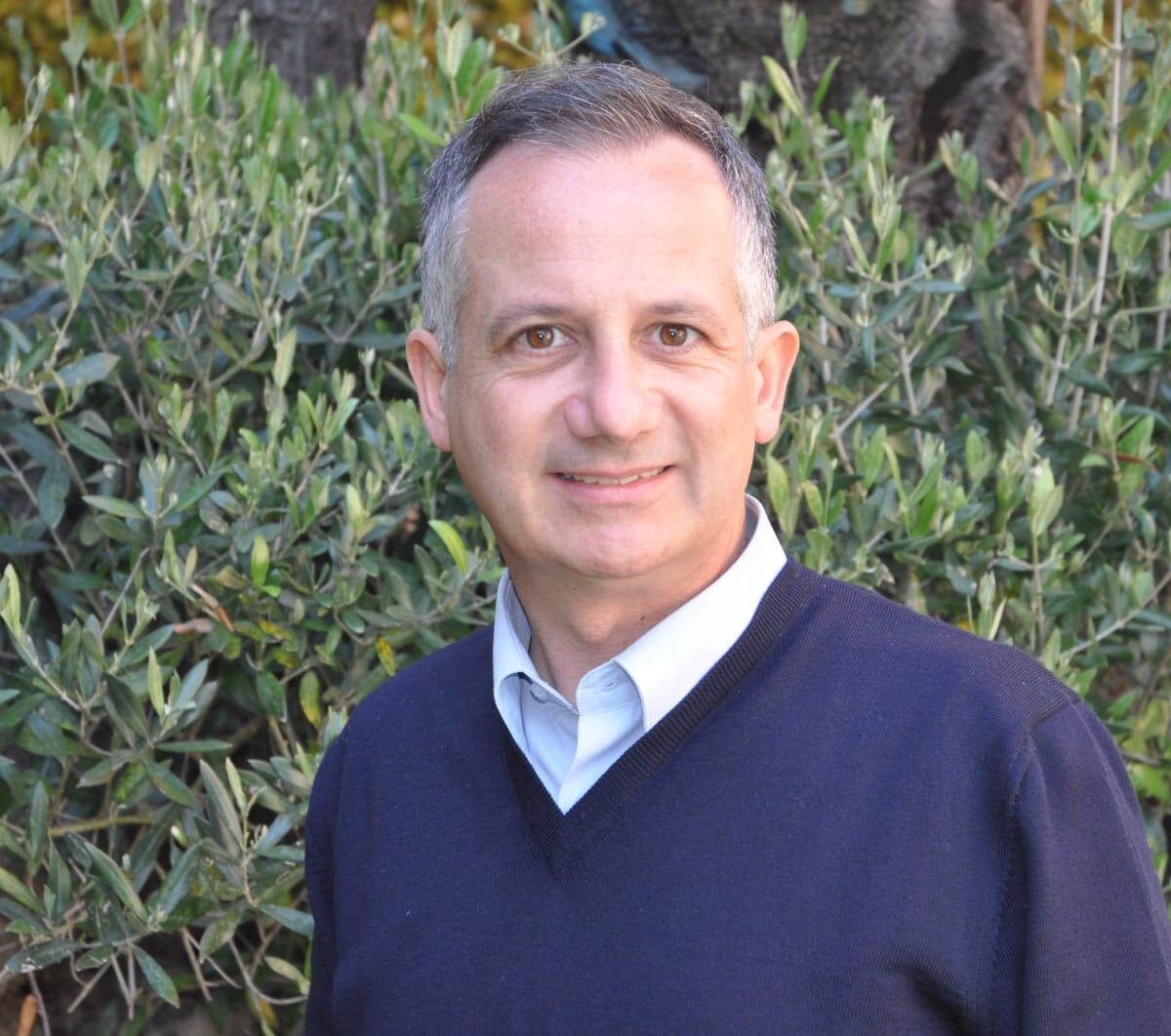
This is what Dr. Pasquale Maria Natrella, Italian leader of Forza Italia Lamezia Terme, declared, speaking on the debate linked to the future of the National Health Service and the prospects of Calabrian healthcare.
«A world that apparently seems distant – continues Natrella – but looking at the latitudes of our home and in particular at Calabria, the border between the American anomaly and our future risks becoming dangerously thin. In the United States, healthcare is a market. OECD data tells us that a huge portion of that spending (around 30%) does not go on treatments or drugs, but on bureaucracy, insurance administrative costs and private intermediation. The result is a healthcare system in which those who can afford the policy access benefits, while those who remain excluded pay with their health and their lives. This scenario, which appears unacceptable to us overseas, however, risks normalizing in Italy too, and Calabria unfortunately represents the most suffering laboratory. Years of commissioners, chronic staff shortages, collapsing departments and interminable waiting lists have worn away citizens’ trust in the National Health Service.”
«It is precisely in this terrain of frustration and abandonment – underlines the Forza Italia exponent from Lamezia – that a dangerous narrative insinuates itself: the idea that total privatization is the only way out, the inevitable modernization of a public system now considered irrecoverable. Relying on private individuals or supplementary funds as a panacea for all ills is a mirage as seductive as it is deceptive. The logic of profit applied to health does not eliminate waiting lists, it simply shifts them towards those who can pay, creating a citizenship based on social classes also in the fundamental right to treatment. Those who today push towards the progressive privatization of Calabrian healthcare – through the proliferation of affiliated clinics that absorb public resources, leaving public hospitals exhausted, or by pushing citizens to turn to the out-of-pocket market – forget the American lesson: more private spending does not mean more health. It only means more inequality, skyrocketing administrative costs and a welfare system that abdicates its constitutional function. The experience of New York reminds us that when health becomes a commercial product, the citizen turns into a customer held hostage by unaffordable tariffs.”
«Calabria cannot afford resignation. Accepting privatization as an inevitable destiny means abdicating the principle of equality enshrined in Article 32 of the Constitution. In this regard, we should always keep in mind the lesson of Tina Anselmi, mother and author of the historic reform which established our National Health Service with law 833 of 1978. In his public interventions, Anselmi directly applied the principle of vigilance on social achievements precisely to the defense of healthcare, strongly reiterating that no achievement is forever: the universal right to health is never acquired once and for all, but requires constant civic and political protection in order not to be emptied or diminished. Defending Calabrian public healthcare today does not just mean defending local hospitals or asking for more doctors: it means taking up that warning and rejecting the logic according to which the right to treatment should depend on the capacity of one’s wallet.”
«In this direction – highlights Dr. Natrella – the constant commitment of the president Roberto Occhiuto must be read, working tirelessly on the recovery front to achieve the crucial objective of leaving the commissionerate. A complex path carried forward with determination also in the recent and fruitful institutional meeting held at Palazzo Chigi with the Prime Minister Giorgia Meloni: a discussion at the center of which, in view of the maneuver, the Governor himself forcefully placed the need to ensure greater resources and an increase in the funding essential to restore fully normal and efficient healthcare to the Calabrians. This inevitably also passes through the valorization of human capital: a strategic objective to be pursued by encouraging the activation of mobility mechanisms between regions to encourage the return of Calabrian doctors, nurses and professionals to their homeland, accompanied by targeted economic measures and incentives capable of making the public system attractive again compared to the enticements of the private sector”.
«The bill of 1,200 dollars that arrived in the United States – states Pasquale Maria Natrella – is the alarm bell of a system that has lost its social compass. Before that model becomes our normality, we need to have the courage to make a deep structural reflection: the corporate healthcare system, as it has been conceived and applied in recent decades, has proven structurally incompatible with the dictates of Article 32 of the Constitution. Health cannot be managed with the criteria of a commercial company oriented towards balancing the budget to the detriment of services: we should have the clarity to go back to the USSL model, recovering that territorial, participatory and universalistic vocation which put the needs of the person at the center and not accounting constraints”.
«At the same time – concludes the blue exponent – it is now essential to draw a clear demarcation line and a real division between public healthcare and private healthcare. These are two worlds that respond to ontologically opposite purposes: the first aims exclusively at protecting the health and well-being of citizens; the second, legitimately but inevitably, aims for profit. This is also clearly demonstrated by the recent controversies raised around the television guest appearance of Paolo Rotelli, heir to the largest Italian private healthcare empire linked to the San Donato Group and the San Raffaele Hospital: a debate that has exposed how slippery and dangerous it is to overlap the narrative of private enterprise with the universalistic mission of the public service. Defending, financing and rebuilding our public system means reiterating that care is not a business. Because a society that stops treating everyone in the same way simply stops being civil.”