

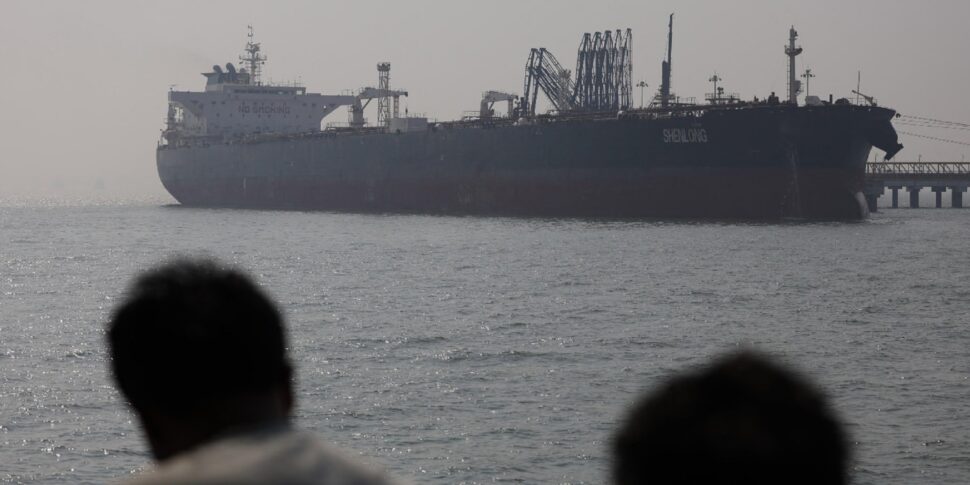
Tension is rising in the Strait of Hormuz, a strategic hub for global energy traffic. According to reports from the Iranian Fars agency, the transit of oil tankers would have been interrupted following the Israeli attacks against Lebanon, opening a scenario of strong uncertainty for the markets and for the safety of international navigation.
Cryptocurrency tolls and checks on ships
Meanwhile, Iran is reportedly considering new measures to control maritime traffic during the two-week ceasefire. These include requiring shipping companies to pay tolls in cryptocurrency to cross the strait.
The details are illustrated by Hamid Hosseini, spokesperson for the Union of Iranian Oil, Gas and Petrochemical Exporters, who explained to the Financial Times how Tehran intends to monitor every ship in transit. “Iran must control what enters and exits the strait to avoid weapons transfers,” he said, stressing that procedures will be thorough and unhurried.
According to what emerged, each oil tanker will have to communicate its cargo to the Iranian authorities, then receiving indications on the toll to be paid. The expected tariff would be one dollar per barrel of oil, while empty ships could transit without costs. Operational decisions would be entrusted to the Iranian Supreme National Security Council, with the hypothesis of forcing ships to follow the northern route, closer to the Iranian coasts.
Doubts about the legitimacy of the measures
However, the hypotheses put forward by Tehran raise strong doubts on an international legal level. This was highlighted by Stefano Zunarelli, full professor of navigation law at the University of Bologna, according to whom such claims “appear to have no legal basis”.
The payment of a toll, explains the expert, can only be requested in the presence of services actually provided by the coastal State, such as the assistance of a pilot on board. In the absence of such conditions, the introduction of tariffs would represent a dangerous precedent, potentially extendable to other international straits.
At the center of the debate remains the principle of “harmless passage”, a historical pillar of navigation law. «Questioning this principle – underlines Zunarelli – would mean returning to a phase preceding the freedom of the seas theorized by Hugo Grozio in the 17th century», with significant consequences for global trade.
A crucial hub for world trade
The Strait of Hormuz represents one of the main energy arteries of the planet, through which a significant share of the world’s oil transits. Any restrictions or slowdowns, such as those hypothesized, risk impacting not only the costs of goods, but also the geopolitical balance and the stability of international markets.