


Add the Gazzetta del Sud as a source
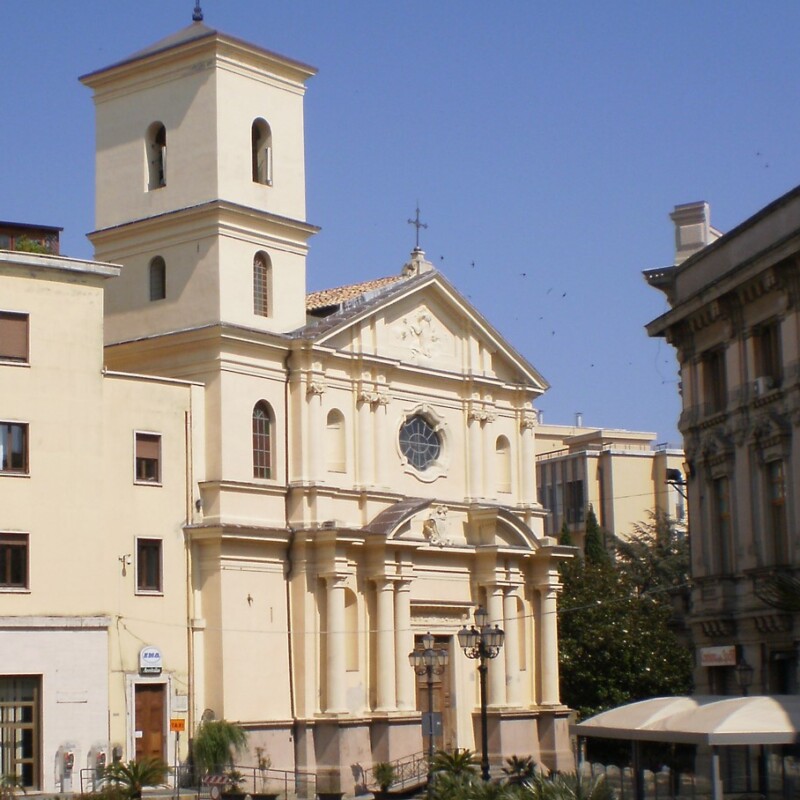
From 25 September to 4 October 2026 the Basilica of the Immaculate Conception of Catanzaro hosts the novena and celebrations for the eighth centenary of the death of Saint Francis of Assisi, which occurred in 1226.
The initiative brings together the four expressions of the Franciscan family – Friars Minor, Friars Minor Capuchin, Friars Minor Conventual and the Secular Franciscan Order – in communion with the Metropolitan Archdiocese of Catanzaro-Squillace and with the Archbishop Msgr. Claudio Maniago.
An event which, in the year of the eighth centenary, aims to go beyond simple commemoration to rediscover the relevance of the evangelical testimony of the Poor Man of Assisi and his message of brotherhood, peace, essentiality and care for creation.
«Francis lives in the Church» is the theme chosen for the novena journey. Every evening, in the Basilica of the Immaculate Conception, the program includes the Holy Rosary at 5.45pm, the novena at 6.15pm and the Holy Mass at 6.30pm.
Preaching will be entrusted to the various Franciscan families according to a single itinerary.
From 25 to 27 September the Capuchin Friars Minor will propose the theme «The vocation of Francis born in the Church»; from 28 to 30 September the Conventual Friars Minor will delve into «The Rule of Francis formed in the Church»; from 1 to 3 October the Friars Minor will accompany the reflection on «The charism of Francis given to the Church».
The journey thus intends to reread Francis’ experience through three fundamental dimensions: the vocation, the evangelical form of life and the charism given to the Church.
Particularly significant will be the appointment on Saturday 3 October at 9.00 pm with the celebration of the Transit of Saint Francis, presided over by Msgr. Salvatore Cognetti, vicar general of the Archdiocese of Catanzaro-Squillace.
The Franciscan tradition recalls in this celebration the last moments of the Saint’s earthly life and his encounter with that death that Francis himself, in the Canticle of the Creatures, had called “sister”.
The Transit takes on an even more intense meaning this year precisely in the context of the eighth centenary: remembering the death of Francis means celebrating his passage to eternal Easter and recognizing the fruitfulness of a testimony that continues to speak to the Church after eight centuries.
The celebrations will culminate on Sunday 4 October, the solemnity of Saint Francis of Assisi, Patron Saint of Italy.
At 6.30 pm, in the Basilica of the Immaculate Conception, the Eucharistic concelebration will be celebrated with the participation of the Franciscan families.
During the celebration, the significant gesture of lighting the Lamp will also be renewed, entrusted to the mayor of Catanzaro, Nicola Fiorita.
A moment that expresses the bond between the city and the figure of the Patron Saint of Italy and recalls the common responsibility of building relationships based on peace, fraternity and care for the most fragile.
Eight hundred years after his death, Francis continues to question our time. In a society crossed by wars, divisions, loneliness and new poverty, his radical return to the Gospel still indicates the possibility of recognizing each other as brothers and sisters and of guarding the common home together.
The celebrations in Catanzaro therefore aim to be not only a memory of a great figure in Christian history, but above all an invitation to translate the Gospel lived by Francis into the present.
The joint presence of the Franciscan families and the diocesan Church also makes visible that communion which profoundly belongs to the legacy of the Saint of Assisi: different charisms, united in the single mission of bearing witness to Christ.
The eighth centenary thus becomes an opportunity to return to the essential and still let ourselves be provoked by the life of a man who, choosing the Gospel as the form of his existence, went through eight centuries while continuing to speak to the Church and the world.