

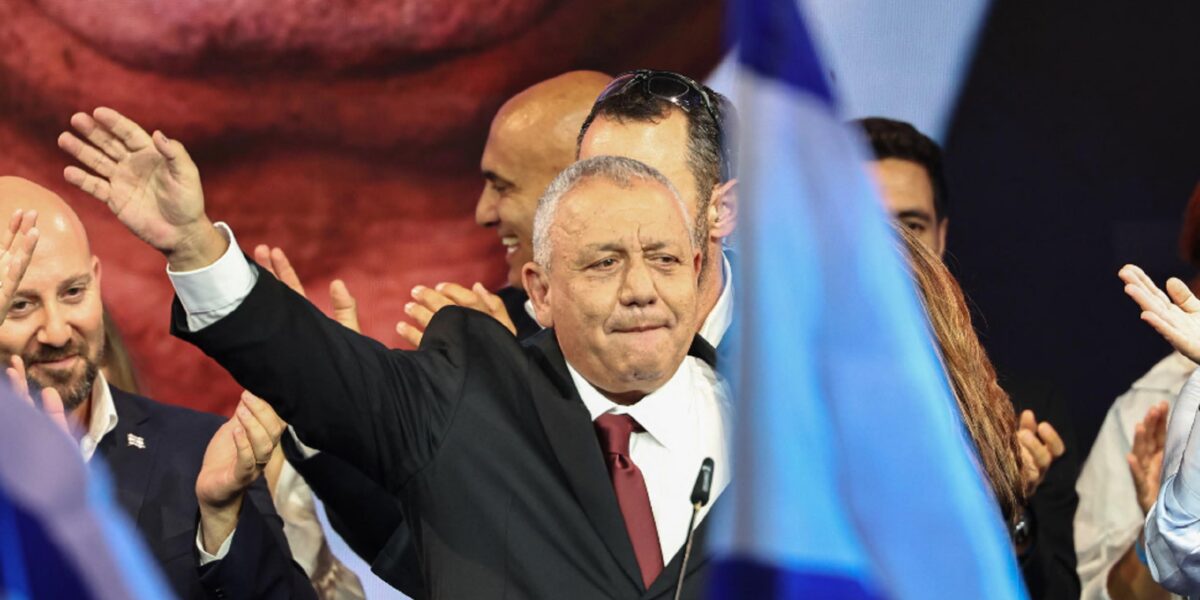
Israeli President Isaac Herzog’s decision on the name of the prime minister who will be in charge of forming the new government came at the end of Shabbat. The spokesperson announced that Yashar leader Gadi Eisenkot has been informed and the mandate will be awarded to him this afternoon at 5pm (one hour less in Italy) at the presidential residence, the ceremony will be broadcast live.
During the two days of consultations, political forces representing a total of 67 members of the Knesset recommended Eisenkot, of the Change Bloc, to President. The coalition of outgoing Prime Minister Benyamin Netanyahu obtained 46 indications from those elected to Parliament. While the United Judaism party (alliance between two Ashkenazi ultra-Orthodox parties) has decided not to nominate any candidate. In the official note, Herzog’s spokesperson reported that the president had in-depth talks in recent days with various personalities in the political system, including meetings with Netanyahu and Eisenkot, to whom he communicated his intention. So there will be 28 days, according to the Basic Law, to form a new executive. If more time is needed, the President is authorized by law to grant an extension of up to an additional 14 days.
Netanyahu calls for a unity government
Just before the presidential announcement, Netanyahu released a video statement: «I call for the formation of a national unity government that includes all parties of the national camp and all Zionist parties. An executive that depends on Hamas supporters will not fight Hamas, a government that depends on those who hate Judaism will not preserve Israel as a Jewish state. A government that depends on Islamists will dismantle the State of Israel from within, as is happening in European countries,” he said. Eisenkot responded to Bibi’s call by clarifying that «if the Likud and its members are suddenly interested in unity and a coalition government, they are more than welcome to publicly announce the dissolution of their alliance with the extremists (Ben Gvir and Smotriche, ed.), to accept Gadi Eisenkot’s principles and to express their willingness to join a government led by him as prime minister. Until then, this is nothing more than pathetic propaganda.” He added: “He who has divided, torn and caused conflict in Israeli society suddenly uses the word ‘unity’ only when he realizes that his days in power are numbered.” The game is now in the hands of the Change Bloc. With Eisenkot maintaining the points of his electoral program of a Zionist government, which wants the draft for all citizens and asks the Arab parties to condemn Hamas, aiming for a minority government with the external support of the Arabs. In the meantime, however, the leader of Ysrael Beitenu, Avigdor Liberman (who is part of the alliance of change) has made a sensational backtrack on one of the crucial points of his campaigns, opening up the discussion on the enlistment of ultra-Orthodox young people (and therefore religious parties) and blocking the way to a minority government with the Arab factions. The troubled transition from the Netanyahu era to a new page for Israel lies in the developments of the coming days.