

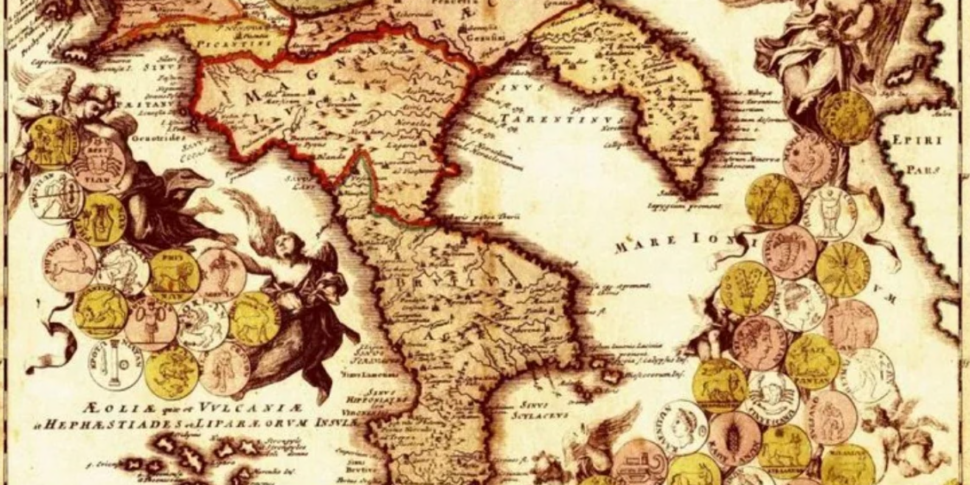
Giuseppe Caridi – former professor of Modern History in Messina and president of the Deputation of Homeland History for Calabria – walks through memory by transferring himself from one space-time to another and he does so with the tools of a professional historian who reads the facts and phenomena iuxta proprio principalia but starting from the complexity of his own task: reading and documenting a «History of Calabria. From the Unification of the South to the Unification of Italy (11th-19th centuries)” (Rubbettino).
A speaking title with the emphasis placed on the word “Unity”, to indicate to those who read the path of this nine-century-long journey. But Caridi’s volume is also the story of a territory, Calabria, with its vast and fragmented geography, an often shattered culture, a land in constant movement and yet immobile, which for rulers and subjects, dominators and dominated, foreigners, foreigners and natives was a tangled dream. An immersion in history, that of Caridi, who has been dealing with the historical events of Calabria for 50 years, as evidenced by the numerous essays and many monographs of academic production integrated by other contributions that come together in this volume.
In the long spatial and temporal atlas of Calabria Caridi identifies two periodizing dates: on the one hand the second half of the 11th century, when the political unification of the South was achieved after the arrival of the Normans, on the other 1861, the year of the Unification of Italy, with the end of the Bourbon monarchy. In the middle there are nine centuries of history which in the South sees the Swabians and Angevins, Aragonese, Spanish, Austrians alternate up to the Bourbon kingdom and its restorative drift which culminates in Garibaldi’s expedition and the proclamation of the Kingdom of Italy. In between there are alliances, revolts and repressions, territorial aggregations and the geography of an omnipresent feudal system, and at the same time demographic and economic growth and decline (the decline which reached its peak during the crisis of the seventeenth century), agrarian relations, customary pacts and marriage chapters, cultural dynamism and crisis of ecclesiastical institutions, social classes and land distribution, epidemics and catastrophes, socio-anthropological phenomena such as brigandage, the Calabria of the 1799 and the Sanfedist expedition with the repression of the republicans, the French decade and the reforms of the Napoleonids. And finally, the second Bourbon Restoration and the first Risorgimento movements, in a “libertarian anxiety” that united people and intellectuals, patriots and Carbonari, years of resistance (also jagged) that were a prelude to the Unification of Italy.
Facts that often come in the form of figures and statistics, numbers that tell of the destinies of peoples. All documented by Caridi with tables that give an account of all the areas into which historians divide Calabria from a geomorphological and lithological point of view, with the two sides, Ionian and Tyrrhenian, the Apennine ridges and the specific topographic conditions deriving from particular physical and geological characteristics. History always presents the accounts of lost opportunities, as Sergio Mattarella always reminds us, and this is confirmed by this interesting and documented volume by Caridi which, with its dynamic narration, traverses the complexity of the atlas of Calabria, which has always been inhabited by geographical, human and geopolitical oxymorons which have influenced people and their existence, mentality and behaviour, conservation and innovation of customs, birth and decline of traditions.