

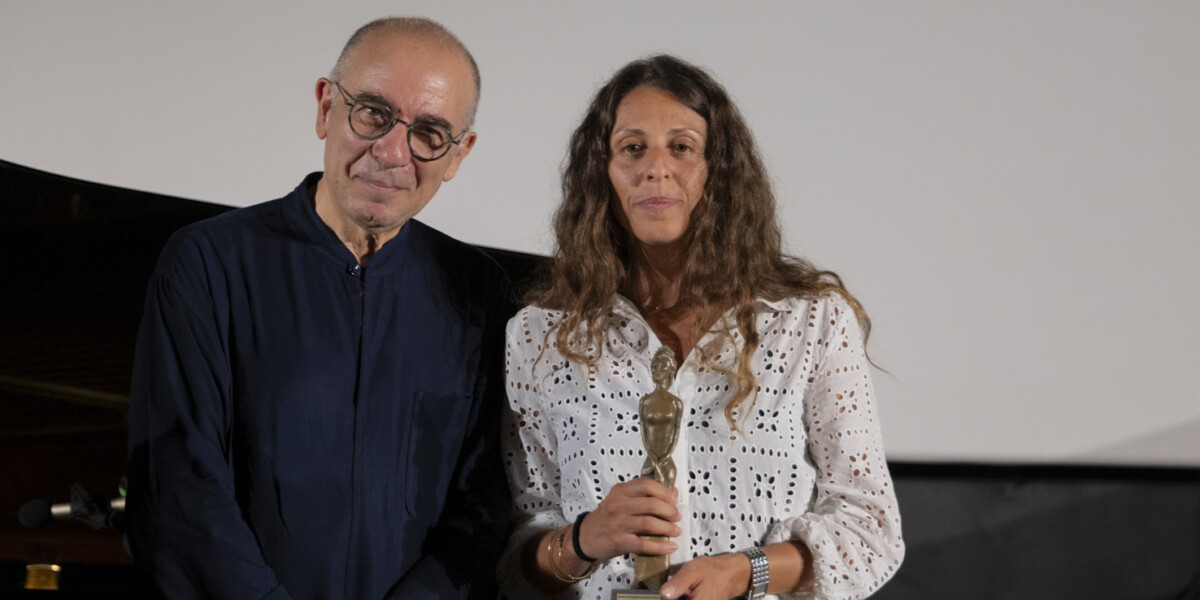
Opening on the thread of memories and emotion for the new edition of the International Film Festival of Messina – directed by director Francesco Cannavà – with the inaugural event at the Agorà dello Strait of the Park in the Fair. Some hints of rain before the start, but, as the journalist Franco Cicero, president of the scientific committee and great star of the evening, observed, they could have been “tears for those who are no longer here”: for Ninni Panzera, pillar of the city’s cinematographic culture and great supporter of the renewed Rassegna, who passed away on 11 July.
Founder of the Cineclub Saletta Milani and of the Messina Opera Film Festival in Messina, as well as historic general secretary of Taormina Arte, Panzera has maintained working and friendly relationships with the greatest cinema professionals, including the Oscar-winning director Giuseppe Tornatore, special guest of the evening.
The title is auspicious, «The Messina Exhibition is reborn», to reiterate the direct link with the past, and opens on the archive images of the Istituto Luce of the third edition (1957) of the old event. The first interlocutor on stage is the director Tornatore, who has been at home in Messina since the days of «Nuovo Cinema Paradiso»; a very special bond, which, as announced on stage by mayor Federico Basile, will be sealed with the future award of honorary citizenship.
But the highlight of the evening was the memory of his friend Ninni: the tones became intimate, profound, far from the typical emphasis of festivals, with the images of memory prevailing over those of the screen. The director remembered his friend, his passion for cinema, his gentlemanly attitudes, his discretion (“He stayed on the sidelines, he didn’t like the spotlight”) and his calmness: “A person who was always balanced, never angry; yet his cultural promotion activity also had difficult moments which he always overcame with the grace that was his hallmark.” All qualities that made him an extremely reliable person, to the point that Tornatore himself agreed to found the documentation center dedicated to him without seeing the project, because «Ninni did well anyway». The memory focused on the almost obsessive love for «Nuovo Cinema Paradiso», which Panzera in January 1989, following an intuition of the Aurora cinema exhibitor Giovanni Parlagreco, contributed to re-evaluating, after the national flop at the box office, by hosting the director in an evening event at the Saletta Milani.
«I could even say that it was he who persuaded me that I had made a film that could have some value – said Tornatore -. When we met on that occasion I was convinced that I had had a beautiful story in mind, but that I hadn’t been able to turn it into a good film, because it had been a failure throughout Italy. Except in Messina. Parlagreco had the brilliant idea of putting a billboard in front of the cinema inviting spectators to go and see it for free and only pay if they liked it. Panzera and the guys from Saletta Milani took the initiative and within a short time there was curiosity and indulgence towards that film, which had found its audience in Messina. It was a moment of hope, and I have always associated the memory of Ninni with that moment.”
Also paying homage to Panzera was the set designer from Messina Marco Dentici, who read a written testimony by Marco Bellocchio; the Catanese musician Angelo Privitera, Franco Battiato’s keyboard player, who performed «La cura», recalling a collaboration between Panzera and the great Sicilian singer-songwriter. And, finally, the piano performance of the theme of «Nuovo Cinema Paradiso» by the Messina composer Cettina Donato, member of the scientific committee of the Review.
The excursion into memories ended with Tornatore’s delivery of the «Regina del Peloro» award – already prepared for Ninni as a career award – to his daughter Ida and with a strong embrace between the two. A historic moment, “a restitution of love”, commented Ida Panzera.
The “Queen of Peloro” award also went to the Polish director Jan Komasa, nominated for the 2020 Oscar for “Corpus Christi”, who met the audience at the Apollo Multiplex for a special out-of-competition screening of his film “Good Boy”. A black comedy about a “Clockwork Orange”-style violent re-education by a dysfunctional married couple on a 19-year-old in disarray. A strong but coherent content, albeit with a veer towards the grotesque, with his idea of cinema illustrated during an interview with Cicero.
«I have always been fascinated by the possibility of cinema to push itself beyond pre-established boundaries – said Komasa -. When I studied cinema, they taught me that we need to create characters that the public likes; however, I remember hearing Martin Scorsese say something like, “Yeah, he’s kind of nice, but what next?” I’ve always loved this approach and have tried experimenting with it a couple of times. I wanted to understand if it was possible, as a director, to make a film about an immoral person, while still making it enjoyable.”
An approach to the seventh art that is not very comforting and far from the canons of academia: «I have always wanted to create somewhat provocative characters, capable of making the viewer reflect and become aware of what is happening, even when this is not at all pleasant. In fact, I create antagonists in the hope that they bring awareness.”
Photo Rocco Papandrea