

Add the Gazzetta del Sud as a source
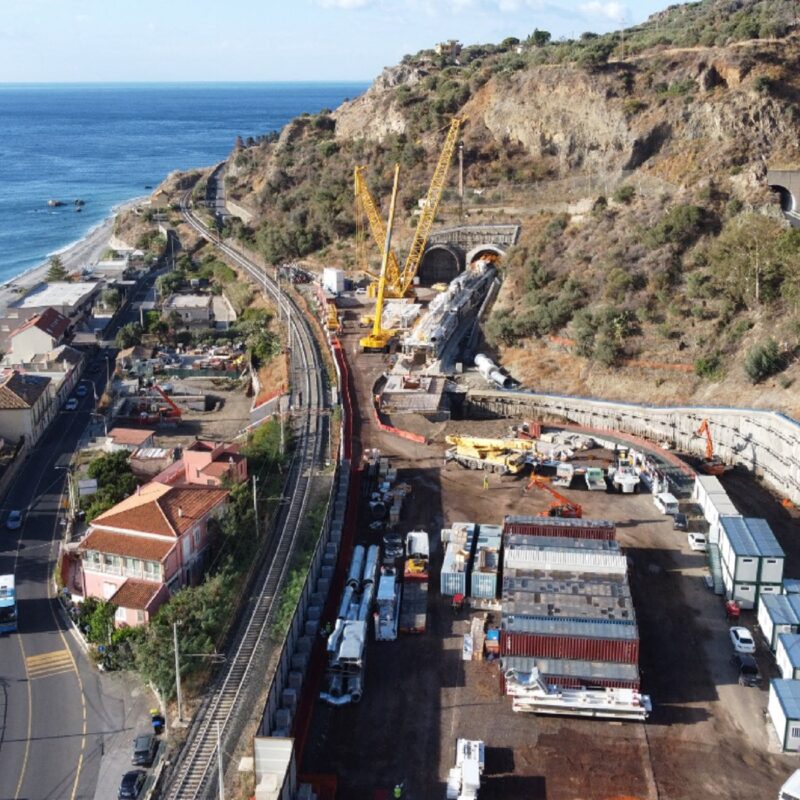
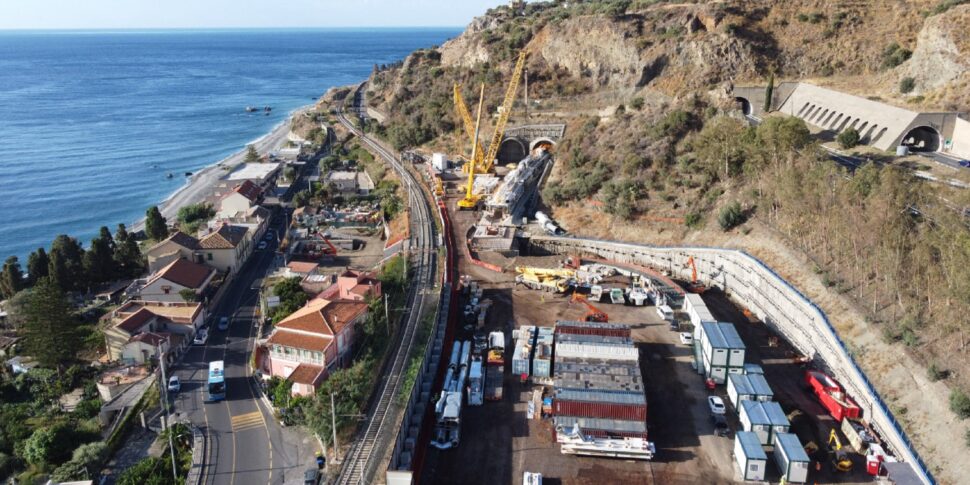
«A potentially explosive situation is being created on the Messina-Catania railway doubling. If action is not taken immediately, the real risk is that the construction sites will be partially closed, with very serious consequences for the work and above all for the workers.” The alarm was raised by Pippo Lombardo, regional deputy of South Calls North, who asked for the urgent convening of the Fourth Commission of the Sicilian Regional Assembly to address the serious critical issues that are affecting the road system serving the railway doubling construction sites.
Since 1 October, on the Mili and Galati bridges of the SS114 Orientale Sicula, the narrowing of the roadway and the ban on transit for vehicles with a mass exceeding 26 tons have been in force. A limitation imposed following technical checks on the infrastructure and which, Lombardo highlights, could continue for years, considering that the static adaptation interventions are still in the planning phase.
«We are not talking about a marginal traffic problem. Heavy vehicles coming from the Giampilieri tunnel and heading towards Messina, to the village of Contesse, must pass on that axis. With the limit imposed on the Mili and Galati bridges, larger tonnage vehicles can no longer use the planned route. This means seriously putting the continuity of work at risk.”
The document sent to the IV Commission highlights, in particular, the concrete risk of stopping the “Letteria” TBM, the mechanical mole that has already completed the excavation of one of the two tubes of the Scaletta tunnel, over 2.7 kilometers long, and which would be ready to start excavating the Quali tunnel, approximately 4.5 kilometers long. «Stopping a machine of this type means directly affecting the timetable of a strategic project and opening up extremely worrying scenarios also on the employment front. The risk of layoffs cannot be underestimated or addressed when it is too late. We must act now.”
The situation, according to Lombardo, is made even more serious by the simultaneous presence of other obstacles: the delay defined in the “no longer tolerable” hearing request for the latest environmental authorizations necessary to start the construction of the construction ramps of Nizza di Sicilia, Sant’Alessio and Taormina, in addition to the impracticability of the submersible walkway on the Nisi stream and, soon, of that on the Agrò stream.
«A real road trap is forming around the construction sites: on the one hand heavy vehicles cannot travel the originally planned route, on the other the necessary alternatives are not yet available. And in the middle there is a fundamental work for Sicily, businesses, workers and entire communities that risk suffering the consequences of delays and missed decisions.” Hence the request for an urgent hearing to verify the possible solutions, also with respect to the possible conveyance of heavy vehicles on the motorway network, and evaluate the effects on traffic safety, ordinary and motorway traffic, the environment and the territories involved.
Lombardo asks the Commission to convene the competent regional councilors, the managers of the regional Departments, ANAS, RFI, FS Engineering, ARPA, Superintendence, the Consortium involved in the railway doubling, the CAS and the mayors of the Municipalities involved along the route. «We cannot wait for the construction sites to stop to convene tables and look for solutions. Alarm bells are already ringing. Immediate answers are needed on the ramps, on alternative roads and on the conditions to guarantee the transit of vehicles. The Messina-Catania doubling is one of the most important infrastructure works in Sicily and we cannot allow authorization delays and road problems to produce a domino effect that puts jobs and employment at risk. The Region must immediately summon all the parties involved and take responsibility for finding a solution before the risk becomes reality”, concludes Lombardo.