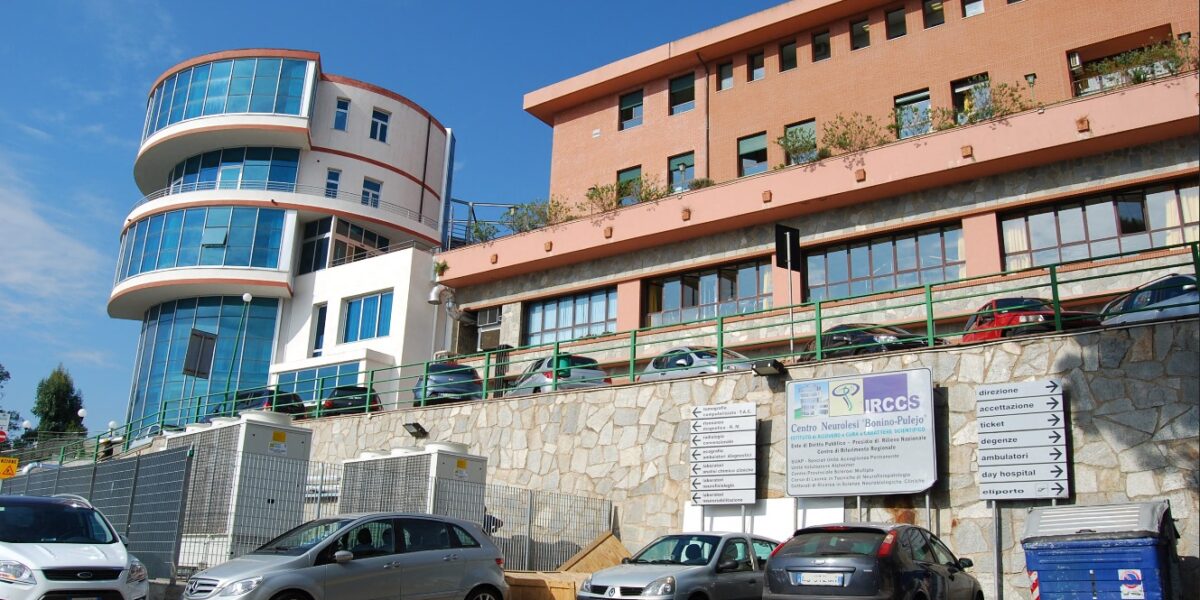
The official imprimatur has arrived: ministerial recognition has been confirmed for the Irccs Centro Neurolesi Bonino Pulejo of Messina. This is not just a simple bureaucratic step but, once again, “a seal of quality” is placed on recovery programs for patients affected by serious acquired brain injuries and neurodegenerative diseases. «It is news that rewards years of silent work, made up of physiotherapy sessions repeated a thousand times, of small progresses that become great goals, of cutting-edge technologies and research activities put at the service of the person», they tell the Irccs.
The recognition, by the Ministry of Health, of the status of scientific hospitalization and treatment institute for the neurorehabilitation area, is also the result of far-sighted and strategic choices, carried out over the decades, and for which a precious role was played by the former director general of the Irccs, Prof. Dino Bramanti. It was he, in fact, who laid the foundations and increased the levels of scientific and clinical excellence achieved by the structure. One thing is certain: the Irccs of Messina is included in the list of large Italian research and treatment centers in the field of recovery of neurological disabilities.
As the current director of the Institute, Maurizio Lanza, explains, «the reconfirmation, sanctioned by decree of the Minister of Health, comes at the end of a particularly rigorous evaluation procedure, which every two years calls on the Italian IRCCS to demonstrate that they have maintained and, if possible, increased the parameters of excellence that justified their initial recognition.
It must be clearly underlined: the reconfirmation of the IRCCS status is not an automatic act. It requires once again passing an in-depth check on numerous indicators: international scientific production, participation in clinical trials, case studies, ability to attract patients from outside the Region, quality of care measured with standardized indicators, economic sustainability, staff training, governance. In other words, every two years an IRCCS must “regain” its title. Reconfirmation, therefore, is not a point of arrival, but the demonstration that the level achieved is maintained and improved over time. And this is why it is an enormous satisfaction – continues the general director -, the reconfirmation is no less important than the other recognitions: indeed, in a certain sense it is more important, because it demonstrates that quality was not an episode but a continuous journey. Behind this result achieved by the entire strategic management, there are our medical researchers, physiatrists, neurologists, physiotherapists, speech therapists, occupational therapists, neuropsychologists, but also our nurses, health professionals, technicians and research collaborators. It is a recognition that belongs to all of them, from first to last, and even before that to our patients and their families, who are the true driving force of everything we do.”
The scientific director, prof. Angelo Quartarone underlines an important element: «Modern neurorehabilitation is no longer just doing physical exercise after a brain stroke. It is a discipline with a very high scientific and technological content, which integrates neuroscience, biomedical engineering, neurophysiology, neuroimaging and artificial intelligence and psychology. We are studying, for example, how the combination of brain neuromodulation techniques with virtual reality rehabilitation can enhance and personalize rehabilitation programs in patients suffering from Alzheimer’s disease, improving their effectiveness. It is true precision medicine applied to functional recovery.”
Among the programs that contributed to the reconfirmation of ministerial recognition are: 1) robotic and technological rehabilitation, with the use of exoskeletons, end-effector devices for upper and lower limbs, immersive virtual reality systems, computerized balance platforms. Technologies that allow more intensive, repeatable and measurable treatments compared to traditional rehabilitation, particularly effective in post-stroke recovery and spinal cord injuries. 2) Non-invasive brain stimulation (TMS, TDCS, and in the future low intensity focused ultrasound) as a support for motor and cognitive recovery. The program for serious acquired brain injuries, dedicated to patients returning from coma or states of minimal consciousness, with “awakening” paths and progressive re-education. 3) The spinal cord injury unit, territorial reference for patients with para- and tetraplegia. 4) Cognitive and neuropsychological rehabilitation for patients with language, memory and attention disorders resulting from stroke, head trauma or neurodegenerative diseases. 5) Paths dedicated to neurodegenerative diseases, with specific programs for Parkinson’s, multiple sclerosis, integrated with the care of the family unit. 6) Pediatric rehabilitation for children with cerebral palsy, neuromotor development delays and neurodevelopmental disorders.