

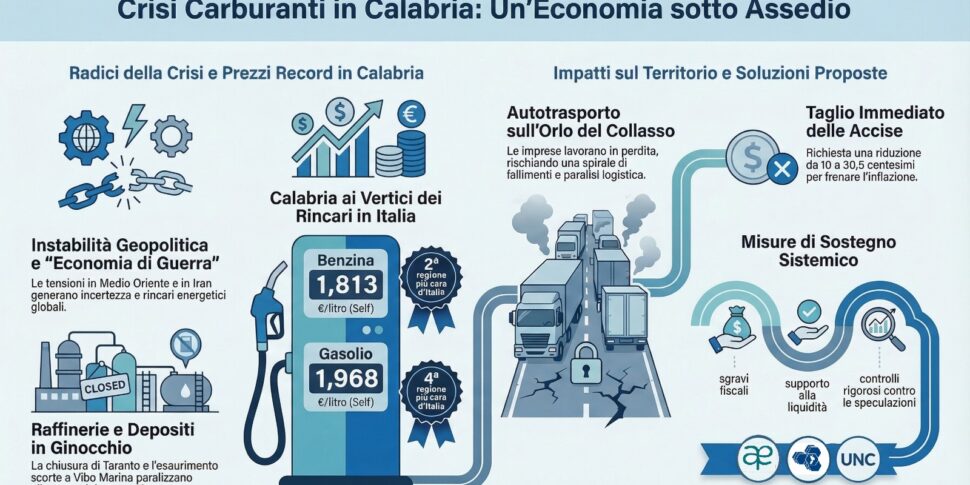
The Middle Eastern front that has opened up violently in the history of humanity is an economic earthquake that shakes the foundations of international markets. The tensions that have spread from the lands of conflict, and which spread like a virus on global stability, are bringing rapid consequences. Every aspect of the war has immediate repercussions on the economy, shaking the already fragile balance of the global trade balance. The production system finds itself trapped in a spiral of uncertainties, with diagrams increasingly connected to exogenous factors. The term “war economy”, which experts have revived in recent hours, describes a scenario of fear that spreads across states, generating profound social instability. It’s a process that threatens to overwhelm productions.
An extremely precarious condition for businesses
In Calabria, businesses, small and large, today experience a condition of extreme precariousness. The storm of increases in energy prices seems to have no end. Electricity and gas bills explode, reaching unsustainable figures for many businesses. But the heart of the pulsating drama, the cause of rapid economic destabilization, is fuel. With prices flying to uncharted heights, the risk is of finding ourselves faced with an imminent crash. It is no longer possible to support production costs, and families, already struggling with rising prices in supermarkets, are forced to reduce their consumption of essential goods. Tensions between supply and demand, as well as the scarcity of raw materials, are fueling inflation, and the forecasts are far from rosy. The future appears bleak, marked by a constant increase in prices and a production system that seems on the verge of collapse.
The full article is available in the print and digital editions