

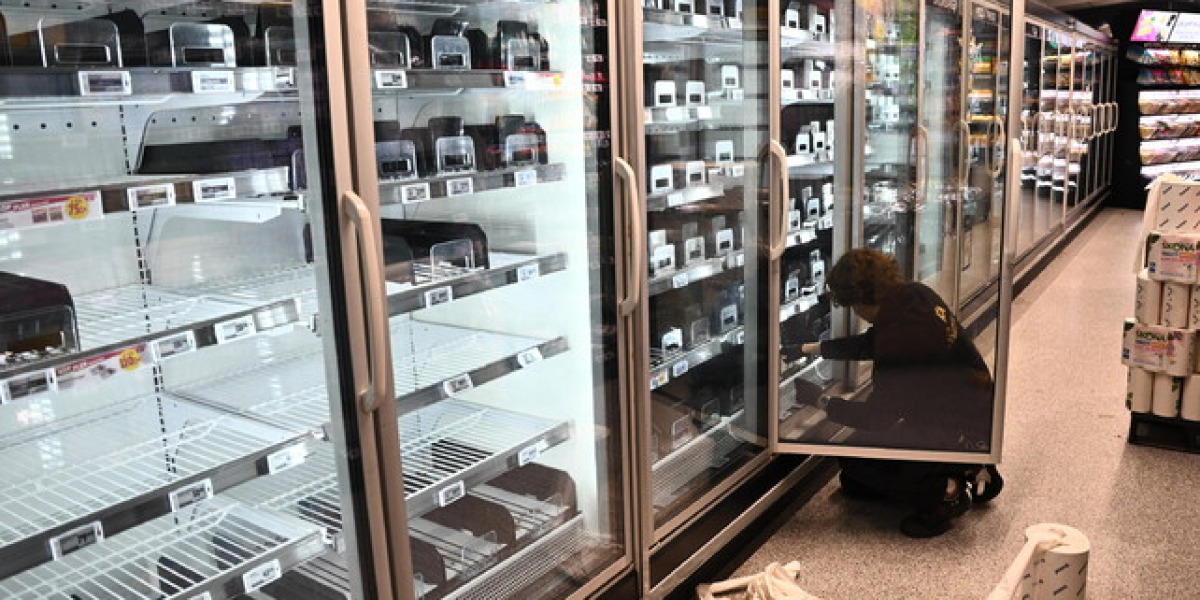
Paris accuses Tehran of being responsible for the attacks on refrigerators that paralyzed supermarkets, but also the blood bank offices in France. «I am able to confirm that the responsibility for this attack lies with the Revolutionary Guard Corps of the Islamic Republic of Iran. This is an attack of unprecedented scale and aggressiveness”, thundered the head of French diplomacy, Jean-Noël Barrot, on the sidelines of the G7 Foreign Affairs meeting in the French capital where the alarm over hybrid warfare in Europe held sway. «We must be united – reiterated the Italian Foreign Minister, Antonio Tajani, on the first day of work in the Clock Hall of the Quai d’Orsay, many times the scene of historic diplomatic agreements -. We must give a strong signal of response to those who seek to cause chaos in Europe and the West. Wherever these attacks come from, they are hostile attacks.” Rome’s line found not only a listening ear among the Big 7 gathered on the banks of the Seine, but also an important and unexpected relaunch with Jean-Noel Barrot, host for the rotating French presidency of the G7. It was from him, shortly after the news of an investigation in France into the hand of the Pasdaran behind the hacker offensive that put the refrigerators out of use, that the political relaunch of the judicial initiative came:
«We have summoned the Iranian ambassador to France to protest in the strongest terms against this extremely serious act. We will adopt sanctions at European level against all those responsible for this attack”, he added. Tajani remained cautious about the accusations directed at Iran by Paris, reiterating that «what is certain is that the hybrid attacks concerning Italy came from pro-Russian hackers. We don’t know if the Moscow government is behind it, we can’t talk about Russia. However, they are pro-Russian hackers by their own admission.” And Iran? “We will see who are the directors of the other attacks in Europe”, he observed, remarking that “they are certainly attacks that take place at the same time”. On the judicial level, the French are investigating in particular the “head of the Iranian group Shahid Kaveh, an offensive cyber unit affiliated to the Electronic and Cyber Center of the Revolutionary Guard Corps”.
Also involved were “two of his collaborators”, specified the Paris prosecutor, Laure Beccuau, who worked and reconstructed the dynamics of the hybrid attack which, on the night between 11 and 12 October, knocked out the refrigeration control stations of supermarkets of the Danfoss and Dixemm brands, targeting 700 large-scale retail outlets in France and causing “significant food losses” as well as the start of fires. The investigations would have “brought to light a type of attack characteristic of this unit, the Shahid Kaveh, the use of the Farsi language as well as IP addresses that can be traced back to terminals located in Iran”. In the first full day of work of the ministerial – which had been scheduled for a long time in Marseille and only 4 days before the appointment was moved to Paris for “operational and security” reasons – Tajani also spoke about hybrid threats in numerous bilateral meetings, among other things with colleagues from Canada, Japan and South Korea. In the first session dedicated to the main crises, the discussion on Ukraine began, where the Italian minister recorded “positive signals, also from the Americans”, encouraging on the role of Europe also in the perspective of two days in Abu Dhabi: «Because – he explained – without Europe we cannot achieve true peace», which must be «fair», so as «not to transform it into a defeat for Ukraine». Also important is the new mission announced by the Italian minister in Sudan, Ethiopia and Nigeria, between Christmas and New Year, with two large ships that will bring aid and will leave from Brindisi in the coming weeks.