

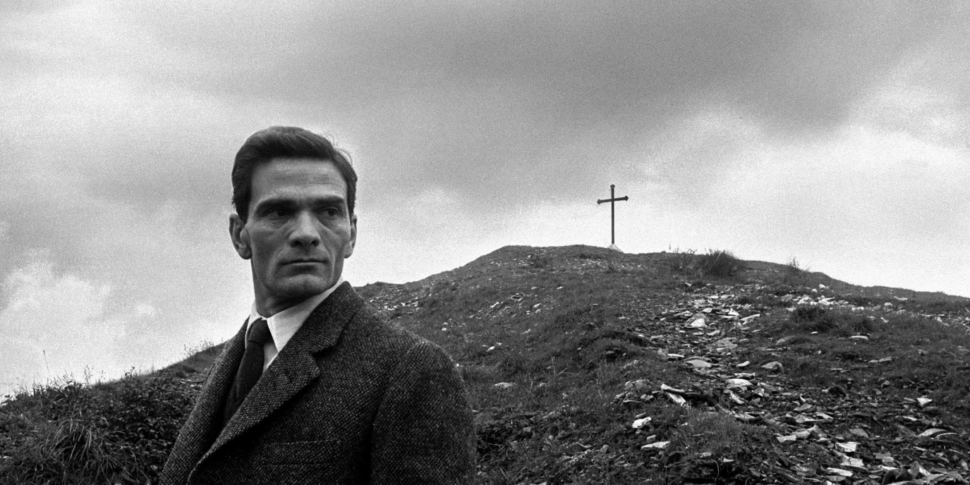
Pasolini: the civil poet, the corsair, the prophet. The essayist, the filmmaker, the critic, an inexhaustible source of criticism. How can we explain Pier Paolo Pasolini’s versatility? Its versatility and complexity? His eclecticism? And most of all, how can we explain his predilection towards poetry and the contradiction in his continuous dedication to other things? Fifty years after his death, Pasolini returns to be central for Italian criticism precisely to explain the “prodigy” of his art: the ability to be able to experiment with different forms by putting himself, his own vision, at the center. «Pasolini and…», the exhibition conceived by professor Carlo Fanelli and created by the Lametino Library System, fits precisely into this scenario. Until December 28th, Pasolini’s work will be the focus of debates and meetings at the Chiostro Caffè Letterario in Lamezia Terme.
Not just the work, but the most diverse ideologies, feelings and authors who inspired it. From Dante to Boccaccio, from Gramsci to De Martino. Even more so, in the last meeting, his fundamental relationship with poetry was highlighted. And therefore with Francesco Leonetti, with Franco Fortini, with Giacomo Leopardi.
Poetry as the glue between Pasolini and Leonetti, two poets and a dense, feverish correspondence. «A human relationship, of friendship», said the researcher Gian Luca Picconi in his speech, but also a way of reflecting on oneself, of recognizing oneself in the world of the other through notes, comments, judgments, often even harsh ones. Leonetti, “poet of the South”, collaborated with various magazines: his “cultural agitation” was expressed in many ways. Both wrote for «Gioventù italiana del Littorio» and then founded «Officina» together. Their intellectual relationship was so important that Leonetti edited the diary in verse «Poems in shapes of roses». A profound human relationship, but two different conceptions of poetic making, for the “avant-garde” Leonetti, for Pasolini full of ideological passion. A dichotomy that Pasolini deals with in the work «Passion and ideology» (Garzanti) claiming a rational dimension of poetry over the irrational one.
Irrationality, the most instinctive part of Pasolini, is what his friend, poet and essayist Franco Fortini strongly opposed but which he somehow recognized as a sort of “alter ego”. For Marco Gatto, professor at Unical, «Fortini recognizes Pasolini’s irrationality as his own, but in a subdued, calmed way, lying in the background. In a monograph by Fortini on Pasolini, published in 1993, the author uses the rhetorical figure of “syneciosis”, a sort of weakened oxymoron, to indicate Pasolini’s poetics: oxymorons that fail to be truly harsh, contradictions that fail to be truly real. For Fortini, passion is together with ideology and the two things must not be in contradiction, they must integrate. For Pasolini, however, poetics must submit to ideology.”
In all this the typical contradiction of Pasolini’s poetics emerges. A «conflict» that is explored in the ambitious study by Paolo Desogus, Maître de conférences at the Sorbonne in Paris, entitled «In defense of the human. Pasolini between passion and ideology” (The Ship of Theseus). According to Desogus «for Pasolini the ideology, the rational dimension enriches poetry». And Leopardi’s influence also comes into play here. As? Through ultraphilosophy: «A rational philosophy, which knows how to lower itself to things, which knows how to see at a human level. Rationality in poetry is not what makes it logical, folds, puts in order, crushes the vital and sentimental element, but it is what knows how to incorporate irrationality that allows it to shine. This is the idea of poetry for Pasolini: what manages to bring passion and ideology together. A contradiction that only poetry can unite.”
Pasolini navigator of contradictions, and splendid, necessary poet.