

Google Discover

Preferred Sources
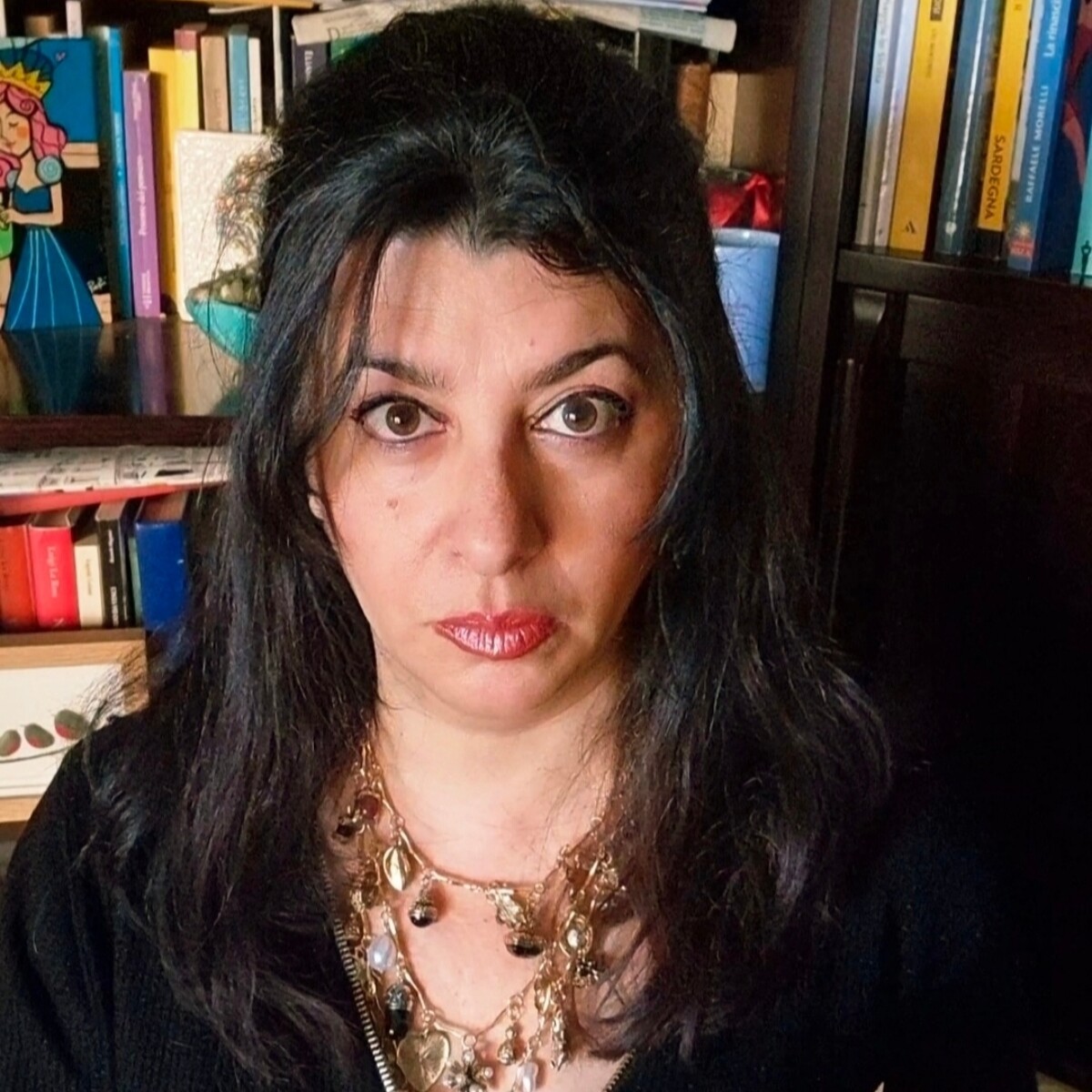
For Azzurra, protagonist and narrator of «The Lover of Cagliostro» (Algra Editore), by the Messina writer, literary critic and blogger Eliana Camaioni, the possibility that her life takes on a new shape starts from an encounter that will launch her into a vortex of experiences, between role-playing games and Masonic lodges, through which, from the mysterious Florence to the legendary Camargue of SS. Maries de la Mer, will reach the most important goal: the discovery of herself.
A novel that intertwines historical mystery, detective stories, current events and esotericism, a field of research for the author who has decades of preparation (“far away – she says – from the new age tendencies that populate the web and society”) grafted onto a classical and philological education. And it concludes two stories, that of Cagliostro and that of Azzurra, a failed biologist, wife, mother, housewife who takes care of her greenhouse among the Tuscan hills, until she meets the enigmatic Alessandro who proposes that she be part of a role-playing game in which he represents Cagliostro and she represents his wife Serafina. But the literary journey of Camaioni (founder of «Messina writes») which from the trilogy of «Nessun dorma», «Take me with you» and «Nostra Signora da Messina», arrives at this evocative story of rebirth (the cover of the novel is by the Messina illustrator Lelio Bonaccorso), will continue with a historical mystery, on which the author is working, «esoteric in part, with Goethe investigating the death of Caravaggio».
Why Cagliostro?
«From the esoteric mysteries, even less known than Messina, of the trilogy I arrive in Cagliostro, alchemist, magician, healer, scholar of the Egyptian rite, pillar of esotericism who in the eighteenth century founded the first female lodge entrusting it to his wife. In the novel, Cagliostro brings to fruition the lesson of the Greek-Armenian mystic and esotericist Georges Ivanovič Gurdjieff on transformative alchemy (the same one that Battiato followed and that I follow): we carry out the true Work within ourselves, there are no test tubes and stills, but there is a raw human soul that must slowly be brought to perfection, to rubedo».
You have moved away from Messina, although there are rumors of Cagliostro’s presence in the city…
«And here we enter the mystery of Cagliostro’s life. For the mainstream, Cagliostro is the impostor Giuseppe Balsamo, born in Palermo in 1743 and died in the San Leo prison in 1795. In reality, through the texts I have followed, an epiphany for me, there is the possibility that two distinct couples existed: Balsamo-Lorenza Feliciani, he the Palermo criminal and she a brothel woman, and the other couple, Count di Cagliostro/Serafina Felicians. The real Cagliostro, born no one knows where, probably in Malta, a pupil of Althotas, first used then chewed up and spat out by the papacy and the strong powers of the time, and Balsamo who was instructed to pass himself off as him, tried at the tribunal of the Inquisition and imprisoned. But Salvatore Brizzi in his “The Child and the Magician” reported in the bibliography, winks at another ending: that Cagliostro was one of the members of or close to the Illuminati of Bavaria, who managed to take him away alive from San Leo and Balsamo died in San Leo. It would be a nice revenge for the story of Cagliostro, it certainly isn’t documented and I threw it away as a hypothesis in the novel, I wanted to do it poetic justice. Then, I do not exclude that Cagliostro may have been in Messina, because he went to Malta with his teacher Althotas from the Tirone district; however, in the reality of the documents in my possession the news is not certified and therefore I did not put it in the novel”.
In the novel there are two strands: the documentary research to rehabilitate Cagliostro and the rebirth of Azzurra.
«This is precisely the double thread that I draw within the novel, because I wanted to apply Gurdjieff’s lesson in concrete terms. The novel is divided into three sections, nigredo, albedo, rubedo, which correspond to the three phases of the Alchemical Work, within which Azzurra’s personal story unfolds which from a rough balance, through a series of vicissitudes, rediscovers herself, her abilities, which is a bit what we would all like to know how to do. I could have made Azzurra a scholar of esoteric subjects and placed her on a different level, but no, she always embodies the point of view of the layman, of the average person. But precisely for this reason I wanted to put within it all the social stereotypes that identify us and the taboos that women have to deal with.”
And what relationship do role-playing games and Freemasonry have in the story?
«Two areas that don’t belong to me but which intrigued me and I liked putting together, and in the novel it was useful for the figure of Cagliostro and to bring the alchemical process into the reality of Azzurra’s life. I never played role-playing games even though I wanted to, but in my youth, in the nineties, that was a niche world. As for freemasonry, a word that evokes a series of clichés, I discovered that it was once not what we mean today.”
From Florence to SS. Maries de la Mer. Alchemical places?
“Certainly. I am convinced that even those who do not know exactly the legends of the places they go to, perceive their energy, even if they cannot explain it. The fulfillment of Azzurra’s rubedo takes place in the Boboli Gardens, because the Florence of the Medici was built on the Sacred Science. I wanted to give substance to what I was telling by following a “map”, as in the trilogy in Messina through the places of Montorsoli, the Templars, the crypt of the Cathedral”.

Find out more in the digital edition
To read everything, buy the newspaper
or download the digital version.