

NATO beats a blow, to show all its muscles. A few days after the unprecedented violation of its airspace in Poland by Russia, the Alliance launches a new mission – East sentinel – to armor the eastern side. With “traditional” military capabilities, for example more jet, but also “elements designed to face the specific challenges associated with the use of drones”. Not only that. According to allied diplomatic sources, a reflection is underway on the possibility of creating a bearing area – a kind of no -prosecutor in a reduced scale – between Poland and Ukraine. Because if the Russian drones were to return, the idea is to break them down before they enter the territory born.
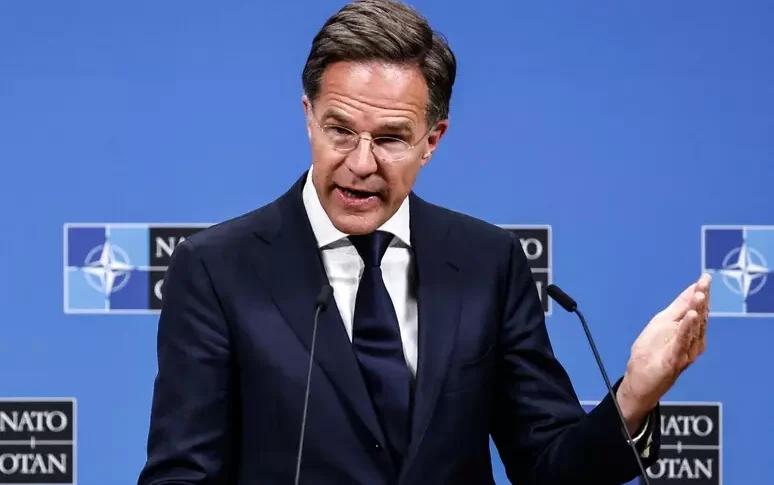
“It is one of the options that are evaluating themselves,” explains a source to the Ansa stressing that at the moment there is still no necessary consent. A little bit because the US has not yet dissolved the reserve, a bit because the Polish operation has been judged “a success” – the word of the supreme commander in person, the US General Alexus Grynkewich – and therefore there would be no need to ‘overdo’. The Ukrainians, of course, would not be looking forward-no one is more advanced than them in the technique of combating low-cost threats. Whether it is, the general secretary Mark Rutte designed the political framework within which the alliance is moving. “Whether the attack was intentional or not Russia violated NATO aerial space, on a scale never seen before,” he stigmatized at the press conference. “Therefore we are clearly demonstrating our determination and our ability to defend our territory: and this is precisely the purpose of the east sentinel”. The operation promises to be huge.
“Although our attention is immediately turned to Poland, this situation transcends the boundaries of a single nation: what affects an ally affects all of us,” said Grynkewich promising a strengthened deployment “from the Baltic to the Black Sea to the Mediterranean”. The allies therefore have already begun to announce the deployment of forces and abilities. Denmark will contribute with two F-16s and an anti-aircraft frigate, France with three rafale and Germany with four Eurofighters. The United Kingdom also expressed its willingness to provide support. The Supreme Command will also work “in close contact” with the Allied Command for the transformation, as continued to do with the Baltic Sentinel operation, to “experiment and rapidly put new technologies on a scale, such as sensors and anti-drone weapons to identify, trace and break down the aircraft”. Here, this is not a secondary step. NATO is satisfied with the operation there are those who point out how drones demolished in Poland have been a minority compared to those detected. And thanks to the use of very sophisticated and very expensive weapons. In short, NATO could be more ready for yesterday’s wars than today (or tomorrow). Grynkewich has not beaten an eye. “Whether it’s a pilot or our earth staff, I don’t want them to think about costs but to defend us adequately”. But, in fact, there is a theme of technological updating and this is why the transformation command – in charge of innovation – is now strictly involved. “If it was still needed, the Polish case clearly shows how correct the choices taken to the Hague are,” comments a diplomat.
The multidominum activity “will begin in the next few days” and will continue for an unspecified period of time. The details, as well, are somewhat narrow. For now it is only known that the operation will be “flexible and agile, ensuring even more targeted deterrence and defense when and where necessary” and that it will include “further enhanced skills, it will integrate aerial and terrestrial defenses and will increase the sharing of information between the nations”. Moscow, it is the message between the lines, from now on you think very carefully about what she does and how it does.