

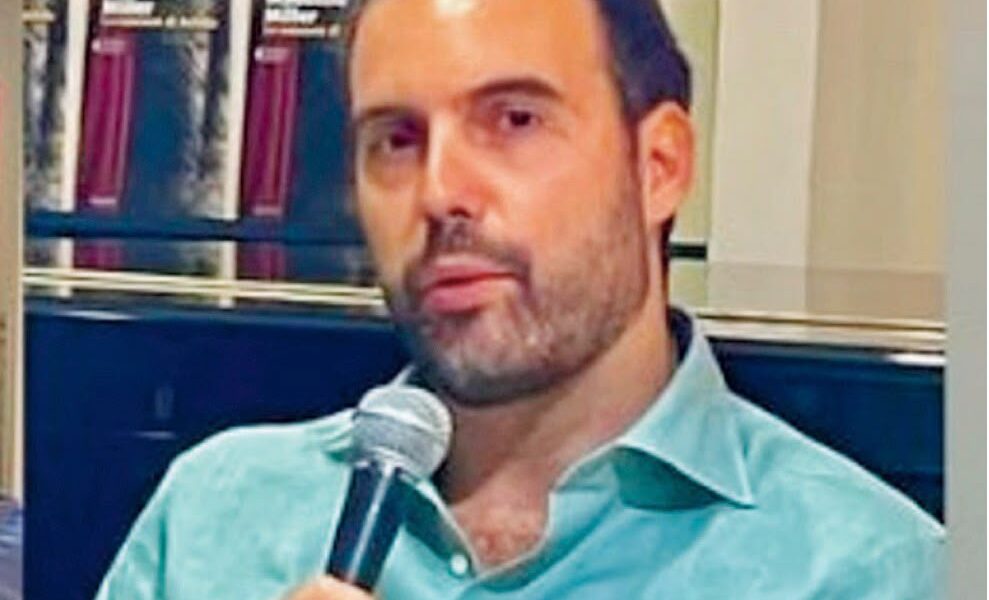
There are novels that are born from a memory, others from a suggestion. And «Mavaría» (Einaudi), the beautiful debut novel by the Syracuse cardiologist and researcher Antonio Popolo Rubbio, was born from a memory which then became a suggestion and at the same time a research, since Popolo Rubbio found many indications in the ethno-anthropological heritage collected by Giuseppe Pitré. Memories and suggestions that inhabited the magical room of Popolo Rubbio’s childhood and were awakened in the present of a scholar who wanted to give a narrative status to the mysterious presences of the “mavàre”, also thanks to the good fortune of having known some of them, including the grandmothers, his “silent mavàre”, with a story of common people with their common lives, their mistakes, pain and superstitions.
From that powerful archaic that continues to exist in Sicily, in the form of practices described in the novel, Popolo Rubbio drew the first suggestion for a subject to which having grown up in a microcosm of aunts, uncles and cousins contributed, having entered the family universe of the novel. Which is the story of a lineage, that of the Bonsangue, which begins in the first decade of the twentieth century with the “patriarch” Prospero who, after a peaceful childhood in the hills of Pietraperzia (in the province of Enna) and then the beastly work of the sulfur mine, finds himself an infantryman in Libya during the Italian-Turkish war. This is the beginning of the lineage, told layer by layer, in the succession of years that adapt to disappointments and small dreams devoured by life itself. When the “marriage adventure” begins for Fortunato, Prospero’s son, with Caterina, at the end of the war, in Ortigia, with a male world with its prerogatives and a female world from which one expects the perpetuation of things and not the affirmation of one’s desires, “the family evolution” seems to go forward, despite certain shadows of Prospero lived in Africa, secrets hidden in certain rediscovered papers that Fortunato decides to entrust to the waves.
«But certain things, when they don’t find peace, learn the way back. A bit like sins”, this is the author’s first clue for a story that continues within that web into which all families fall. Caterina, although she has given birth to five children, always has an aura of sadness, aware that being parents and being children does not mean ensuring a form of salvation, but that, on the contrary, it is life itself that distracts the lineage from small useless securities. Thus the death of one of her children becomes for her the sign that an ancient “mavarìa” dominates the family, a heavy burden to carry, despite the passing of generations, marriages and children and the changes that open up to the future.
A future that seems nebulous for the fragile Orpheus, the last of the line, son of Carmelo and Brigida. Therefore Brigida, who has done everything to tame the dissatisfaction that has inhabited her since she was a young girl, making a change for her family with the move to Catania, fears that that mavarìa could, once again, get to her. So she knocks on the door of a neighbor, Amarilli, a mavàra, for some a woman of light, despite the load of shadows she carries, for others a witch. But perhaps we need to question ourselves rationally about that “evil eye” whose fear has weighed on the destinies of the family group and with the help of science fight with other tools against that evil. Or even try to tell it.