

Google Discover

Preferred Sources
“I can’t find the words!” It’s a phrase that Dino Petralia from Palermo will never use. He could be accused of forgery, which is not nice for a magistrate! Not even if he accompanied the assertion with that “hard-working sentinel” which, in his opinion, is the exclamation point. The point, this time in a metaphorical sense, is that it is the words “that come towards him without him looking for them”, to cajole him, seduce him and possess him completely. It is no coincidence that, after a career at the top of the judiciary, culminating in the positions of general prosecutor in Reggio Calabria and head of the Penitentiary Administration Department in Rome, Petralia, now retired, also discovered the pleasure of writing fairy tales for children.
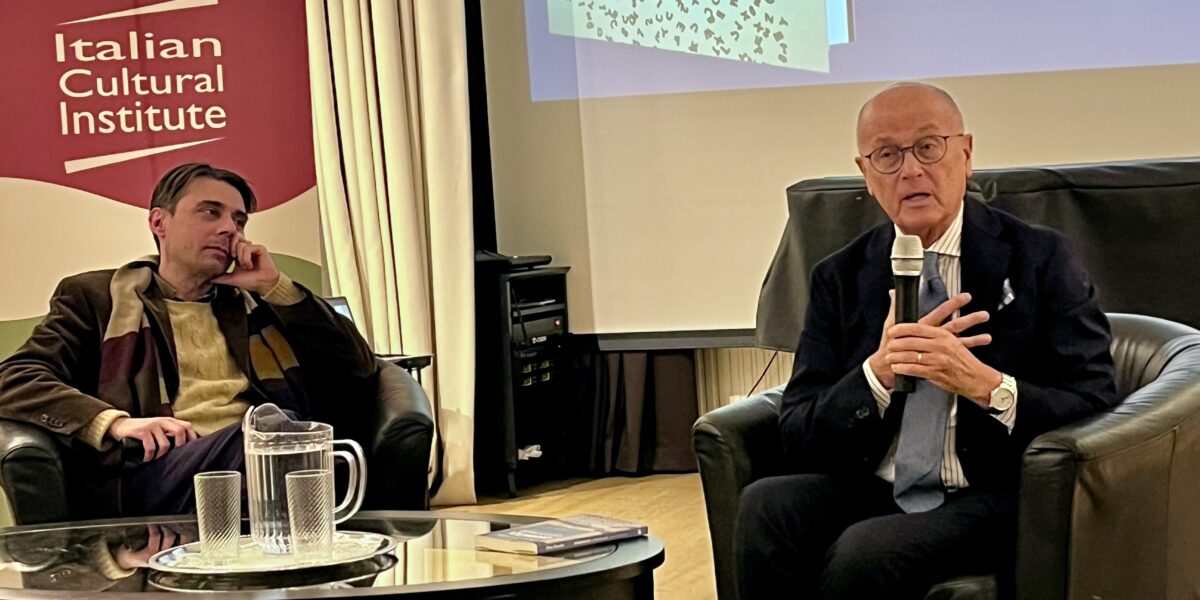
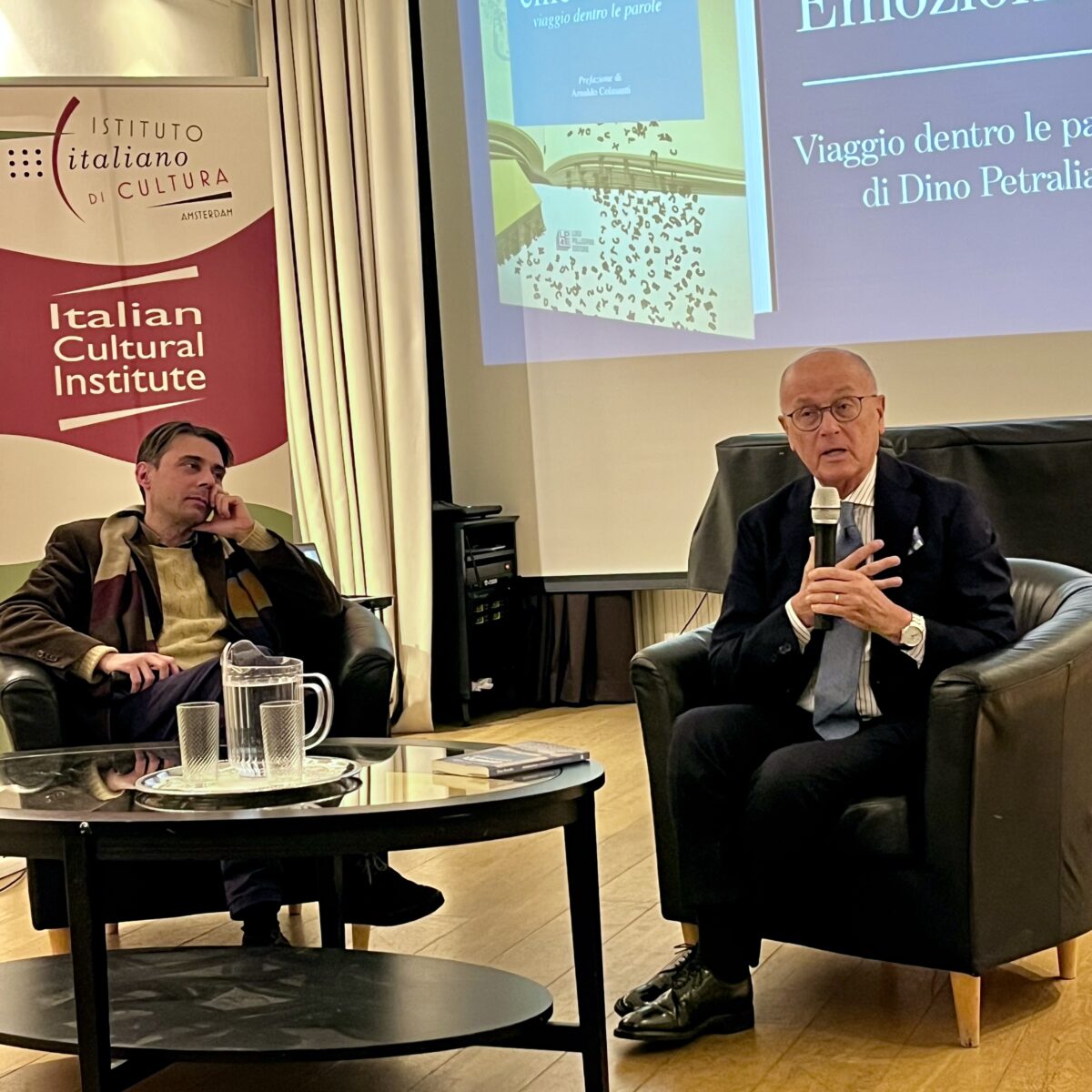
He is attracted by words and has fun and enjoyment with words. This was felt in Amsterdam, in the crowded headquarters of the Italian Cultural Institute of the Italian Embassy in the Netherlands, where Petralia, accompanied by his wife Alessandra, presented his book “Emotional Grammar”, in dialogue with the director of the IIC, Veronica Manson, and with Gandolfo Cascio, poet and scholar, professor of Italian Literature at the University of Utrecht. In the city of the sumptuous splendor of museums, where Rembrandt, Van Gogh and Vermeer speak to the world, Petralia exhibited the great beauty of the Italian language, with an at times ironic but intense tone, aware of the extraordinary richness and expressive flexibility of the idiom of Dante and Leopardi.
Her own cultural journey can be defined as an inexhaustible “journey inside words”, as stated in the subtitle of “Emotional Grammar”, a delightful and crackling “hybrid work” published by Luigi Pellegrini, where, as Arnaldo Colasanti writes in the preface, Petralia places, with “genial nonchalance”, “the language on the stage of human chatter” and “makes folds in all the variable and invariable parts of speech, presenting them as if they were the wives of a little fishermen’s island”.
Nouns, verbal forms and the whole “articulated relationship” of the Italian lexicon and syntax, including punctuation, parade without shyness on the catwalk, annotated by a sensitive critic who stages and humanizes the grammar, with elegant, refined, always enjoyable writing. In short (“holy word”, according to the author, and “verbal passepartout that lives by its own light”), a true pleasure, suspended between divertissement and philosophy of language, because words “have an ethics and an aesthetics, they generate emotions” in the labyrinth of the mind. Think of the emotional power of the adverbs “distractfully” and “badly”, the latter also used as an adjective in Naples. And how can we not appreciate the definition of the period as a presumptuous and assertive commander and of the comma as a “bewitching female who winks at the period”?
To get into the mood of the book, it is useful to know that Petralia, granddaughter of an elementary school teacher, enjoyed listening to it as a child, acquiring confidence and love for the word, which “lives above all in thoughts and dreams”. This also explains the notebooks, jealously guarded in the bedside tables, where some write down the thoughts developed during the night, in the creative solitude of internal dialogue.
The expressive research of Gandolfo Cascio vibrates along the same emotional lines. As a Dante scholar, he does not like the abuse of English words in conversation, rather appreciating the rhythm and natural harmony of Sicilian, which curiously shatters time, often using the past instead of the future. Two different sensibilities, therefore, but united by the same belief: words are never simple neutral tools of communication. They bring with them history, sound, images, emotions.
Certainly the word is crucial in political communication, where language however uses “empty simulacra”, warns Petralia, and the great absence is the contents. Moreover, the horizon does not look promising. Communicative isolation looms and a future that is increasingly word-thief looms.