

The University of Calabria has brought an innovative latest generation robotic bronchoscopy system to the Annunziata Hospital, the first in Southern Italy from Rome downwards. This is the “Ion” endoluminal system which will work in synergy with the “da Vinci Single Port”, for minimally invasive surgery. For the first time, in Calabria, early diagnosis and surgery can communicate through tools designed to work continuously, offering patients quicker and more targeted paths.
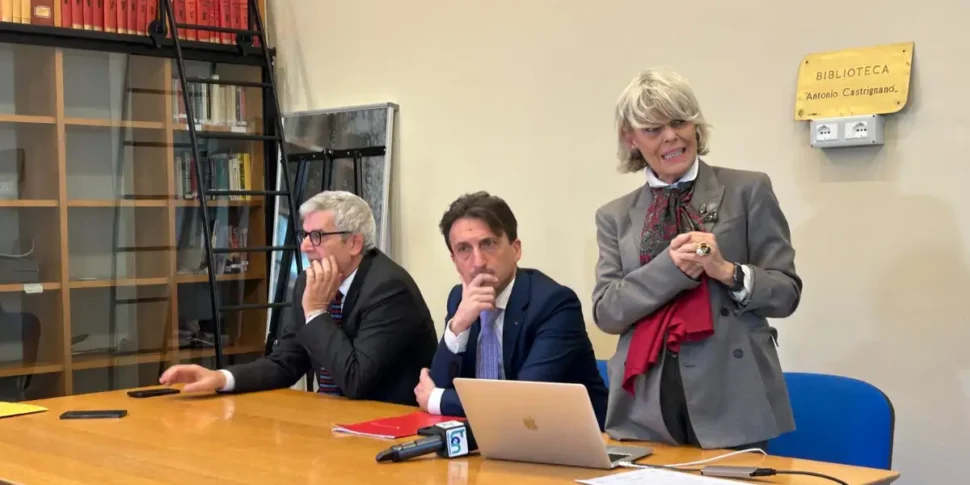
The innovative characteristics, the clinical and surgical applications and the future prospects of the two robotic systems were illustrated during a press conference attended by the Rector of Unical, Gianluigi Greco, the General Director of the hospital, Vitaliano De Salazar, Professor Franca Melfi and the Directors of Operational Units Michele Morelli, Michele Di Dio, Andrea Bruni, Flavio Fedele, Maria Raffaella Ambrosio and Tommaso De Bartolo, who use the new robotic platforms and support and integrate the diagnostic and clinical path.
Fewer “journeys of hope” thanks to technological innovations
The Rector Gianluigi Greco underlined how: «Bringing technologies like Ion and da Vinci Single Port to the Annunziata Hospital is not only a big step for Calabrian healthcare, but a concrete example of what it means to create a university together with the territory, putting one’s skills at the direct service of the community. The medical health area has a strategic value and we must strengthen the dialogue between scientific knowledge and people’s real needs. Bringing advanced technologies into clinical practice means translating knowledge into concrete opportunities: more timely diagnoses, more sustainable treatment paths, greater quality of life for patients. This initiative demonstrates how innovation must become a shared good, especially in disadvantaged regions like ours. Reducing healthcare migration, offering high-level responses here in Calabria and strengthening trust in local healthcare are objectives that fully coincide with our institutional vision. The University of Calabria will continue to invest in collaborations capable of generating public value, so that scientific growth always has a human and social impact.”
«Technological innovation is not just an investment in tools, but a strategic choice of vision – declared General Director Vitaliano de Salazar. – We are building a modern, efficient and sustainable healthcare model, in which technology becomes an organizational, clinical and management lever. The Annunziata hospital is increasingly emerging as a technological hub in the South in healthcare processes, capable of attracting skills, innovation and professional quality, putting the patient and the safety of care at the centre.”
Ion, the “navigator” that reaches the most hidden nodules
The first device is an advanced robotic navigation platform for the tracheobronchial tree called the Ion Endoluminal System, developed by Intuitive Surgical, the same company known for the Da Vinci surgical robot. It is a system designed to perform minimally invasive lung biopsies, in particular on peripheral nodular lesions, i.e. located in the most difficult to reach areas of the bronchial tree. Its ability to maintain stability and control allows it to reach nodules that in the past may have been more complex to explore. Once the desired point has been reached, the doctor can take small samples in a targeted manner, increasing the chances of obtaining clear answers already in the early stages of the diagnostic process. This approach helps to overcome the logic of prudent waiting, instead offering the possibility of quickly clarifying the nature of a suspicious lesion.
The technology is recent in the European panorama: the system obtained the CE mark (the authorization necessary for clinical use in the European Union) at the end of 2024. In the United States, however, it was introduced as early as 2018. In just a few years, the results obtained in the diagnostic field have favored a very wide diffusion: around 1,000 robotic bronchoscopy systems are in use in the USA today. In Europe, growth is more gradual, mainly due to the high costs of the platforms, which represent the main obstacle to their large-scale implementation.
Da Vinci Single Port, surgery through a single access
The da Vinci Single Port represents an important evolution in robotic surgery. Its distinctive feature is the possibility of operating through a single access, limiting the physical impact of the intervention. The surgeon works with an extremely clear vision of the operating field and with instruments capable of moving with great freedom and precision, even in complex spaces. This translates into a more controlled and, for the patient, less traumatic surgical experience. Reducing the number of incisions means reducing post-operative pain and promoting faster recovery. The system also expands the possibilities for intervention in delicate anatomical areas.
In Italy, robotic bronchoscopy is present in a still limited number of centers, mainly highly specialized facilities. These include the European Institute of Oncology in Milan, the Spedali Civili in Brescia, the Policlinico Sant’Orsola in Bologna and the Policlinico Universitario A. Gemelli in Rome. With the activation of the system in Cosenza, the number of Italian structures equipped with this technology rises to around six, and for the first time one of them is located in the South of the country.