

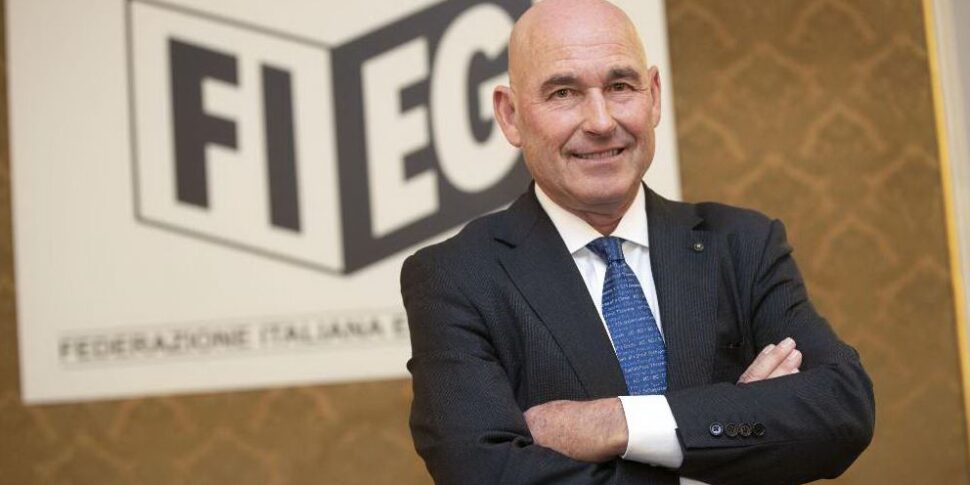
In the last ten years «unfortunately the situation for the information sector has always been in regression. The decline in turnover, the decline in advertising is constant. This is why we ask for a stable budget law and certainly urgent interventions for the supply chain.” This was reiterated by Andrea Riffeser Monti, just re-elected for the third mandate at the helm of Fieg, during the meeting on support measures for the sector in the maneuver which took place at the headquarters of the Italian Federation of Newspaper Publishers in Rome. An appointment attended by the undersecretary of the Presidency of the Council with responsibility for Information and Publishing, Alberto Barachini and majority and opposition parliamentarians who signed amendments to the budget law: Gerolamo Cangiano (Brothers of Italy), Maurizio Casasco (Forza Italia – Berlusconi President – EPP) and Stefano Graziano (Democratic Party – Democratic and Progressive Italy). At the center of the discussion was the examination of the proposed changes to the budget, in particular on the strengthening of the Publishing Fund and the increase in resources for the tax credit on paper and early retirement.
Particular attention was also paid to the new structural financing methods of the Fund, such as the use of an incremental share of the revenue from the web tax and a contribution from digital content distribution platforms. «In the maneuver we have already included important resources regarding changes in the editorial staff and also regarding some costs that publishers support – reiterated Barachini – such as the cost of paper which has grown exponentially in recent years. We are also trying with parliamentary forces, in agreement with the majority and the opposition, to include measures that can allow a part of the web tax imposed on digital services to benefit publishers, because in our opinion the distribution of content must contribute to the costs of those who produce original content, which involves the work of many people”.
Riffeser Monti recalled that «around 100,000 people work in this sector and give life to citizens, because without quality information citizens are disoriented, indeed they can have completely different orientations. There is more fake news than real news, so this sector needs to be reformed here” he added. What happened “is also the fault of the publishers: to save money, to keep the companies afloat, we reduced the quality of the paper, reduced the numbers sent, reduced the quality”. Barachini explained that he had received a letter from the National Press Federation asking for support measures to be linked to the journalistic contract and fair compensation: “This is not legally feasible but it is equally true that by helping the sector these long-standing issues can also be closed.”
The Undersecretary for Publishing thinks that «there could certainly be new developments on the journalistic contract next year – he explained -. It is a question of finding a synthesis between the legitimate requests of the categories of journalists and the requests of the editors who also want to reshape the work of journalists or lead journalists to do new tasks. I think and am optimistic that a solution can be found, perhaps also thanks to interventions in support of publishers.” As regards fair compensation, “there is still a large distance, but on this too we hope to be able to soon propose solutions to find a balanced synthesis between the two instances”.