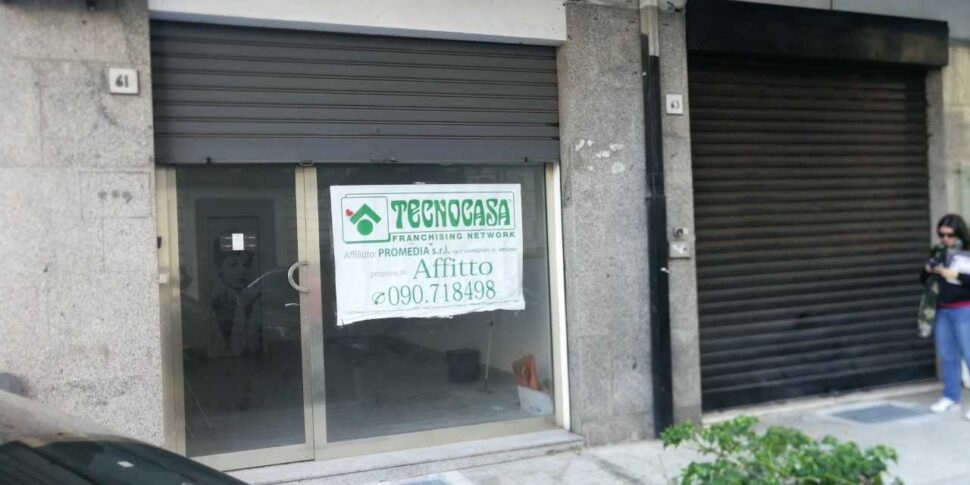
“Closing of many businesses in the city and, in general, crisis of trade and crafts in Messina”. It is the agenda of the extraordinary session to be held today, starting at 13.30, at Palazzo Zanca. A meeting that had been requested by several parties, a sort of call, for institutions, institutions and organization of category, to the bedside of the great patient: trade. The risk is that a very serious question, with even dramatic implications, crucial for the Messina economy founded on the tertiary sector, is trivialized with considerations and analyzes detached from any reality, such as attributing the closure of the windows to the fact that or not there is a ‘pedestrian island or a limited traffic area.
«Between 2014 and 2024, about 630 stores lowered over 140 thousand at national level. Impressive numbers that outline a dramatic portrait of the effects of the crisis of commerce that is heavily involving our region and city ». Who writes it? The Confesercenti of Trento, referring to the capital and the whole of Trentino, a region that we usually consider rich and privileged compared to the lands of the deep South. And we still read: «To realize it, just a simple walk in the streets of the city center and in the heart of the Small centers, where there are numerous empty windows, evidence that it also negatively affects the quality of life, with the network of small commercial activities that represents an added value on a social level, as well as economic “. Mal Comune Half Gaudio? Not really, however, the problem must be tackled in all its facets, starting from a vision that cannot fail to be general and, therefore, extended to most urban realities in Italy and perhaps in many other parts of the old continent.
What are the common problems? We limit ourselves to two: 1) Fixed costs of managing activities, that is, increasingly expensive rents and bills. 2) the unstoppable growth of e-commerce, With competition that in other times and contexts we would have defined absolutely “unfair” and which today, however, appears as a symbol of freedom of choice, which allows consumers to buy online to save money. Nobody takes me into account that the large multinationals of e-commerce and online stores are not tartured by Balzelli and tasks reserved only for those who manage businesses in the cities.