

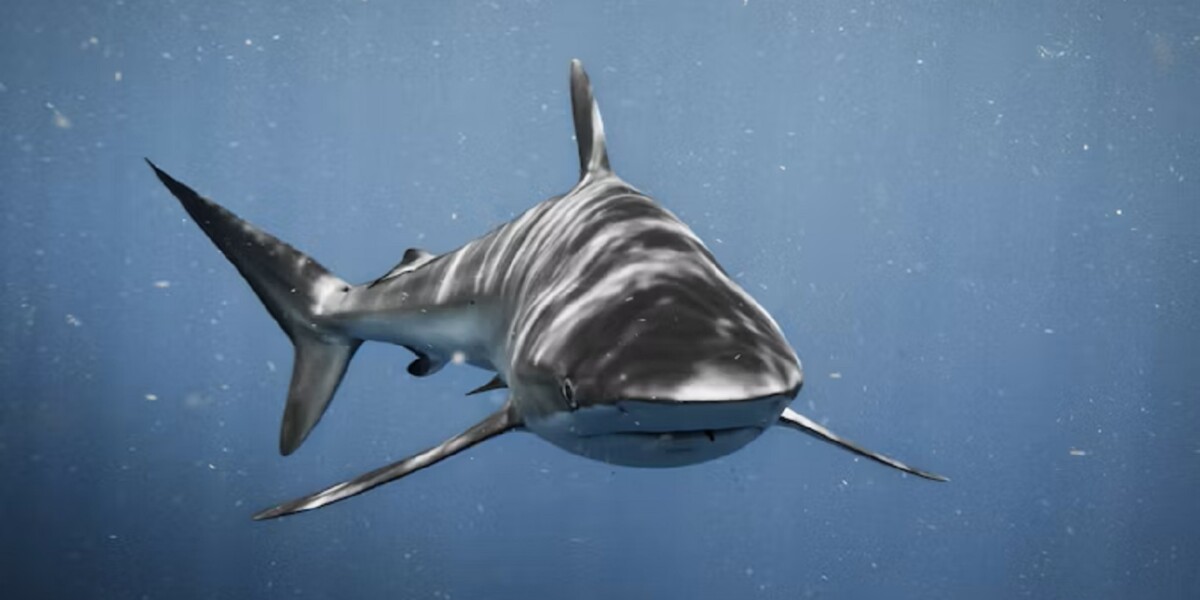
Swimming next to a shark, recovering, publishing. It is the sequence at the center of a debate that the BBC has rekindled by reconstructing a series of close encounters that ended badly and then went viral: according to the British broadcaster, at least three creators have been bitten by a shark in less than a year. The three events, however, are not superimposable.
The three cases
On January 9, Brazilian lawyer Tayane Dalazen, 36, was bitten on the thigh by a nurse shark while snorkeling in Fernando de Noronha – the BBC describes the specimen as over two meters long. She escaped with two stitches and published the video herself, which went viral; she clarified that she did not enter the water to produce content and then told the broadcaster that she later discovered that the organizers of the excursion were feeding the sharks to get them closer to the tourists. In July, New Zealander Henry Gibbs, a creator of the fishing industry, was bitten by a gray reef shark in Fiji while he was spearfishing: the scene was recorded by his video camera, but he had not dived to film the animal. He has had four surgeries and a skin graft. In November, a 26-year-old Chinese tourist was bitten on the wrist by a nurse shark while diving in the Maldives.
What the data says
Researchers fromInternational Shark Attack Filethe University of Florida’s database that tracks shark bites, told the BBC that they have observed an increase in cases among those trying to recapture the animals for three years. The overall risk remains very low: in 2025 the archive confirmed 65 unprovoked bites in the world, nine of which were fatal, in line with the average of 61 in the previous five years. However, one piece of data must be read carefully: the ISAF classifies as “provoked” the bites suffered by those who touch or annoy the animal and those in underwater fishing, which therefore remain outside of that count.