

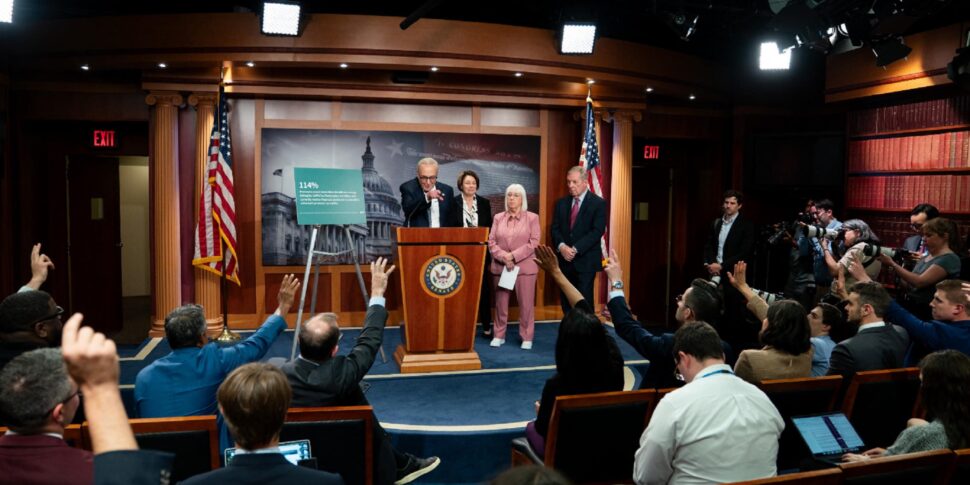
In the United States, the feared Shutdown, the budget paralysis that involves the suspension of hundreds of thousands of federal employees and the closure of numerous fundamental public programs and services.
The budget paralysis will lead to the stop of the non -essential activities of the federal government, the closure of some public services and the dissemination of problems and inconveniences in numerous sectors, in particular in transport. The most striking previous one dates back to 2018, during the first term of Donald Trump, when the federal government remained closed for 35 days.
On average, from the first Shutdown of 1976, the paralysis lasted about eight days. The public employees considered “essential” must continue to work, but without salary. The military in active service, safety forces, border staff, flight controllers, in addition to the maintenance of electrical networks and the hospital health service are included in this category. The other public employees, classified as “non -essential”, will instead be placed in layoffs without remuneration until a new balance is approved.
The main inconveniences – in concrete terms, this means the total or partial closure of national parks and museums, longer waiting times for safety checks in airports, reduction of inspections on food and environment. Some food assistance programs, including the Wic program intended for women and children of low -income families, could undergo heavy slowdowns.
The numbers – According to an estimate of the Congress Budget Office (CBO) published yesterday, about 750,000 federal employees risk temporary suspension from work. Pensions and health programs intended for elderly and low -income people (medicate and medicaid) will continue to be financed, but the new requests for registration could undergo delays. During the 2018 Shutdown, around 10,000 questions per day were postponed.
Another effect will be the delay in the publication of important economic statistics, increasing uncertainty on the markets. The impact of the Shutdown could be even more marked if the White House will put its threats into practice: the reduction of federal staff placed on forced leave could become permanent, recently warned the director of the Budget of the White House, Russell Vought.
Paralysis continues until the political arm wrestling continues and neither parts will make concessions. A little over a year from the mid -mandate elections of November 2026, which could question the presidential majority, the electoral considerations risk prevailing. The only certain thing, at the moment, is that the longer it will last, the more the American economy could come out weakened.