

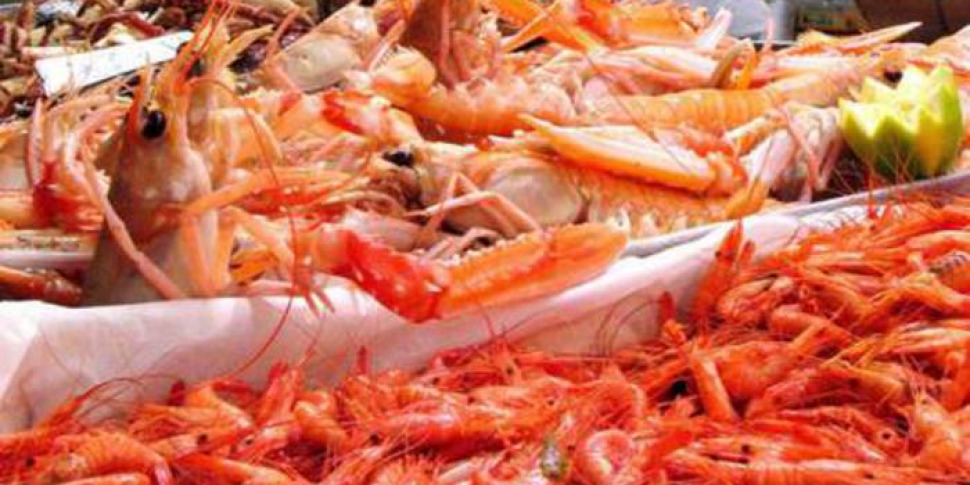
What is about to arrive on Italian tables will be a Christmas dedicated to “expensive fish”. According to the latest estimates from Confcooperative Fedagripesca, overall spending on fish dishes during the holidays will see a surge of 20% compared to last year, reaching 792 million euros.
It’s the fault of a sort of “perfect storm” that hit the sector, pushing prices upwards. In the dock there is not only galloping inflation, but a mix of structural and contingent factors: from the additional fishing closure of a month in the Tyrrhenian Sea to the adverse weather conditions in December, which drastically reduced trips to the sea and the availability of fresh product. Despite the prices, the tradition shows surprising resilience.
8 out of 10 consumers will not give up at least one fish dish on the table
The survey reveals that 8 out of 10 consumers will not give up bringing at least one fish course to the table, confirming the primacy of clams and seafood for first courses and fresh fish for second courses. The analysis of wholesale prices developed by Bmti, the Italian telematic commodity exchange based on data from the Italmercati network, illustrates a critical situation for the most sought-after products.
The prices of prawns and octopus are up
Prawns, the protagonists of festive menus, have reached prices between 18 and 23 euros per kilo, with a jump of 22.3% in just one week. Things are no better for octopus, which has already broken through the ceiling of 20 euros per kilo (+5%), with an upward trend that shows no signs of stopping in view of December 25th. Clams, the iconic symbol of Christmas Eve, deserve a separate chapter. The sector is still in check due to the blue crab emergency, which has decimated production. With prices starting from 18 euros per kilo and increasing daily, many consumers are falling back on lupine clams, which are more abundant and accessible at around 5.50 euros per kilo. However, positive signs for the recovery of veracity can only be seen in 2026.
An increasingly scarce local product
The scarcity of local products is also influencing geographical dynamics: if squid from the Adriatic stands at around 20 euros per kg, that from the Tyrrhenian Sea reaches 30 euros due to lack of supply, pushing the market towards massive imports from France at around 15 euros per kg; Always pay attention to the label to discover the origin. Even farmed fish and products from Northern Europe are affected by the moment: Italian sea bream and sea bass start from 12 euros per kg, while salmon stands at around 10 euros per kg. In this scenario of record prices, consumers are looking to technology for help. The use of Artificial Intelligence as a ‘personal shopper’ among fish counters is growing rapidly: AI is consulted to verify freshness, traceability and sustainability, as well as to obtain anti-waste recipes. For those who choose not to cook at home, the answer comes from cooperation. The Confcooperative guide «The taste of cooperation» offers 176 menus in cooperative restaurants, where the quality of the fish is combined with social inclusion, offering an ethical and gastronomic alternative to celebrate the holidays despite the price increases.