

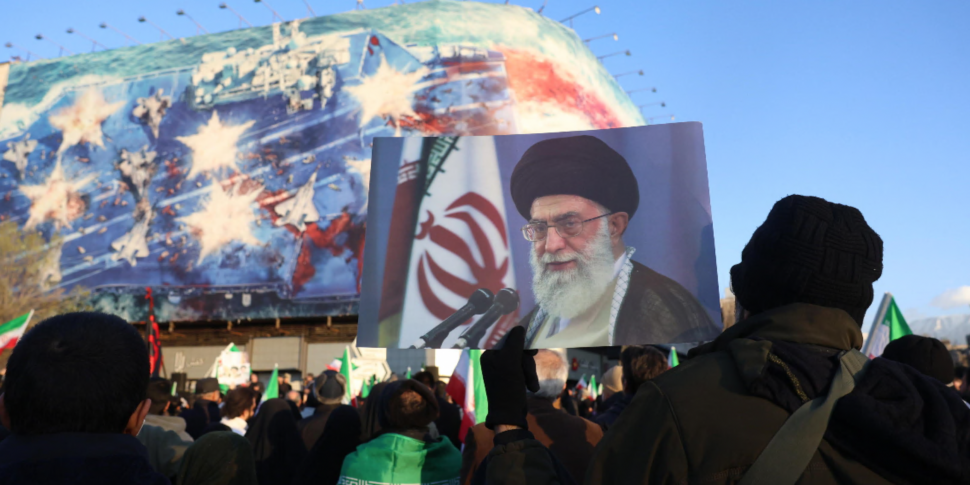
Less than a week after the death of Ayatollah Ali Khamenei, his succession still remains a puzzle, despite the Iranian constitution providing for short times for the appointment of the new Supreme Leader.
Who has the choice?
Formally, the choice is up to the Assembly of Experts, a body of 88 religious people, but in the current phase of crisis, the final decision will be a test of strength between those who want to protect the regime through the son of the former religious leader and those who, fearing internal revolts or collapse, are pushing for a more collegial or moderate leadership. The meeting of experts who will have to choose the new leader could be held by the weekend, announced a member of the council, Ayatollah Hossein Mozaffari. And while the media close to the opposition days ago indicated Mojtaba, the second son of Ali Khamenei, as the successor already chosen, the front of the most reformist and pragmatic figures is trying to carve out a space for itself to avoid a dynastic drift that many, within the regime itself, view with suspicion.
Mojtaba is considered the man of absolute continuity
Mojtaba, 56 years old, is considered the man of absolute continuity and the hard line, despite not having a high theological rank (he is not a Grand Ayatollah). Although Donald Trump has defined him as a ‘featherweight’, he enjoys very deep ties with the Islamic Revolutionary Guard Corps and for years worked in his father’s office, coordinating repression and regional foreign policy. But Mojtaba’s possible rise would also create a fracture within, breaking the taboo of hereditary succession that the 1979 Revolution had tried to break down to distinguish itself from the Palhevi monarchy. Not to mention that in the last few hours doubts about his fate have started to grow again, with several observers wondering about the possibility that the man survived the raid that destroyed the bunker in which his father Ali Khamenei was killed.
The other options remain in the shadows
Alongside the figure of Mojtaba, other options remain in the shadows. Among them is that of Hassan Khomeini, grandson of the founder of the Islamic Republic, who represents a point of reference for the reformist camp: he supports the principles of the revolution but seems more open to dialogue, showing critical signals towards the more extremist wings of the regime. And, again, for days several analysts have also been shining the spotlight on Ali Larijani, former president of Parliament, an expression of the “pragmatic right”. He is described as a balancing figure, capable of communicating with the economic and bureaucratic sectors of the State, and indicated by some observers as a potential guarantor of the transition. Among the creditable names there is also Alireza Arafi, solid theological qualifications, integrated with the system but distant from the intransigence of the security hawks. Also on the table is the name of former reformist president Hassan Rouhani. The choice of the new Supreme Leader, the first entrusted to the Assembly of Experts as required by the constitution (Khamenei was designated directly by Khomeini on his deathbed), will be a signal of the direction that Iran wants to take. And it is not excluded that in the absence of a clear transition, Iran’s elite military force, the Pasdaran, could assume leadership.