

Add the Gazzetta del Sud as a source
The exception to the Stability Pact provided for defense must also be extended to expenses for the energy crisis or the activation of the Safe program by Italy is at risk.
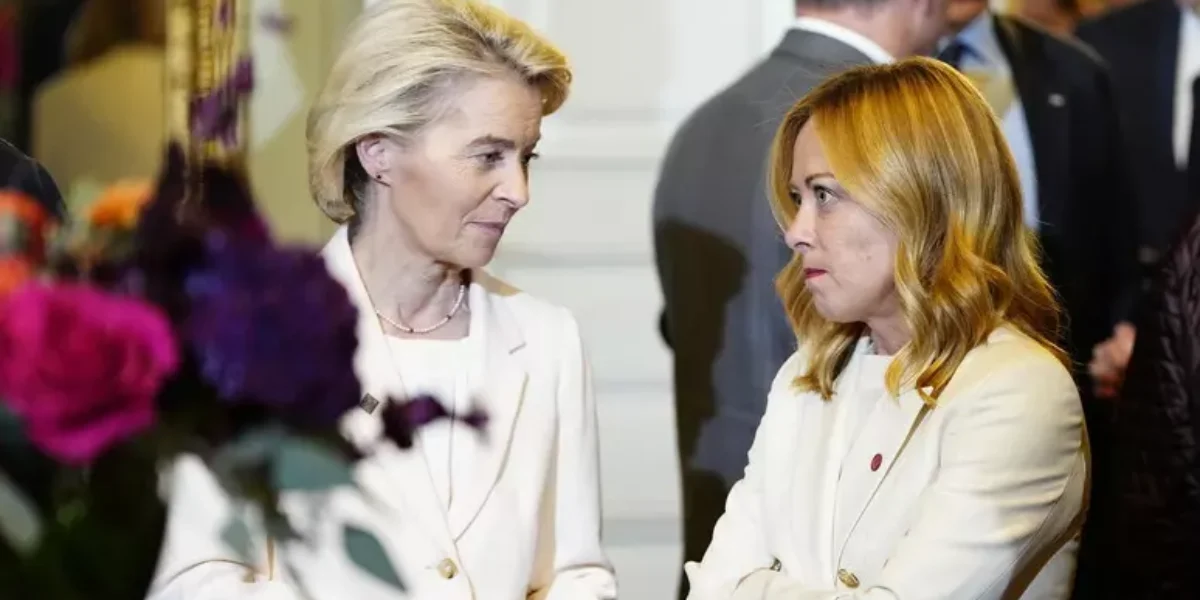
Giorgia Meloni decides to put in writing what she has been saying in international forums for weeks. He does so in an unpublished letter addressed to the President of the EU Commission Ursula von der Leyen, in which the Prime Minister supports a line that already emerged at the informal European Council in Cyprus last April: with the Iranian crisis not coming to an end and energy prices constantly skyrocketing, for the Italian government “it would be very difficult to explain to public opinion a possible recourse to the Safe programme”.
Unless the National Escape Clause – i.e. the derogation from the Pact – agreed by Brussels for defense is also extended to a crisis which, Meloni points out, is today a priority for the entire continent. The letter marks a raising of the level of Italy’s game in Europe. First of all, it responds to the ‘verba volant, scripta manent’ rule, which is taken into great account in Brussels. Secondly, it puts for the first time, in writing, that Italy seriously risks not activating the Safe programme, which for the Commission is a crucial step in building the strategic autonomy of the EU. The risk is that of an open clash with the European executive.
“Our position has not changed. We have presented Member States with a range of options available to them to address the current energy crisis. We are currently not including the National Escape Clause among these options,” explains a Commission spokesperson. In fact, the Commission has always responded to Italy’s initial request – to provide for an ad hoc National Escape Clause for energy – with a clear refusal. The glimmer, in theory, could however open up on the extension under the same conditions of an exemption that already exists, that for Safe.
Furthermore, Meloni’s letter responds to the tensions that have emerged in recent days in the government regarding the activation of defense contracts envisaged by the program. Only three days ago, Defense Minister Guido Crosetto explained that he had written twice to Economy Minister Giancarlo Giorgetti to understand how to proceed, as the green light from the Mef was necessary. The answer, in fact, came directly from Meloni. It is no coincidence that League sources explain that the prime minister’s letter “totally follows the suggestions” of Matteo Salvini’s party. More neutral, however, is the comment by the president of Noi Moderati, Maurizio Lupi, who observes: “The delicate geopolitical situation requires a European strategy that provides for a derogation from the Stability Pact for investments in the sector energy”https://gazzettadelsud.it/articoli/economia/2026/05/18/meloni-a-von-der-leyen-deroga-al-patto-sullenergia-o-safe-a-rischio-a7fa46e5-ecf5-4b09-bf49-68aaa7b99216/.”Meloni’s initiative is an important one, it will be at the center of the Plenary of Strasbourg”, assures for his part the head of the Fdi delegation to the EP Nicola Procaccini. The extension of the exception to the Pact foreseen for defense would allow the government to be able to use part of the 14.9 billion allocated by Safe for the energy crisis.
The extension of the excise duty cut expires on May 22. Italy, not having emerged from the infringement procedure, has fiscal margins close to zero. Without the support of the EU, for Meloni the last maneuver before the elections risks turning into a boomerang. “I am sure that the Commission will be able to understand the scope and urgency of this request”, writes the prime minister to number one at Palazzo Berlaymont. Ensuring, on the one hand, Italy’s responsibility for defense commitments but at the same time asking von der Leyen for “the political courage to recognize that today energy security is also a European strategic priority”. But the match remains very difficult, also given the opposing position of the frugals, Germany first and foremost. While France and Greece are asking for something significantly different, making new common debt to deal with the effects of the energy crisis. From now until June, when the 27 leaders will meet again in Brussels, Italy will have to play along with the other big names in Europe so as not to end up in a dangerous cul de sac.