

Faced with a desecrator like Molière, who managed (and manages) to make people laugh by ridiculing misers, misanthropes and above all money-hungry doctors, one cannot speak of a “sacred” text, it would be a contradiction. For this reason, the operation of Stefano Chiodi (director) and Angela Dematté (adaptor and translator) with «The Imaginary Patient» (which concluded its tour in the historic location of the Piccolo Teatro) is pertinent and intelligent, faithful and sincere as well as innovative and open. At the same time it is classic, modern and contemporary, it adds in tones and visions rather than in words, it does not open with the rural prologue but with a German cabaret “ballet” of the 1930s (which, like Molière, had lost the favor of power), acting as a calling card to enter everything that follows.
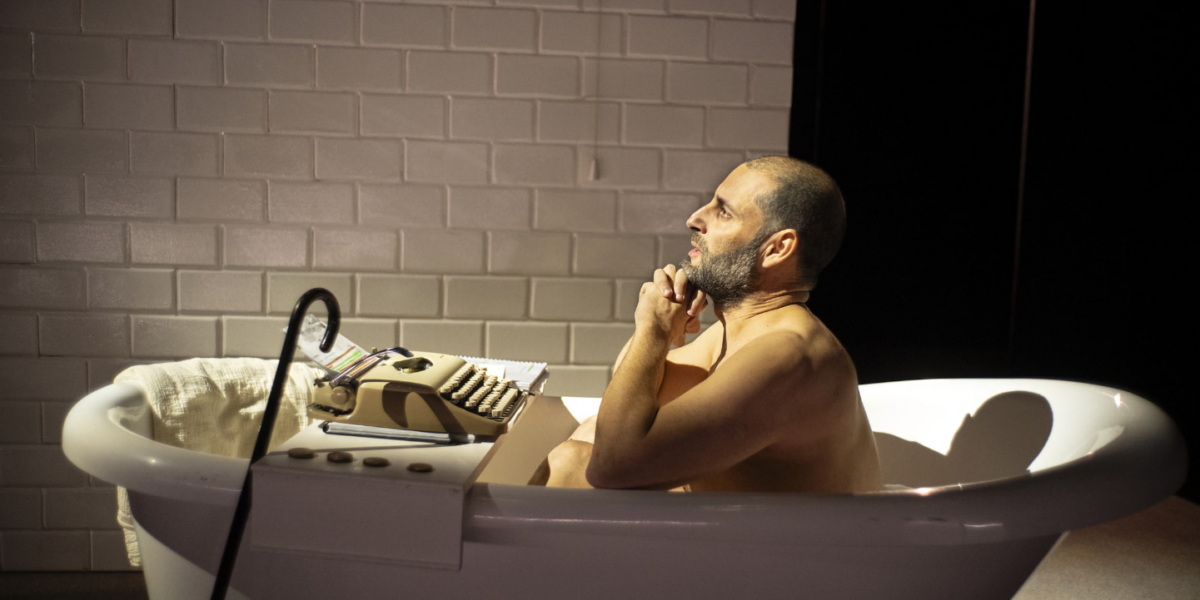
Argante (a Tindaro Granata in full expressive maturity, capable of capturing every nuance of the character) instead of between the traditional bed and desk, moves between the bathtub and the toilet, symbol and truth of his transition from an enema to a purge and vice versa, while from above (a “healthcare” scene by Guido Buganza) looms a chandelier made of syringes and container vases. Starting from scholars who saw in Argante a possible symbiosis with the author (who died in 1673 after an illness during the fourth performance of the comedy), in crisis because he had lost the favor of Louis XIV, the show manages to transmute the two into each other and vice versa. Thus the cry “I am the sick man!” becomes the claim of the author’s and his art’s right to exist and the addition of Molière’s plea to the king is a logical and pertinent consequence.
The show never loses its lightness between Doctor Purgone and his colleague Diarrhea, between the love story of his daughter Angelica and the ability of the servant Tonina (an excellent Francesca Porrini) to reveal the plots of Belina, Argante’s second wife. And the cunning of predatory doctors brings us back today to all the controversies surrounding pharmaceutical companies.
Alongside the Messina (from Tindari) Granata and Porrini, a solid and good cast. Emanuele Arrigazzi (the various doctors) and Alessia Spinelli (Belina) are comedians with an effective sense of proportion, well supported by Angelo Di Genio (Argante’s brother), Nicola Ciaffoni (Cleante), Emilia Tiburzi (Angelica) and Elisa Grilli (Diarroico jr). Production of the Brescia Theater Center with Lugano Arte e Cultura and Viola productions Rome.