

Add the Gazzetta del Sud as a source
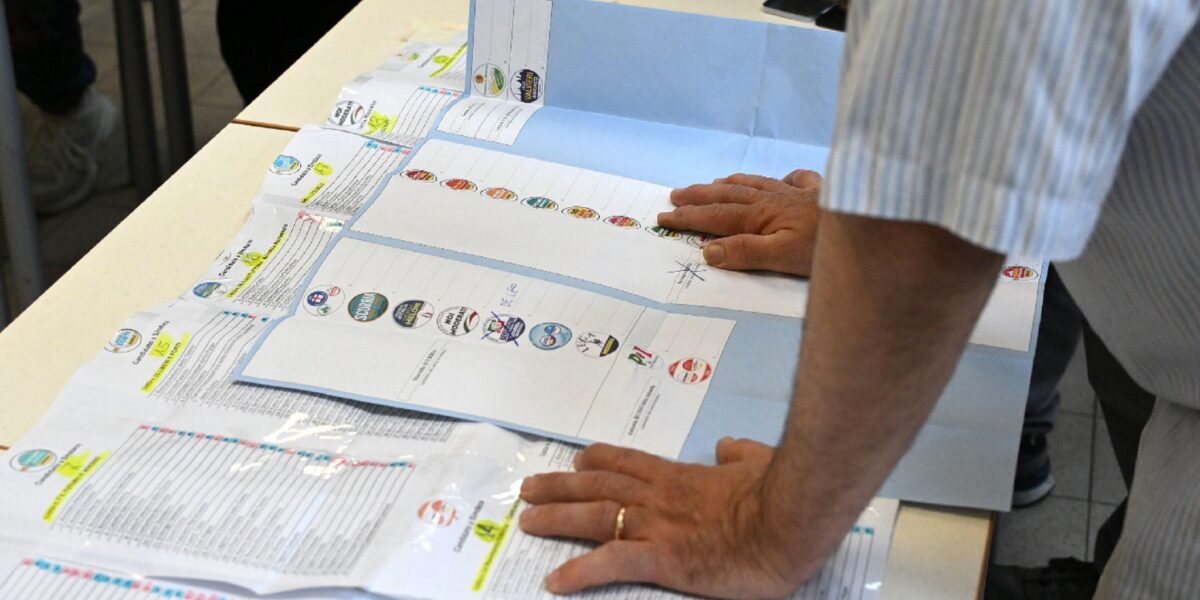
This morning, in the council chamber of Palazzo Zanca, the verification operations of the votes and minutes resulting from last week’s local elections will resume. The Central Electoral Office, chaired by the magistrate of the Messina Court, Giuseppe D’Agostino, will try to close as soon as possible, but there are still various situations in the balance and the impression is that the whole week will not be enough to have the definitive picture.
At the same time, the more political analysis of the session that returned the Italian flag to Federico Basile with clear numbers continues. How did it go, for example, in detail, for each mayoral candidate and for the various parties – and therefore the lists, in the case of the “single-party” South calls North – in the individual constituencies? The clear fact is that Basile won in all seven districts, consolidating his position. But in what proportions? And what results did the other mayoral candidates have?
The third and fifth Constituencies, for example, are those in which Basile obtained the highest disjoint vote in favour: 1,170 preferences more than the lists in the third (Villaggio Aldisio, Camaro, Provinciale, Cumia, etc.), 1,128 in the fifth (Giostra, Annunziata). The lowest disjunction in favor of Basile, however, is recorded in the sixth district (northern coastal area, up to Faro Superiore), with 461 more votes, and in the newly created seventh (the hilly villages of the northern area, from Castanea to Masse, plus the coastal strip up to Orto Liuzzo), with only 114 more votes.
The seventh is also the only constituency in which Scurria obtains a split in favour: 92 votes more than the lists of his centre-right coalition. And it is also the only one in which, instead, Antonella Russo pays a disjunction against her: 37 votes less than her centre-left lists, mainly the result of Castanea’s eloquent data. In all the other Constituencies Antonella Russo fared better than her lists (the boom in the fourth, that of the city center, with 442 more votes), Marcello Scurria instead fared worse, with the greatest gap between votes for the mayor and list votes recorded in the fourth Constituency (361 votes less) and in the third (318).
How did the parties go?
And the parties? The fifteen South calls North lists, overall, obtained more votes in the third and fourth Constituencies, exceeding 12 thousand votes, the Center-right in the third (almost 8 thousand) and in the fifth (6 thousand), the Center-left in the fourth (almost 3 thousand). The internal challenges within the coalitions are interesting, apart from the Centre-left, where the Democratic Party obviously surpassed the M5S-Controcurrent list everywhere. In the centre-right Fratelli d’Italia it was the most voted list in the third, fourth and sixth districts; the Genevesian Popolari e Autonomisti, however, won the internal competition in the second, fifth and seventh Districts (where, probably not by chance, the presidential candidates were Genoese); the League, however, prevailed only in the first constituency, where it pushed hard, for months, on the issue of the Mili plant. In no district did Forza Italia manage to undermine the “podium”, arriving everywhere after the Marcello Scurria Mayor list. The one which, it turned out after the polls were closed, became the “second” Forza Italia list, or evidently the first.
Finally, in the galaxy of lists supporting Federico Basile, the most voted list everywhere was that of South calls North, followed by Basile Mayor and Messina Protagonist.
Curiosity: the Basile Mayor and Scurria Mayor lists are the only ones in which the list votes exceeded the total preference votes, that is, they were those which, more than others, induced the voter to draw a sign on the symbol in a “dry” manner, without indicating any name for the Council.

Find out more in the digital edition
To read everything, buy the newspaper
or download the digital version.