

Add the Gazzetta del Sud as a source
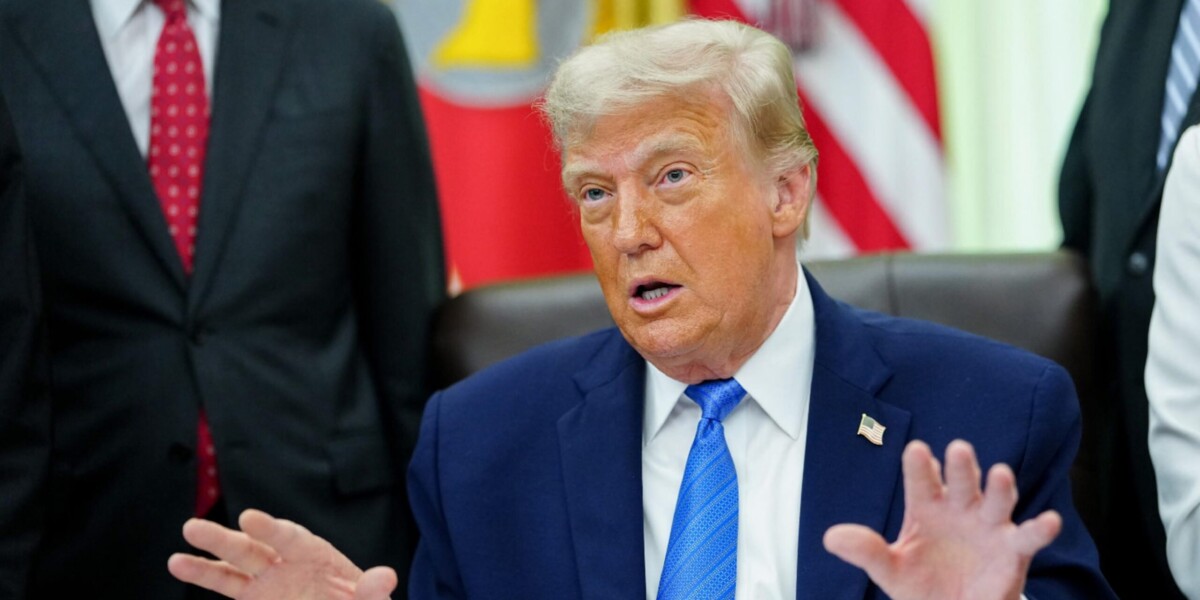
American planes were already “flying over Iran” to launch an attack “even harsher” than that of the previous night. Then, after hours of threats, including to take control of Kharg Island, the about-face. Donald Trump announced on his social network Truth that he had “cancelled the attacks and bombings against Iran scheduled for this evening”, because – he explained – the negotiations, which continued despite the crossfire over the skies of the Persian Gulf, “were brought to the highest levels of the Iranian leadership and approved”, both “on a conceptual level and in detail”.
“The date and place of the signing will be announced shortly”, the president assured in the post, later specifying from the Oval Office that it could take place “perhaps over the weekend in Europe”, on the eve of the G7 in Evian, at the hands of his deputy JD Vance. Immediately afterwards “the Strait of Hormuz will also reopen”, where in the meantime the naval blockade imposed by the US on Iranian ports remains “fully in force”.
The green light from Tehran and the slowdown of the Pasdaran media
In the tycoon’s post there would therefore be a green light for the agreement, which has been on the table for weeks, from the leaders of the Islamic Republic – it is not clear whether from Mojtaba Khamenei himself – which could lead to the end of the war that broke out on 28 February. There are still no direct confirmations from Tehran, nor from the mediating countries, but according to Trump’s post, “all parties involved, including the United States, Israel, Saudi Arabia, United Arab Emirates, Qatar, Turkey, Pakistan, Bahrain, Kuwait, Jordan, Egypt and others” have given their consent.
The Iranian media Tasnim and Fars, close to the Pasdaran – the most extremist wing of the regime that survived the Israeli-American bombs – initially held back, warning that “no text of agreement” had been approved with the United States as Trump claims. “Every hour he tells a lie and boasts,” state TV added. To then open up the possibility that the leaders of the regime “approve” the text which – Fars itself claimed – is the one “proposed by Iran”.
Despite the obligatory prudence, given the repeated announcements of an imminent agreement by Trump which later fell on deaf ears, it was Wall Street who believed in the approach of the signature, with the Dow Jones immediately rising by 1.64% and oil falling by more than 3%.
Qatar’s mediation and the three issues of the negotiation
According to the Axios website, the deadlock was broken by the mission of Qatari mediators who went to Tehran on Wednesday with the aim of finalizing the agreement. Negotiations between Doha envoy Ali Al-Thawadi and Iranian Foreign Minister Abbas Araghchi continued until late at night, arriving at “a shared text that even the United States would have accepted”. “The differences – added the sources of the American website – have been reduced on three key issues” of the negotiation: the mechanism for the release of frozen Iranian assets; the agreements to reopen the Strait of Hormuz during the 60-day ceasefire; how talks on Iran’s nuclear program will be conducted during this period.
Today, according to the same sources, Iranian officials informed several countries that talks in Tehran had produced an agreement in principle, but that Supreme Leader Khamenei had yet to give final approval. The sources also underlined that the American raids that night had nevertheless increased “Iranian suspicions about Trump’s true intentions”. Meanwhile, according to Saudi broadcaster Al Arabiya, Araghchi could fly to Pakistan on June 13.
The day of tension on Hormuz and the threats on Kharg
Trump’s post came after yet another day of tension over Hormuz, with Iran striking three oil tankers in recent days — also killing three Indian sailors — and America’s Centcom targeting another “attempting to transport oil from Iran through the Gulf of Oman and repeatedly refusing to obey orders from US forces.”
The commander-in-chief had also threatened to conquer the island of Kharg “in the not too distant future”. The objective, the tycoon explained, is to take “total control of its infrastructure and its oil and gas market, just like we did with Venezuela”. And Tehran had also flexed its muscles to the new threats, announcing the closure of Hormuz “until further notice”. Everything suspended. At least for one night.