

Add the Gazzetta del Sud as a source
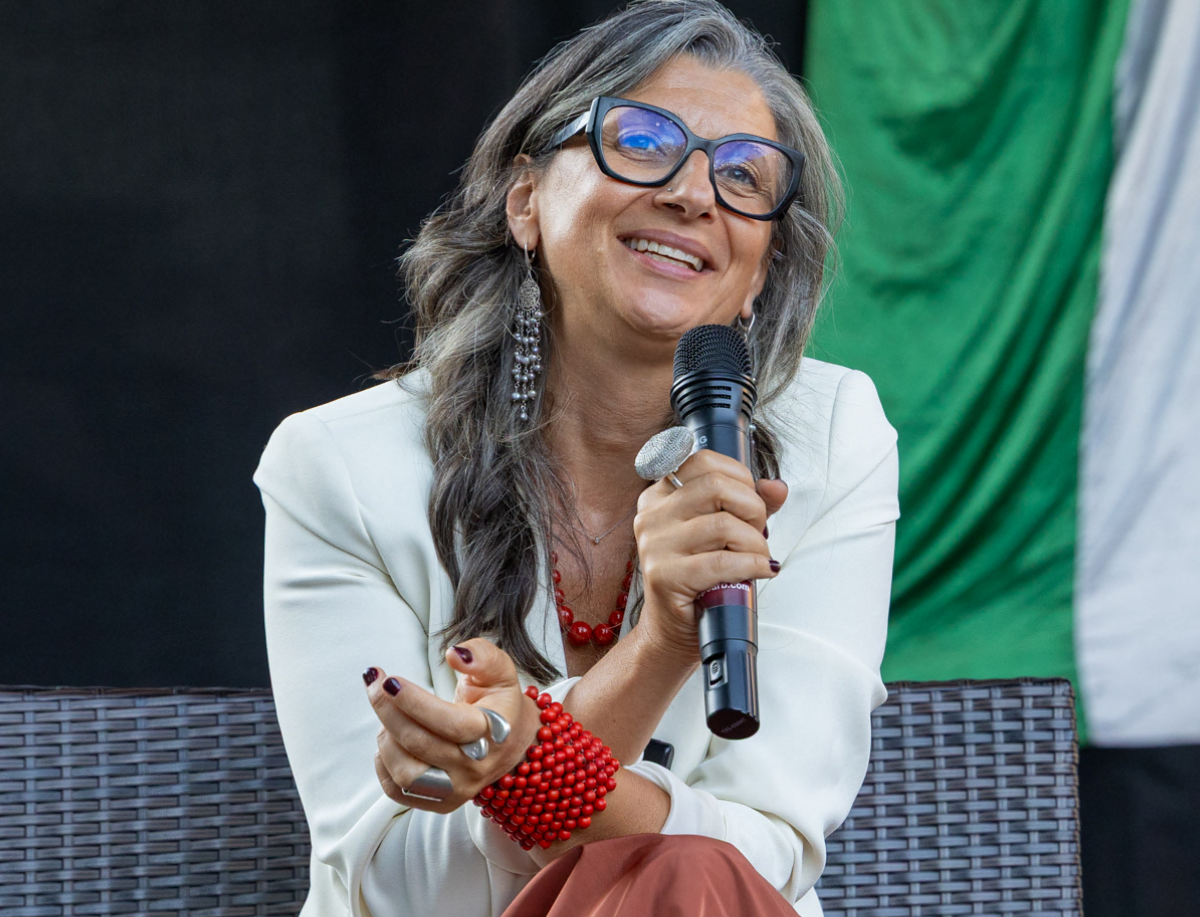
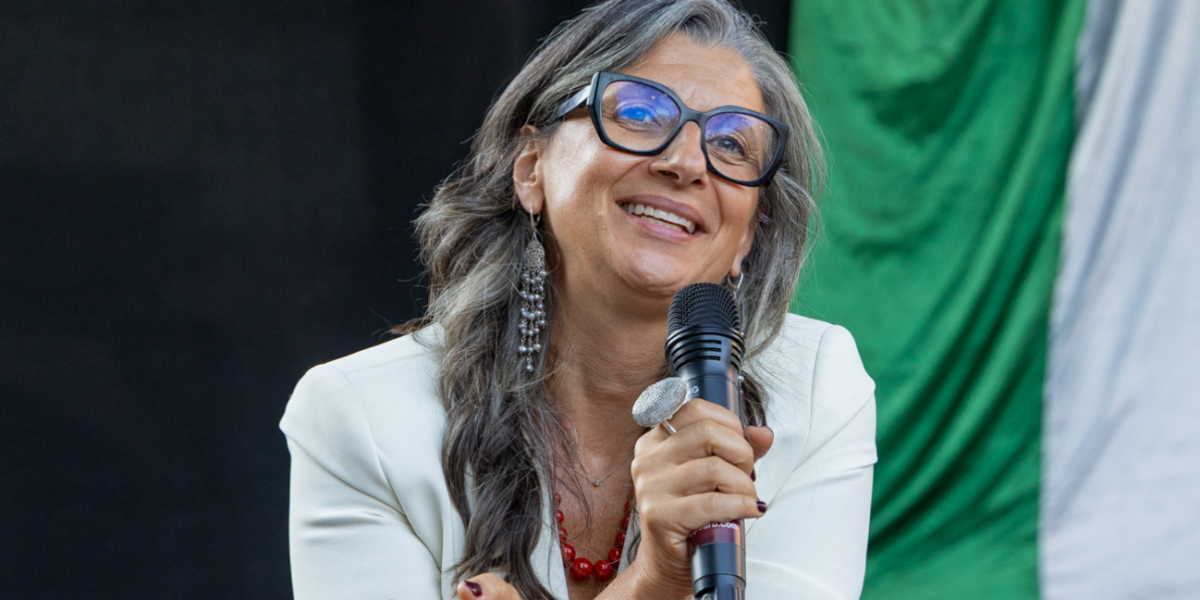
“How can we, powerless citizens, contribute to stopping this entropy of democracy and world freedom?” We ask Francesca Albanese, jurist expert in international law and UN Special Rapporteur on the situation of human rights in the occupied Palestinian territory, guest in Messina, at the Coral Garden, in a meeting organized by Messina-Palestine Coordination and Carmelo Chitè. During which, in conversation with Triestino Mariniello, professor of International Criminal Law at Liverpool John Moores University, Albanese presented her book “The light of awakening. From Palestine to the whole world, a manifesto of resistance and freedom” (Rizzoli 2026).
«We must first of all reevaluate the concept – he told us -, we have a lot of power but we must unite, give meaning to the polis, return to the foundations of politics, because delegating it as it happens doesn’t work. The fact that in the last two years there have been masses of people in Italy and other countries who have managed to make their voices heard, to demonstrate, protest, ask, understand what a genocide is, and see governments that do not respond means that there is an order that is not clear to us. So who do these governments answer to? I insist on this especially here in Sicily, where it is instinctively understood better, because it is fundamental that the anti-mafia culture of this region is appreciated and understood even outside of it. As long as there is silence and indifference, and we don’t understand that true resistance begins with awareness and union, we won’t go anywhere. Why should we be afraid to talk about Palestine even in schools, along with other important topics? Why, in a cross-examination, deny the genocide when on the basis of studies and analyzes we know that the genocide exists? Therefore, no one is useless, but we need to change every day, document ourselves and denounce, persevere and unite.”
And then Francesca was welcomed by a large audience eager to meet her (for the second time in Messina), because Albanese’s relationship with Sicily is special, given that with her husband, the Catanian economist Massimiliano Calì (present in the audience, former consultant for the Ministry of National Economy of Palestine), they are often in the Etna city, in front of whose sea the idea of the “light of awakening” was born, because – Francesca writes in the book – “as much as it is The situation is apocalyptic. I feel that in what is happening in Palestine, in addition to the colossal and inhuman loss, there is a sense of rebirth, of awakening. Like the beginning of an epochal change.”
Hope of awakening that he passionately transmitted to Corallo. But first, to introduce it with the same passion, were Carmelo Chitè of the Messina-Palestine Coordination (a movement established in 2020 «with a very high adhesion of unitary spirit and which proceeds with constructive results», so Chitè), the intense performance of Silvana Urso on the harp, Carmelo Geraci on the accordion and Monia Alfieri who read verses taken from “Maria di Gaza” by the great Palestinian poet Ibrahim Nasrallah, and Mariniello’s lectio who, thanking Albanese «for the courage and dedication with which she defends the law» defined her book as a «necessary shock that opens our gaze to the abyss in which we find ourselves today. And that “light” is a violent light that forces us to see Palestine as a reflection of our time, but it is also hope as a political act and transformative practice.”
And then the teacher focused on genocide as a «process of dehumanization, a fundamental step in humanity’s worst crimes, to “normalize” it, made possible by the silence of governments, to break which international justice is needed. «But perhaps we are at the death of international law? Are we returning to a world governed by the law of the fittest?” Mariniello asked Albanese, who said she was grateful to be welcomed by so many, because “they continue to say that Palestine is of no interest to anyone, and instead Palestine’s call is to make us all feel more human”. «International law – and Francesca insisted on this – is not dead but in order not to bury it alive we must stay within justice. This is a very heavy testing phase, but international law is a “toolbox” that has evolved and improved, but is made up of people, many of whom have weakened.” «Palestine has made us understand – continued Albanese, already sanctioned by the USA (sanctions involving serious financial restrictions), subject to threats and absurd accusations – how great the disconnect is from the constitutional fact that we all experience. What does it mean to be a citizen in this system in which it seems that being a citizen means producing, consuming and then dying? For this reason, young people must go back and read what our country’s fight for the Constitution was, look at history and historical continuity (80 years ago Israel was allowed to illegally take over Palestine), enforce the Constitution, unite and protect the law and all rights”.
And of course he talked about the Holocaust, but he also remembered how easy it is to manipulate the sacred memory of that genocide to justify this other genocide. And he repeated, remembering the thousands of victims, men, women, children whose future was cancelled, how the titles of the chapters of his book are all verbs, therefore actions, because the actions of each of us are the only possible bridge between the apocalypse and the light. Dreaming is resistance, it is imagining among and beyond the ruins, criticizing is discernment (and dispelling the myth of Israel’s democracy), resisting is also acting with BDS (boycott, divestment and sanctions, because Israel does business with occupation), and considering freedom, truth and justice as universal, non-negotiable values. And again, to nourish, to emancipate oneself (stripping patriarchy of its masks and by extension of colonialism), to heal, to cry, to return, to dance because dancing “is coordination, it is politics of the body and of the commitment that each one of us can have for justice and peace”.