

Add the Gazzetta del Sud as a source
Writing? You never know where it takes you. She is the one who guides, takes your hand and leads you towards destinations that you will only discover by living, because “writing is exploration, the pleasure of discovery”. And if the narrative, pushing you along unknown paths, even crosses over into non-human worlds – the animal, mineral, vegetal and even spectral kingdoms – all you have to do is follow it, as if the words had an autonomous life and the writer were their witness, their vassal, their adept. It is the inclusive “creed” of Luigi Lo Cascio, author, actor, director and writer born in Palermo, made famous by the role of Peppino Impastato in the film “I cento passi”.
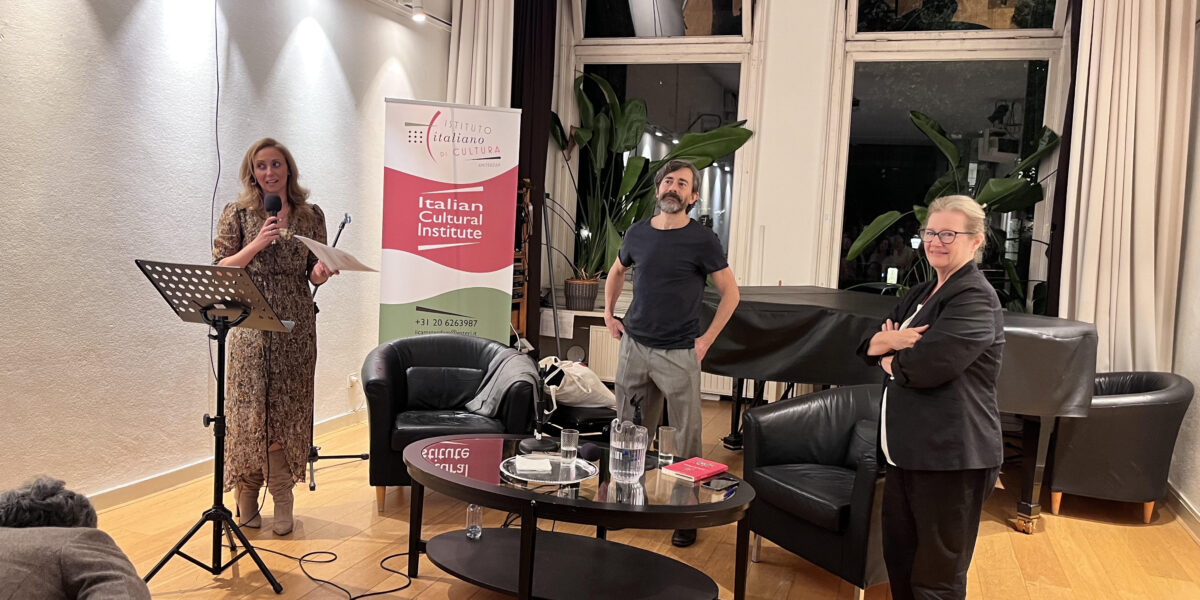
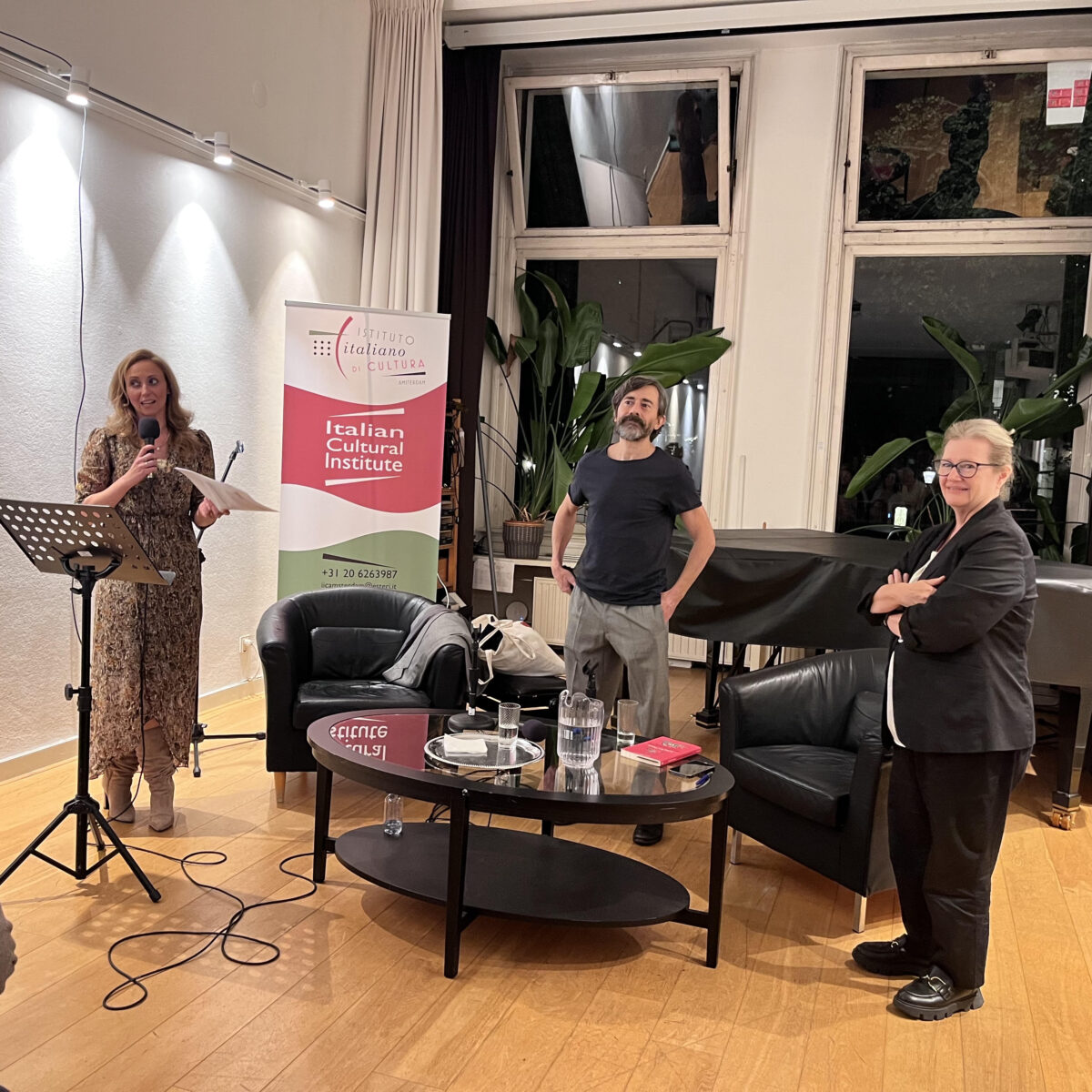
Brilliant, ironic, immediately in tune with the Italian and Dutch public, the multifaceted intellectual managed with rhythm and pathos the event “An evening with Luigi Lo Cascio” organized in Amsterdam by the Italian Cultural Institute directed by Veronica Manson, in the prestigious headquarters of the diplomatic structure overlooking the canal, in the elegant Keizersgracht. A literary meeting but with bold forays into everyday life, starting from the initial mention of flight delays and Lo Cascio’s obsessive fear of not arriving in Amsterdam in time for the evening. Comedy, self-irony, actorly verve and ability to command attention emerged from the first lines as the Sicilian artist’s strengths, prompted by questions from Carmen Van der Bergh, professor at Leiden University.
Taking to the extreme consequences his idea of the word as an autonomous entity, capable of exercising a force that goes beyond inspiration and transforms into possession – as if the story imposed itself on its author – Lo Cascio suggests that paradoxical pages and grotesque situations can arise precisely from this self-generative capacity of art. Just like those that populate “Stories for crabs and scorpions”, his latest book published by Feltrinelli. A collection of philosophical stories “to be taken with a pinch of salt”, warns the author. Stories “of men but also of cats and bacteria, of flies that eat sofas, conspiracies of ashes and ghosts of soldiers fallen in battle”.
To tell them, Lo Cascio adopts the narrative device of estrangement and change of angle, taking the point of view of the non-human characters. A choice that has its roots in a long literary tradition, from Phaedrus to Kafka, and also crosses paths with the immense Leopardi, capable of transforming even the hedge of “Infinity” into a threshold of the imagination. The gap, the leap aside from anthropocentric Western literature, is symbolically accomplished in Lo Cascio’s “Storielle” when two characters, Mr. Crab and Mr. Scorpion, talking to each other about literature, “deprecate the habit of men to write only about men”. But it’s not easy to get rid of millennia of stereotypes. Even if great authors have paved the way. And on this ground comes the comparison with two crucial figures of twentieth-century literature: Franz Kafka and Vladimir Mayakovsky.
Lo Cascio – he is asked – feels closer to Kafka, author of “Metamorphosis” with his Gregor Samsa transformed into a monstrous being, or to Mayakovsky, than in the famous “And me?” does he present himself young and proud, almost challenging the world with the strength of his own identity? A little to one, a little to the other, is, in short, Lo Cascio’s response, but he immediately puts his hands forward: no comparison with two giants of such stature. Precisely when speaking of Mayakovsky, Lo Cascio evoked the figure of Angelo Maria Ripellino, a great Slavic scholar and professor at the La Sapienza University of Rome, who dedicated fundamental studies to the Russian poet. Kafka and Mayakovsky, therefore: two distant worlds, two different voices, but both capable of pushing the word beyond its usual boundaries. On the one hand the metamorphosis, with the reversal of the point of view, which surpasses that of the author and even the human one; on the other, the pride of the poetic ego, its almost physical presence on the scene of history. Two directions which, in different ways, seem to converge in Lo Cascio’s conception of art: a journey in which the author does not know where he will land, because, as he himself suggests, writing is intellectual exploration. And for some explorers – we could deduce – the North Star is not enough to provide reassuring certainties.