

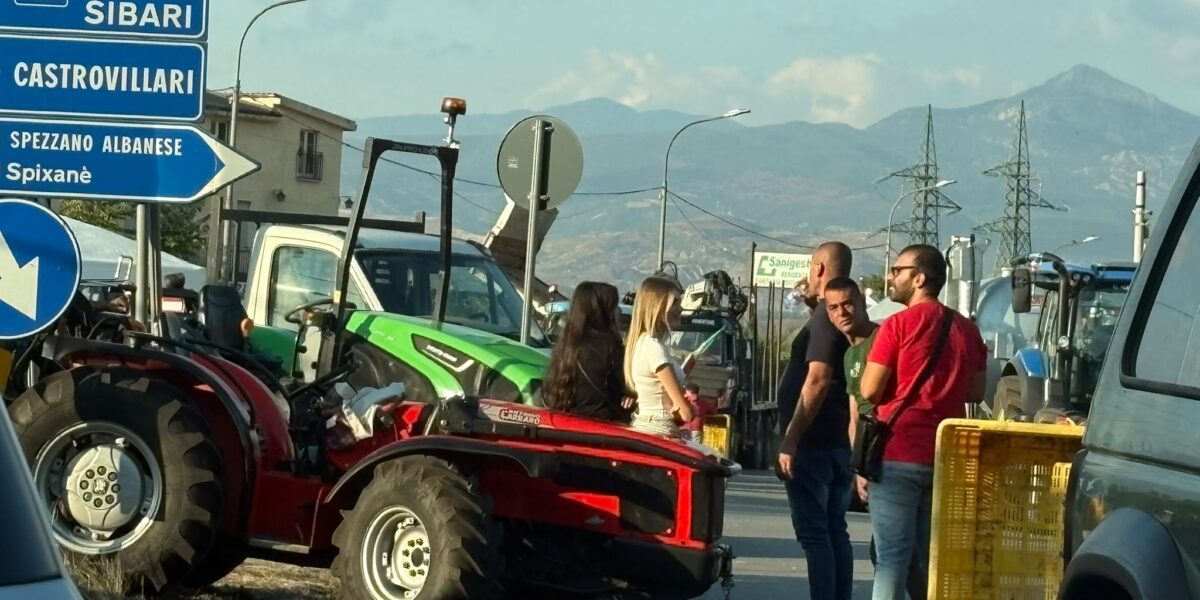
There is the “extraordinary” Calabria (to use an adjective that is very popular on the upper floors of the Citadel) and then there is the Calabria of stationary tractors and trucks. There is the one told through events, festivals, glossy communications, and the one witnessed by those who have chosen to take to the streets to denounce a very difficult situation marked by unsustainable costs and businesses in difficulty. The crisis is now structural and affects agriculture, the most crucial sector of the economy of this region. Thousands of businesses risk ending up broke, crushed by an unprecedented negative economic situation. And with obvious consequences on families forced to shrink their basket.
Those with political and institutional responsibility cannot limit themselves to defining the demands of farmers and hauliers as “sacrosanct” and announcing new, more incisive measures. The regional councilor Gianluca Gallo has been leading the sector for about 6 years and his latest positions raise some questions: what has been done to prevent the worsening of such a profound crisis? The 15 million allocated yesterday by the Regional Council to combat high fuel prices are certainly a first step, but insufficient to talk about a turning point. In fact, this is a sum that is significantly lower than the real need to give respite to all those who, more than others, are paying the price of an unprecedented negative economic situation.
Fanning the flames of protests and discontent may be the simplest but at the same time the most dangerous path in a land like Calabria, where the presence of the ‘ndrangheta is unfortunately still important and the risk of infiltration and/or exploitation of desperation is real. There is no doubt, however, that the drama of the moment imposes responsibility and seriousness at all levels. And it raises the theme of a political class incapable of listening to those who occupy the lowest rungs of our social system. Promoting our products, labeling them as excellence, as the Region and Arsac have done in recent years, does not equate to resolving the critical issues of those who work in the fields or are responsible for transporting them to our tables. A recession of this size requires measures that are not extraordinary but long-term and coordinated with all the players in the field. Listening to those who have chosen to take to the streets cannot be read as a sign of weakness on the part of the institutions at all levels, if anything as proof of having understood the gravity of the context. What is needed now is less catwalks and more listening, a few fewer spotlights and more discussion away from the dazzling lights of social networks. The time to strike a shot is not yet up.