


Google Discover

Preferred Sources
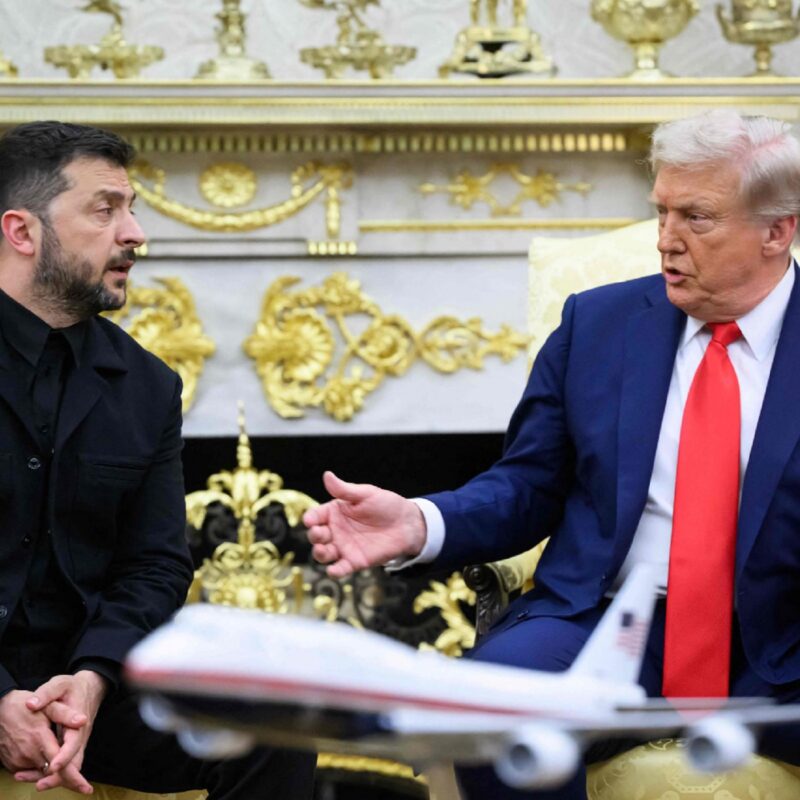
Rags fly between Washington and Kiev: President Donald Trump, enraged by Volodymyr Zelensky’s reactions to the US-Russia agreement on diesel and for the failure to stop Ukrainian attacks on Russian refineries, evokes a change of Ukrainian leadership with unprecedented verbal violence. Zelensky “could have put an end to this war on many occasions, he wants to create problems for the world and for farmers, the time has come for Ukraine to have a new president,” the tycoon said before an election rally in Tennessee.
“I suggest that Ukraine find a new leader capable of reaching an agreement”, he insisted, underlining that Zelensky “can do what he wants, but he cannot hit the refineries”. “Iconic and historic”, exulted the Russian presidential envoy and negotiator Kirill Dmitriev on attacks on Russian plants, convinced that they are increasing energy prices in the United States: an absolutely crucial issue for the tycoon in the last weeks of the election campaign in the mid-terms, decidedly uphill for the Republicans according to the polls. And Washington’s new, perhaps decisive, U-turn in relations with Moscow came during the phone call between Trump and Vladimir Putin, “which lasted an hour and a half”, “very intense and friendly”, so much so that neither of them “wanted to be the first to hang up”.
The White House’s “slap in the face” to Zelensky, after the humiliation in the Oval Office, follows Kiev and Brussels’ furious criticism of the diesel agreement between Trump and Putin in exchange for a halt to sanctions, a move branded as a “green light” for the escalation of Russian missiles and drones in Ukraine. In Washington, they did not like the threat to interrupt the sharing of intelligence information with Kiev by putting on the table of negotiations with the Ukrainians and Europeans, which were underway at the same time in Miami.
Zelensky, after accusing the US of showing its weakness, took matters further while in Ukraine the daily deluge of bombs claimed the lives of other civilians. “Russia expressed its thanks for the lifting of sanctions on diesel exports by launching five guided bombs on residential buildings in Zaporizhzhia”, he denounced as rescuers extracted the bodies from the rubble, including those of three children. The toll in the end will be 20 dead and 18 injured, in yet another massacre this week. The Ukrainian leader, who received a phone call of solidarity from French President Emmanuel Macron – who also did not comment the diesel agreement -, asked for “strong signals from the United States, Europe and other partners in support of Ukraine to reduce Russia’s ability to wage war and sow terror”. Kiev, it is clear, has no intention of following up on American pressure by reducing attacks on Russian territory; indeed, on the day of the diesel agreement its drones caused the closure of Moscow’s airports, forcing several Russian government planes – including the one carrying Putin returning from Turkmenistan – to head for St. Petersburg and land in the capital only later.
Another resounding attack on the US-Russia telephone agreement came from Brussels: «Russian attacks have killed over 80 Ukrainian civilians in two days, the suspension of sanctions on Russian diesel guarantees Moscow more revenue to finance the war», thundered the EU High Representative Kaja Kallas, also citing the intensification of hybrid attacks against Europe, and recalling that on Monday the EU Foreign Ministers intend to approve a large package of sanctions against the Russian war machine. In this fiery climate, a glimmer of peace would remain open. The negotiations in Miami “were constructive”, said the American special envoy Steve Witkoff, who together with Trump’s son-in-law Jared Kushner, is considering a mission to Moscow in the coming weeks. In the phone call with the tycoon, Putin “showed great understanding of some US proposals for the de-escalation of the conflict in Ukraine”, say the Kremlin. Meanwhile, however, the Ukrainian negotiating team left the Miami table early, a sign that Kiev thinks differently.