

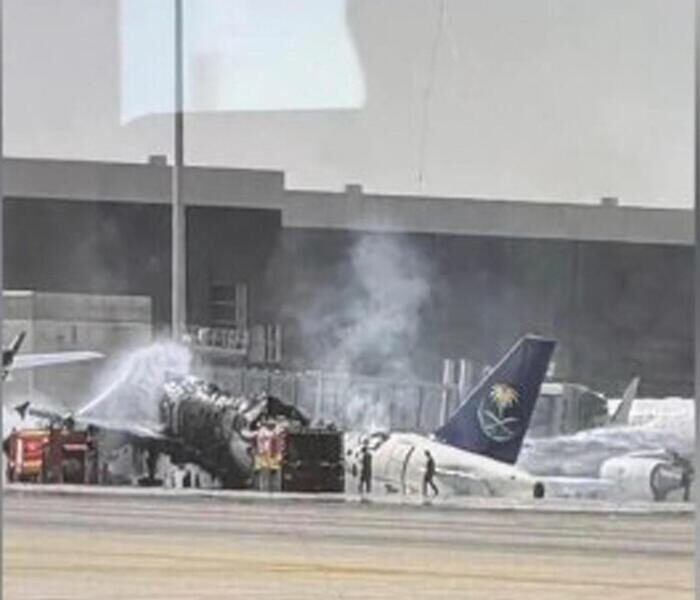
The loud roar of the explosion, the evacuation alarm, the coming and going of ambulances and helicopters: the Houthi offensive hits Riyadh airport hard, the target of what was identified as a missile by a diplomatic source to AFP.
At least 309 people were injured following the attack which left 12 dead. This was stated by the Saudi Civil Aviation Authority. The victims included four Saudis and eight foreigners, including an American, the authority said in a statement. “The attack also caused 309 injuries”, some of them seriously, he added, also reporting material damage.
The Farnesina recommends compatriots to avoid travel
An escalation that pushed the Farnesina to recommend compatriots to avoid non-essential travel to the airport area and to use the airport, in an invitation similar to that of other Western countries such as Germany, Spain and Canada. And which led American President Donald Trump to reopen the possibility of intervening alongside the Saudis: “We will make a decision”, said the tycoon. Only after several hours of silence did the Saudi Civil Aviation Authority confirm the attack, reporting however only “a certain number of injuries” and that the airport’s operations were temporarily suspended pending assessment of the damage and verification of the safety of the structures. Meanwhile, the raid had already brought chaos to the airport with cancellations, delays and panic. According to Saudi officials quoted by the Wall Street Journal, the attack directly hit Terminal 3 of King Khalid International Airport which was evacuated. Several ambulances and some helicopters were sent to pick up the injured and transport them to King Fahad hospital in Riyadh, said one of the officials quoted by the US newspaper, who verified the authenticity of a video showing traces of blood on the airport floor. “I was at gate 403” of the domestic flight terminal, the witness told AFP.
Riyadh under attack
“I saw gate 401 hit and people injured before my eyes. Everyone was running.” Following the latest attack, several Western embassies “indicated that they have decided to ban their staff from traveling to or from Riyadh airport over the next week, as a precautionary measure,” a senior diplomat told AFP. The scale and frequency of recent attacks against Riyadh has in fact reached unprecedented levels: on Thursday the airport had already been hit by lethal attacks claimed by the Houthis, who were also engaged in a clash on the ground with government forces around the disputed areas near the Bab el-Mandeb Strait, a vital passage for global trade. According to Trump’s words, the increase in tensions could push the United States to review their position on the conflict, after the tycoon had denied his help to Crown Prince Mohammed Bin Salman so as not to open a second war front before the midterm elections. Meanwhile, continued attacks on airports in Riyadh and some southern Saudi Arabian cities threaten to stifle business travel and tourism just as the busy conference and travel season begins, the Wall Street Journal recalls. A major test will come with the summit of the kingdom’s flagship Future Investment Initiative that is expected to attract thousands of global executives and investors to Riyadh later this month.