

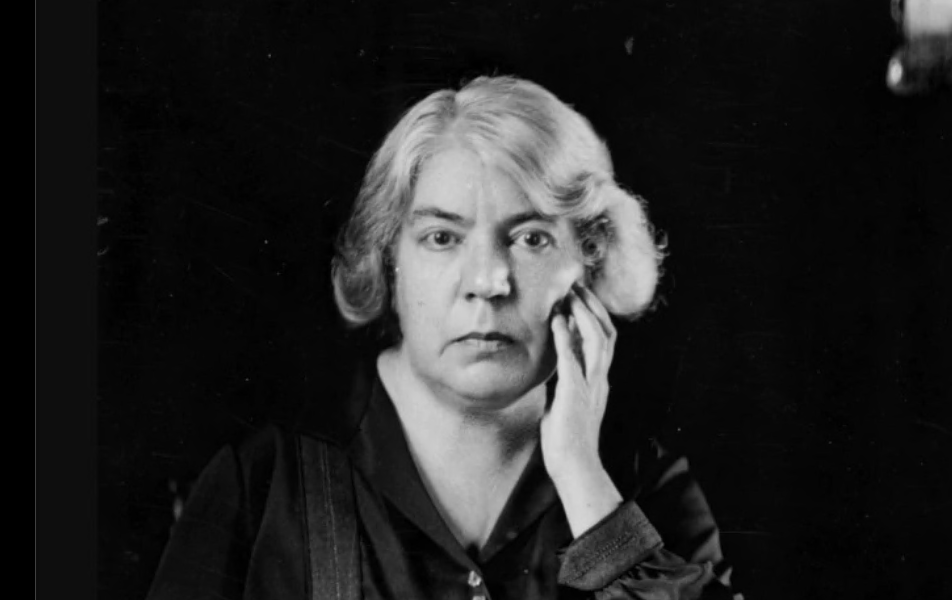
How can “island” cultures find new spaces of recognition in Europe? In 1926 Grazia Deledda (1871-1936), Sardinian writer, was awarded the Nobel Prize for Literature, awarded in 1927; in 1934 the prize went to the Sicilian writer and playwright Luigi Pirandello. Their works demonstrate that the islands are not on the margins of European culture, but places where a particular history can become universal, produce innovative thought and international prestige. It is from this perspective that the celebration of the centenary of Deleddi’s Nobel Prize at the Italian Cultural Institute in Amsterdam has taken on a broader meaning than the anniversary.
The Institute directed by Veronica Manson proposed the event «Stories of grace and friendship», a concert-show by Paola Contini, in the presence of the Italian ambassador to the Netherlands, Augusto Massari. A theatrical and musical journey into the writer’s universe, among characters, landscapes and encounters that marked her existence, fueling a myth that is still alive. The acting voice of Contini – actress, director and playwright who worked with Marco Ferreri, Pupi Avati and Marco Bellocchio – intertwined life and literature, conveying the complexity of a woman capable of transforming the memory of her land into narrative matter. The accordion of Bardh Jakova, Albanian musician and orchestra director, and the singing of Paola Sabbatani, who has been involved in theater, music and research on popular tradition for over thirty years, gave body and rhythm to the story, amplifying its pathos and melancholy. A mix of atmospheres, strength and delicacy, from which an intimate and vibrant portrait emerged, capable of involving the public.
Born in Nuoro in 1871, self-taught and a writer since adolescence, Deledda was able to overcome the social limits imposed on women of her time, in a literary panorama dominated by men. Having moved to Rome, she never severed her connection with Sardinia: landscapes, traditions and family and moral conflicts continued to live in her imagination.
The Nobel recognized his ability to talk about his land while addressing the great questions of existence. Destiny, guilt, the desire for freedom and the fragility of affections thus transcend every geographical boundary. The comparison with Pirandello does not erase the differences between Sardinia and Sicily: it makes them more fertile. Pirandello undermined the masks of identity and absolute truths; Deledda explored the conflict between conscience, destiny and community. Two paths that show how roots are not a cage, but a source of knowledge.
The Amsterdam celebration thus brings a current question back to the center: where and how is culture produced today? And what relationship links territorial roots to the international recognition of Italian literature? In a panorama in which the circulation of works and ideas transcends national borders, cultural institutions abroad are meeting places, capable of restoring relevance to literary heritages born in local contexts.
It is not enough to preserve memory: it is necessary to put it back into dialogue with the present, through new interpretations and artistic languages. It is a challenge that also closely concerns the South. From Sardinia to Sicily, up to Calabria, the territories can offer Europe not only traditions to preserve, but experiences and visions to compete with. Deledda’s lesson remains relevant: to speak to the world it is not necessary to distance oneself from one’s origins, but to know how to transform them into a voice capable of being heard.