

Google Discover

Preferred Sources
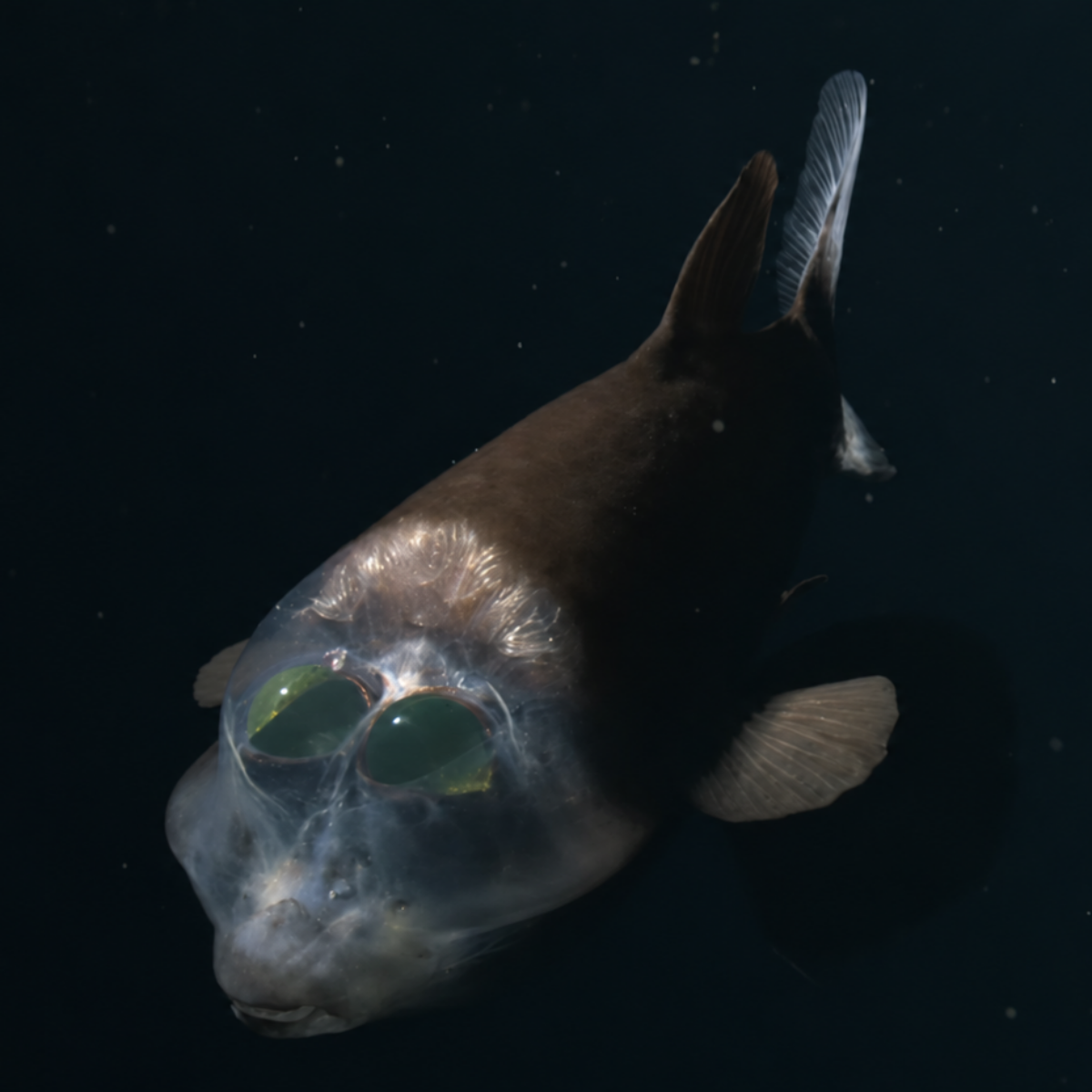
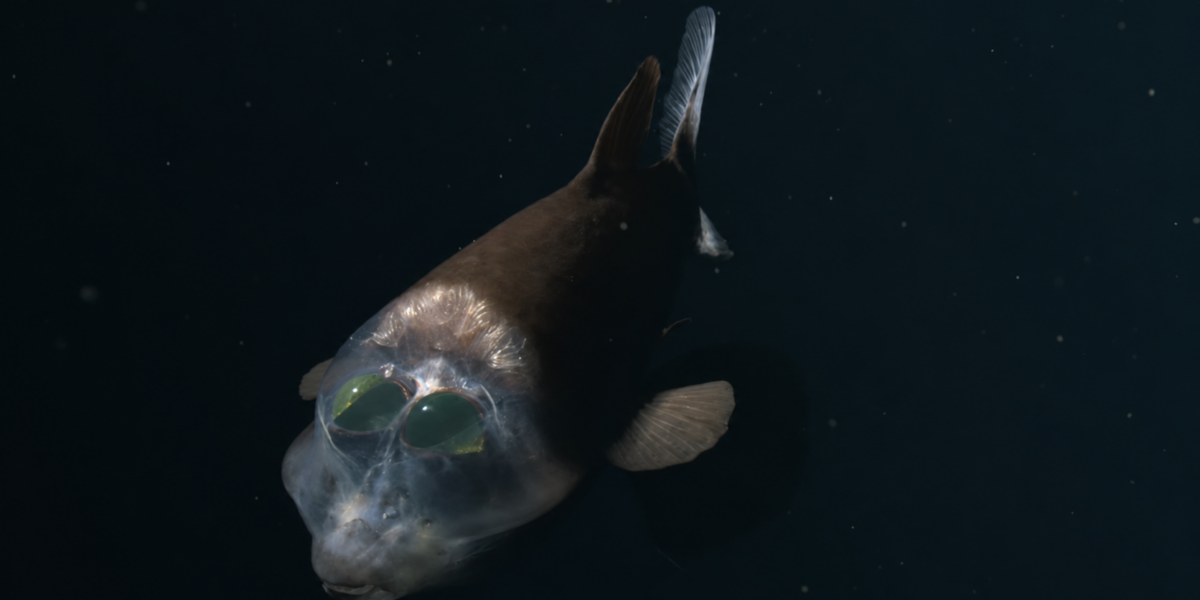
It has a transparent head, under which you can see two large green eyes that rotate, and lives hundreds of meters deep, where sunlight barely reaches. It is the Macropinna microstoma, the fish known in English as barreleye (“barrel eyes”), just filmed for the first time in 4K by researchers at the Monterey Bay Aquarium Research Institute (Mbari), in California.
The encounter took place about 600 meters deep in the Pacific Ocean, about 90 kilometers from the coast, during an eight-day expedition aboard the oceanographic vessel David Packard. Researcher Shannon Johnson spotted the fish while the team explored the deep waters with the underwater robot Doc Ricketts.
The Mbari video
Eleven sightings in almost forty years
The numbers tell you how rare this meeting is. In almost 40 years of exploration, Mbari has carried out approximately 7,000 dives with its robots, collecting over 41,000 hours of in-depth video. In all this time, the institute’s researchers have spotted the Macropinna microstoma only eleven times. The last observation was for 2021.
This time the team was able to observe the fish for about 20 minutes. It is the first time that the animal has been imaged in 4K, and the robot’s pilot, Cameron Law, also recorded stereoscopic images in 3D, intended for dissemination.
Because he has a transparent head
What appear to be two eyes on the front of the snout are actually olfactory organs. The real eyes are the two green tubular structures visible through the transparent fabric covering the top of the head.
They are normally turned upwards, to see the outline of their prey in the very faint light that filters from the surface. When the fish spots something to catch, it rotates them forward and keeps the prey in its field of vision. The transparent dome also protects the eyes when the fish approaches the stinging tentacles of the siphonophores, gelatinous organisms from which it steals small crustaceans.
A window into the twilight zone
For the group led by Steven Haddock, Mbari senior researcher and expedition leader, the meeting is an opportunity to delve deeper into the view of animals in the ocean’s so-called twilight zone. Scientists believe that green pigments in the lenses of the eyes may help the fish distinguish the faint light produced by other organisms, called bioluminescence.
The fish was not collected: the researchers simply filmed it in its environment.
Source: Monterey Bay Aquarium Research Institute, release dated October 28, 2026. Video: Mbari.