

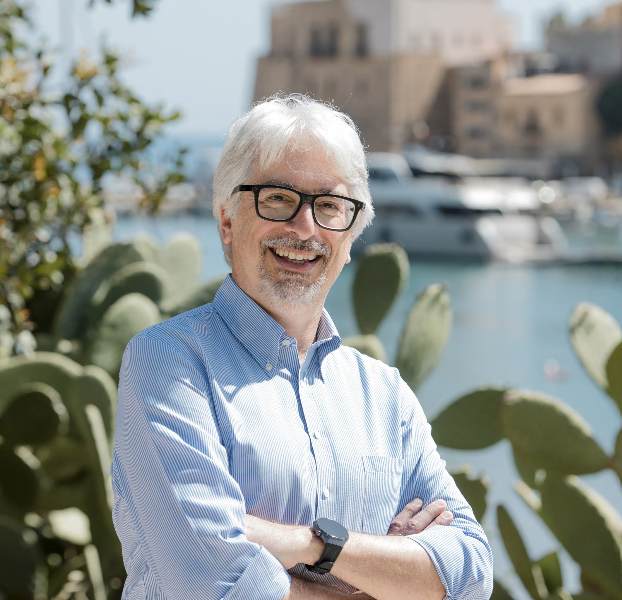
A much awaited book, «La mala notte» (Einaudi), by the Palermo writer and journalist Ugo Barbàra, who after «I Malarazza» and «Malastrada» brings the Montalto-Scudera lineage to the island of Cuba, in a tangle of passions and ambitions with historical facts, social upheavals and changes in perspectives in the background, elements that have made up a compelling and fluid tale that moves from Castellammare del Golfo to America then to Cuba with frequent returns to Sicily. A narrative journey that ends because «at a certain point – says Barbàra – you have to let go of the stories and the characters. For a writer, getting to know the characters and telling their stories is a journey. One of those even a little adventurous with travel companions that you think you’ll never leave. And then you don’t see them anymore. The intensity of the story has worn off, one more word would be a stretch.”
After «I Malarazza» and «Malastrada», now «La mala notte». An assonance or a functional title to the facts?
«It was obvious that there would be an assonance with –mala. The title was originally different but then the final choice seemed perfect to me and certainly functional to a very particular night in the final part of the novel, a “bad night” for everyone.”
From Sicily to New York to Sicily again and now in this third novel Cuba. Why Cuba?
«The inspiration for Cuba comes from the fact that the real-life family that inspired me in the 1950s had gone to Cuba where they had made their fortune in casinos, as well as owning a jewelery shop, as told in the novel. Then I did some research and learned that the Sicilian emigration to Cuba, although substantial, was very particular and predominantly criminal. Cuba was attractive because there were good deals on alcohol, gambling, lust and vices. The Italian Americans who were beginning to have little water to swim in in America with the laws against organized crime wanted to transform Cuba into a sort of criminal state, in which they could exercise unconditional power. And they were succeeding because all in all Batista was suitable. There were Lucky Luciano, Santo Trafficante, Io and Stassi from Castellammare, present in the novel, but also stars of cinema, music and literature.”
You also talk about the revolution about Cuba, with a character from the Scudera family, Elisabetta, who joins it…
«I talk about the less romantic aspects of the revolution. Raul Castro, under the thumb of his brother Fidel, was a gangster, a term that had a different meaning than the one we know. The gangsters were university students organized into paramilitary groups who paid themselves to politicians who prevaricated to win elections. Elizabeth is a fictional character but her choice was the same as that of many children of American multinational managers who joined the revolution; at the end of the fifties, therefore far from ’68, this was a very interesting paradigm shift in American society. The Cubans were servants of the Americans but on the social scale the real servants were the Haitians who worked on the sugar cane plantations. Many young people like the Elizabeth of history rebelled against this colonial slave structure.”
Ambition moves all the threads that bind the generations of the Montalto and Scudera families and determines the destinies of the characters.
«Ambitions that drive decisions, passions, loves. What always overwhelms the Montaltos are passions, perhaps even more than love. As for ambition, when we meet the Montaltos for the first time we know that theirs is still a healthy ambition, but then money comes into play, and this begins to poison the blood of the characters, when they realize that ambition goes hand in hand with power and power with wealth and brings with it corruption, betrayal. Clearly there can be no purity in pursuing that kind of ambition. And yet there are also those who give up their own ambitions to follow the plan made by others.”
In the trilogy you focused a lot on female characters.
«I was interested in the idea of the matriarchy of Sicilian women. Mine are not women’s novels, even if in the first two novels the women are certainly the most interesting characters due to the context in which they moved, between the mid-nineteenth century and the first decades of the twentieth century, when being a determined woman meant facing an enormous challenge. In “La mala notte” I gave women a strength of rebellion and not of self-affirmation; Elizabeth’s rebellion is not the head of a spoiled girl but the only possible resolution to assert herself in a context that wanted her to be different from what she wanted to be. On the other hand there is a very present and extremely strong male character, and not in a positive way as was the founder, Antonio Montalto: Gaetano Scalera is not only an assertive patriarch but a half-criminal, who creates an ethical problem in the family”.
Do you have any other stories planned?
«I have a project that differs greatly from the saga. There is a character I wrote about before starting “I Malarazza” and to whom I am attached for reasons that will be discovered when the story sees the light. And I must say that I am tempted by seriality because it is not only me who becomes attached to the characters but also the reader. And so I want to give this character the possibility of seriality with a book that is self-contained and which, however, if it works, can have a sequel not in the events but in the character.”