

Add the Gazzetta del Sud as a source
At all times, women and men have tried to avert the end and ensure the rebirth of plants, animals and communities, asking their gods for fertility and prosperity. This prayer has always been translated into codified and ritual gestures. The orghia – the sacred actions – keep the relationship with the divinity solid and direct, anchoring it to the sharing of gestures, formulas and sounds, objects and symbols and, again, food, drinks, offerings.
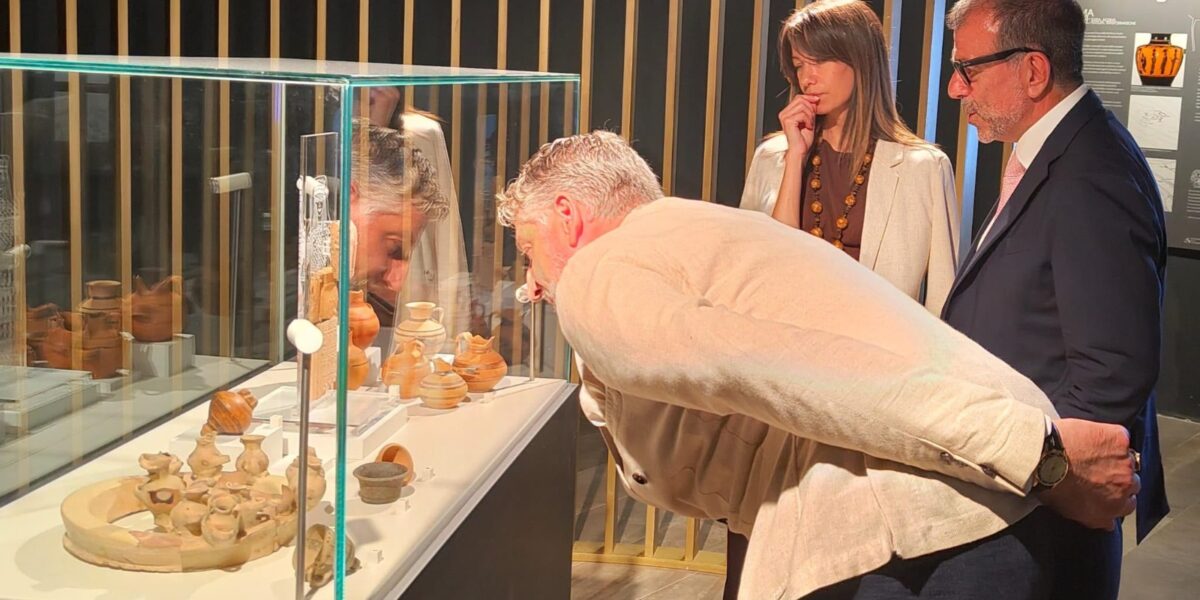
The exhibition on display at the Sibari museum leads on a journey that goes from the actions of the gods (the myth) to those repeated by human beings (the ritual), illustrating the encounter between Italic and Greek cults. The “corn goddesses” par excellence are Demeter and her daughter Kore-Persephone, who is dragged by the god Hades to the Underworld and returns to earth every year. Among the main expressions of their cult. The exhibition presents for the first time the recent discoveries made in the sanctuaries of Locri Epizefiri (RC) and Eraclea Lucana (Policoro-Mt). Alongside the grain goddesses are Hera Lacinia of Capo Colonna, lady of nature, animals and female fertility, and The Lady of Sibari (Athena), linked to transitions of state and deep waters. Their temples have also returned new things, which will be exhibited in preview. In the end, the path reaches the Madonnas, the Christian saints and the peasant rituals of Southern Italy, which derive directly from the ancient ones, and in which the need to promote the growth of wheat and the regeneration of life remains.
The initiative is part of the objectives of the Olivetti Plan for Culture, a strategic objective of the Minister of Culture Alessandro Giuli, fully interpreting the vision of a heritage capable of generating development, inclusion and participation in the peripheral areas of the country through the involvement of local communities.
This route represents the development of the widespread cultural project “Le Dee del Grano”, carried out between January and June in the National Museums of Basilicata. The project, conceived and curated by the Director of the Archaeological Parks of Crotone and Sibari, Filippo Demma, former interim director of the DRMN Basilicata, explores the relationship between archaeology, landscape, memory and intangible heritage, showing how the mystery cults linked to the fertility of the earth have transformed into still alive manifestations of contemporary rural culture. Of particular importance is the audiovisual focus created thanks to the materials selected from the RAI Teche and from the archives of the Central Institute of Immaterial Heritage of the MiC, which document the transformation of the ancient agricultural ceremonies into the popular traditions of southern Italy starting from the Second World War, offering an extraordinary anthropological story of peasant civilisation, enriched by the photographic research carried out by the Parks staff in numerous local archives.
The start of the exhibition, dedicated precisely to the divinities of the harvest and the earth, launches the focus on wheat which will characterize the entire summer season, thus completing the Mediterranean food triad after having explored wine and oil in previous editions. The exhibition itinerary – previewed by Minister Alessandro Giuli on the occasion of the inauguration of Vinitaly and the City in Sibari – will then act as a backdrop to the subsequent evolution of the summer program: for four weekends in August (1-2, 7-8, 22-23 and 29-30), the archaeological spaces will host Vinitaly Follow Up Sibari 2026. The Park will be transformed into a large laboratory of gastronomic culture and experience outdoors, in an atmosphere of strong excitement which, in the wake of the exhibition, will alternate concerts, live shows, musical moments and identity exploration in collaboration with ARSAC and the Calabria Region, the operational details of which will be illustrated later.
“This year too, the exhibition and scientific initiatives that accompany the major events in Sibari offer cultural insights of the highest level, capable of combining scientific rigor with accessibility and hospitality – declares the Director of the Archaeological Parks of Crotone and Sibari, Filippo Demma -. With the ‘Orghia’ exhibition we restore centrality to the indissoluble link between archaeology, land and intangible heritage, offering a scientific declination that combines wine with wheat, pillars of Mediterranean civilisation. Our strategic objective remains to make research and valorisation a concrete engine of redemption and cohesion for the territory: archeology must not be simple memory, but a living experience, capable of demonstrating how our daily gestures linked to food have their roots in a thousand-year history, in full harmony with the programmatic lines of the Ministry”.
Dr. speaks on the strategic value of the operation. Stefano Lanna – General Director of the Olivetti Plan for Culture: “With ‘Orghia. Myths, rites and mysteries’ the National Archaeological Museum of Sibaritide fully interprets the vision of the Olivetti Plan for Culture: to make cultural heritage a strategic lever for development, social cohesion and growth of territories. This exhibition demonstrates how places of culture can connect research, memory, landscape, productive traditions and communities, generating new opportunities for knowledge and participation. This is the idea of culture that the Ministry intends to promote: a culture that is not limited to preserving the past, but which concretely contributes to building the future of the country, starting from its areas richest in history and potential”.
The exhibition also takes on a particular meaning because it symbolically accompanies the new season of the National Archaeological Museum of Sibaritide, currently undergoing a profound reorganization made necessary both by the updating of the exhibition spaces and by the interventions following the serious flood that hit the area last February.
The entire program testifies to the ability of the Sibaritide Museum and Archaeological Park, in the wake of the broader activities of the Olivetti Plan for Culture, to transform difficulties into opportunities for growth. In a territory marked by environmental and social fragility, by the consequences of the flood events of last February and by repeated episodes of crime, the Ministry of Culture led by Alessandro Giuli continues to invest in culture as a driver of development, cohesion and rebirth of communities.