

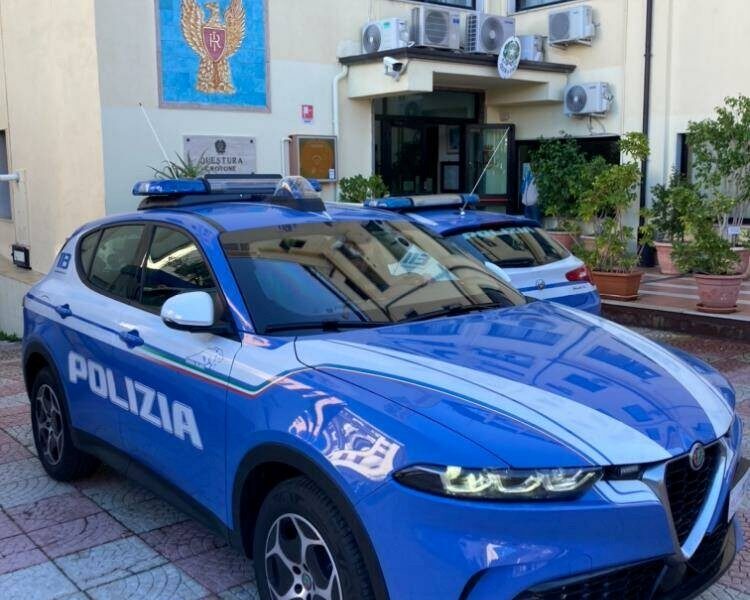
The Police Commissioner of the Province of Crotone, Renato Panvino, has arranged an extraordinary control service of the territory between the capital and Isola di Capo Rizzuto, fully engaging the State Police and all its specialized units. The men of the Anti-Crime Division, the Immigration Office, the Digos, the Administrative Police, the Traffic Police, the Polfer and the Crime Prevention Department took to the field.
The agents dealt, in particular, with the close monitoring of criminals, subjects subjected to house arrest and special surveillance, often linked to organized crime or drug dealing contexts.
The numbers of the blitzThe final balance of the activity is clear: 489 people identified, of which 98 with police records. 232 vehicles checked along the main roads and state roads. 15 checkpoints activated in key points of the territory. 13 home checks on subjects with measures limiting their freedom.
During the checks carried out by the Crime Prevention Department crews – who alone identified 114 people (27 with criminal records) and checked 54 vehicles – a complaint was made to the Judicial Authority: a person under special public security surveillance who had violated the requirements imposed by the judge ended up in trouble.
In the same context, the police officers involved in Crotone identified 252 people (of which 50 were criminals) and checked 128 vehicles, raising fines to the Highway Code. The Traffic Police and the Polfer patrolled the state roads and the areas adjacent to the train station respectively, identifying dozens of passers-by and motorists.
Particular attention was paid to checks on the regularity of foreign citizens. Immigration Office staff, together with Digos agents, identified 21 non-EU citizens. Although all of them were found to be legal on the national territory, the police have started in-depth and meticulous investigations on the declarations of hospitality presented in their favour, to verify that there are no irregularities or forms of underground exploitation.
The blitz did not stop only at public security checks, but also scoured the local commercial fabric. Administrative Police officers carried out an in-depth check inside an accommodation facility with an associated food and drink administration activity. The inspection required the timely intervention of the ASP (Provincial Health Company) technicians: the ASP inspectors found hygienic-sanitary and structural irregularities, issuing formal prescriptions for the restoration of the minimum legal conditions.