


Add the Gazzetta del Sud as a source
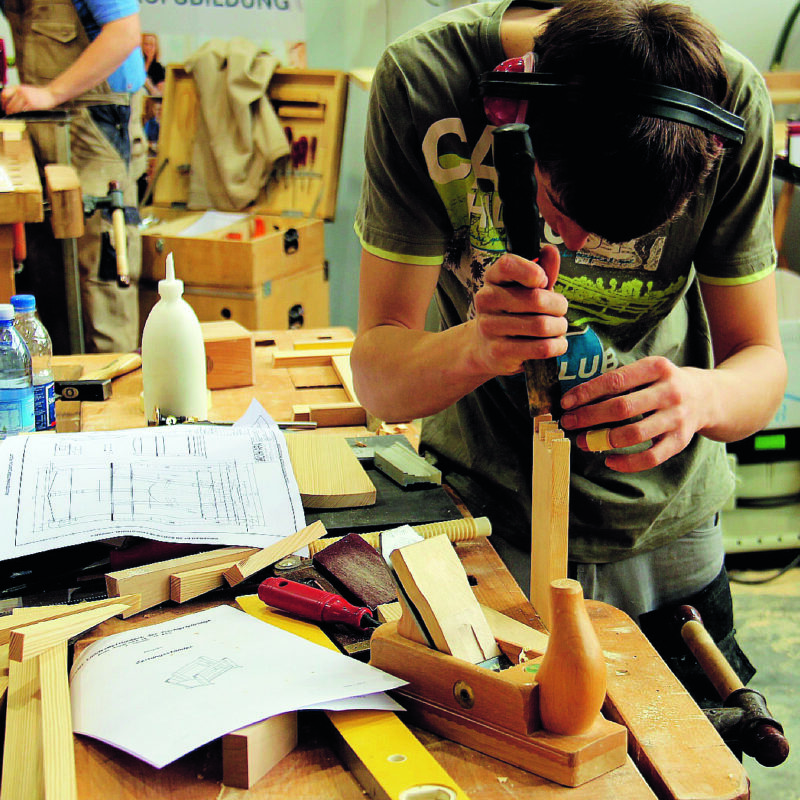
Almost 315 thousand owners of individual Italian businesses are at least 70 years old. And as the age of entrepreneurs grows, the audience of young people who could take up their role is rapidly shrinking. It is the double movement that emerges from the Cna dossier «Companies without turnover», which photographs at a provincial and sectoral level the exposure of the Italian production system to the risk of failed generational transition.
In June 2025, there were 314,824 owners of individual businesses aged at least 70, equal to 10.7% of the total. Ten years earlier there were 290,328 and represented 8.9%. The number of elderly entrepreneurs has therefore increased by almost 25 thousand units despite, in the same period, the overall number of individual owners having decreased.
The demographic collapse and the decline of youth entrepreneurship
The dynamic becomes even more significant if observed together with the demographic and entrepreneurial evolution of young people. Between 2015 and 2026, the Italian population between 20 and 39 years old decreased by approximately 1.4 million people, almost 10%. And between 2014 and 2024, youth businesses decreased by over 153 thousand units, 24%.
The impact on sectors: from agriculture to trade
The sectoral composition also highlights the scale of the problem. The phenomenon of aging is particularly evident in agriculture, where over 160 thousand owners are at least 70 years old, equal to 28.3% of the total. In trade there are almost 59 thousand, in construction over 19 thousand, in manufacturing more than 18 thousand, in other service activities around 14 thousand and in accommodation and catering over 12,600. Considering the incidence of those over seventy among the owners, among the large sectors that emerge, in addition to agriculture, are manufacturing with 9.6%, transport and warehousing with 8.4%, trade with 7.8% and accommodation and catering with 6.6%. Numbers that take on particular importance in sectors in which technical skills, knowledge of the trade, relationships with customers and professional assets are difficult to replace in the short term.
The picture becomes even more delicate when observing the other side of the phenomenon: the decline of youth entrepreneurship. Between 2014 and 2024, businesses led by young people decreased especially in construction, with almost 40 thousand fewer businesses (-38.7%), in commerce, where the reduction exceeded 66 thousand businesses (-36.2%), and in industry, which lost over 14 thousand youth businesses (-35.9%). In tourism the decline is over 11 thousand units, equal to 18.3%. However, not all sectors show the same trend. In business services, youth activities grew by 3.5%, while agriculture and fishing were essentially stable. A difference that also signals a change in the direction chosen by new entrepreneurs and raises the problem of the continuity of some traditional sectors of the Italian production system. The greatest risk is therefore determined precisely where the two dynamics overlap: the number of entrepreneurs close to leaving increases while the number of young people available to take over decreases. This is the case, in particular, of sectors such as manufacturing, construction and trade, which are fundamental for the territorial diffusion of small businesses and crafts.
The geography of the lack of turnover: the most exposed provinces
Looking at the incidence of those over seventy, the highest value is recorded in Grosseto, where 18.7% of individual owners are at least 70 years old, followed by Viterbo with 17.9%, Chieti and Trapani with 17.6%. A geography that does not simply coincide with the traditional divide between North and South, but above all identifies the territories in which the aging of entrepreneurs is accompanied by a progressive weakening of the younger demographic and entrepreneurial base. The most significant increase in entrepreneurs over 70 is recorded in Enna, followed by Crotone, Chieti and Vibo Valentia. In absolute terms, however, the phenomenon takes on the greatest dimensions in the large provinces: Naples has over 11,600 owners over seventy, Rome more than 10,200, then Milan, Turin and Foggia. The analysis measures the size of the audience that will be called upon to face the generational transition in the coming years and identifies the territories and sectors in which this process risks being more difficult.
The appeal: we need a policy for business transfer
“The generational transition is one of the great industrial policy issues that Italy must face”, states the national president of the CNA, Dario Costantini. “Every business that closes because it cannot find someone willing to continue it does not only represent the loss of an economic activity. It means dispersing skills, professionalism, relationships with customers and suppliers and often a heritage built over decades of work. The fact that in some of the sectors in which the age of entrepreneurs is increasing, young businesses are decreasing must be considered an alarm signal”.
For Cna the topic cannot be addressed only as a hereditary issue. We need a real policy for business transfer, encouraging meetings between entrepreneurs who intend to exit the business and potential successors, accompanying the transfer of skills and making access to credit easier for those who take over a company. It is also necessary to strengthen the fiscal and financial instruments intended for the generational transition, support workers buyout operations and encourage the entry of young people into entrepreneurship. Particular attention must be paid to crafts and small businesses, where the value of the company often lies above all in the personal skills of the entrepreneur and where an unprepared succession can determine the definitive disappearance of trades, knowledge and production.
“We cannot afford to lose healthy businesses just because there is a lack of turnover”, concludes Costantini. “In a country that has to deal with an increasingly older population and fewer and fewer young people, helping the transmission of businesses means defending production capacity, employment and the future of the territories.”