

Add the Gazzetta del Sud as a source
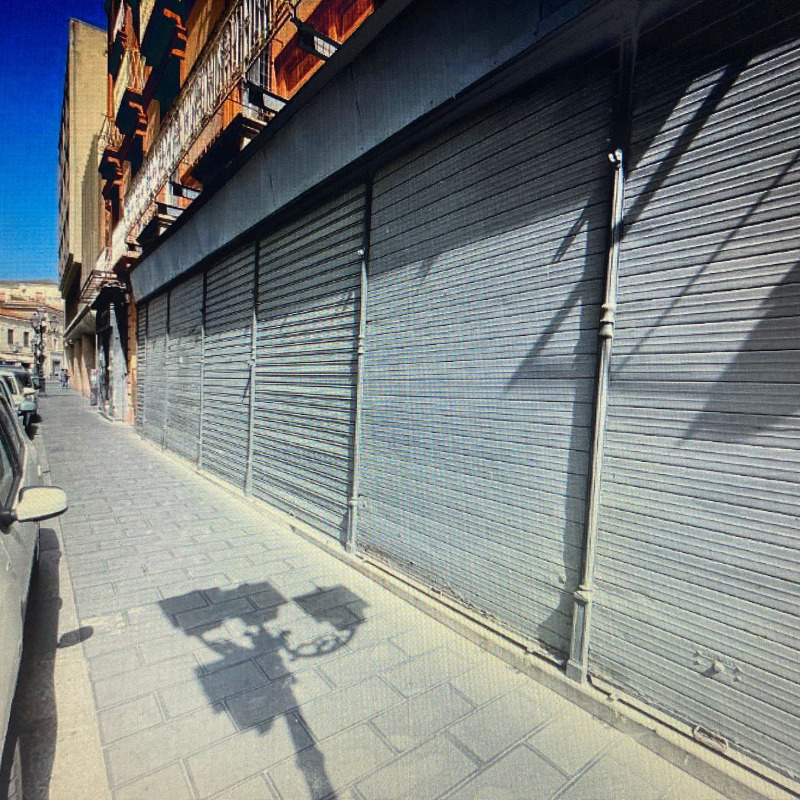
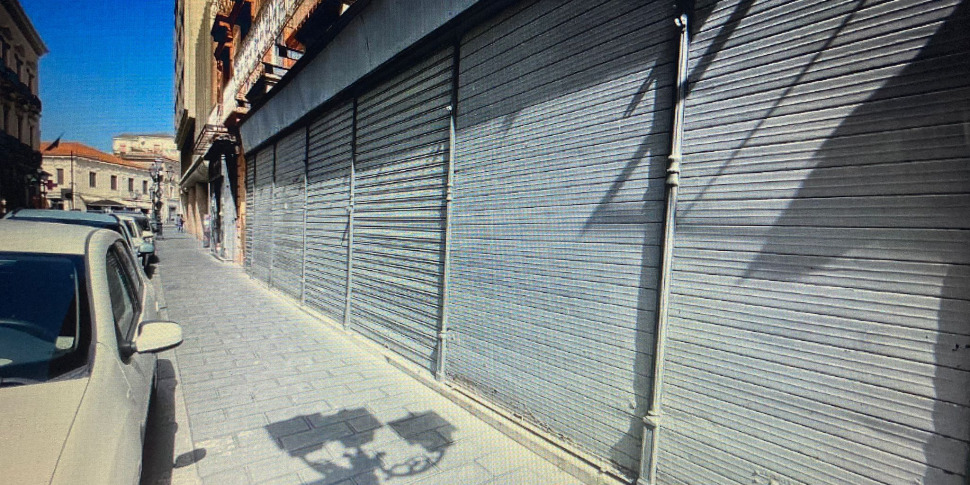
«Closed shutters cannot be raised with a ban. If taxes, contractual constraints and urban planning rigidities make it more difficult to open a business, rent a place or use it for another use, financing new openings means intervening on the effects without removing the causes”. This is what Sandro Scoppa, president of Confbuilding Catanzaro and Calabria, says.
«In Catanzaro and in the territory of its province the problem – according to Scoppa – has measurable dimensions. According to the first report by Osserva Calabria, the economic and territorial observatory of Confesercenti Calabria, as of 31 May 2026, commercial companies in the province of Catanzaro recorded a decrease of 4.8 percent compared to the previous year, compared to an average regional decline of 3.7 percent. The Catanzaro data therefore indicates a more accentuated difficulty compared to the regional picture. Faced with this, the Municipality has once again chosen the path of incentives. A few days ago it announced 2 million euros: 600 thousand for integrated business projects in the historic center and 1.4 million for “Neighbourhood Businesses”, with contributions of up to 80 percent of eligible expenses. A choice that however poses a fundamental problem. If the contribution covers four fifths of the investment, a significant part of the risk passes from the entrepreneur to the taxpayer. Financing changes the economic calculation: it can make an investment convenient which, at actual costs, would not have attracted sufficient private resources. Nor does it guarantee that the business will sustain itself when the grant ends. The administration selects the projects; profits and losses subsequently verify their sustainability. A different strategy must instead act on the four barriers that hinder the use of a premises: the levy on rental income, that on ownership, contractual constraints and those on the use of the property”.
Scoppa’s first proposal is «the dry tax on non-residential rentals, which has returned in the discussion on the next maneuver and expressly requested by Confedilizia. In 2019 it was already expected to be 21 percent for new contracts relating to C/1 shops and workshops of up to 600 square metres; the perimeter of any new regulations, which could find space in the budget law for 2027, still remains to be defined. Its function is not to establish lower rents by law, but to reduce the fiscal cost of the agreement. A lower levy widens the space within which the owner and tenant can find conditions that are convenient for both. Taxing the rental income less, however, is not enough if the tax cost of the asset remains high.”
Scoppa’s second proposal therefore concerns the IMU on commercial properties. «A generalized reduction is needed, making full use of the spaces allowed to the Municipality by national regulations and aiming, where the legislative framework allows it, at zeroing. The measure must concern rented, directly used and vacant properties: facilitating only the latter would mean increasing the levy precisely when the asset becomes productive again. Once fiscal barriers have been reduced, the third obstacle remains: contractual rigidity. Non-residential rentals continue to be subject to the system of law no. 392 of 1978, which limits the autonomy of the parties on duration, renewal, withdrawal, update of the fee, compensation for loss of goodwill and other aspects. It is not enough to correct the 6+6: it is necessary to overcome that logic and bring commercial leases back to the general rules of the Civil Code. In this context, the owner and tenant must be able to establish duration, price, updates, renewal and termination. A contract can last ten years, six, three or one, if that is the solution that makes the agreement possible. No legislator knows the appropriate combination for thousands of different properties and businesses: the necessary knowledge is dispersed among the contracting parties and emerges in the negotiation.”
«Once tax and contractual rigidities have been overcome, there remains – according to Scoppa’s thesis – one last problem: a place may no longer have an economically sustainable function as a shop. The fourth proposal is consequently the liberalization of intended uses. Calabria intervened on the matter in 2026, but the principle must be clearer: in the absence of concrete safety or protection reasons, a property must be able to pass from one function to another with simple procedures. Indeed, protecting a building or elements of authentic historical and architectural value does not mean crystallizing the economic function of each location forever. If a space no longer finds commercial users, the urban planning law cannot create them: it can only prevent it from becoming something else. Without prejudice to safety, health and hygiene requirements and truly necessary constraints, it must be possible to convert it into a home, studio, office, accommodation facility or other compatible destination”.
«As is evident, it is a logic opposite to that followed so far by municipal interventions, which have tried above all to encourage the establishment of commercial activities through administrative tools. It happened, for example, with the temporary store project, which in 2025 received just eleven expressions of interest from the owners, and with the proposal, put forward in March 2026, of a voluntary territorial agreement on commercial fees, which Confedilizia Catanzaro decided not to join, expressing doubts about the very idea of administratively orienting the formation of fees. In both cases, in fact, an attempt was made to guide the meeting between properties and activities from above, rather than removing the obstacles that limit the choices of owners and operators”.
Scoppa’s four proposals «start from the opposite principle. Reducing taxation on rental income, lightening property taxation, restoring autonomy to contractors and allowing the property to change function when the previous one is no longer sustainable means letting prices, contracts, profits and losses transmit the necessary information. To raise the shutters it is not necessary to choose from above who should do it. We need to leave individuals with more resources, more contractual freedom and more possibilities to use property.”