

But how many bodies, how many women’s lives did it take to gain rights and their share of freedom, how much effort and humiliation, how many silences and gestures of defiance to free ourselves from resignation. This is illustrated by some very recent novels which, among habits, customs and everyday life that today seem very distant from us, tell stories of redemption and resistance, of emancipation and solidarity of a female universe crushed between patriarchal machismo, prejudices and social injustices. Composite books of voices, memories, faces, like Sicily itself, where they are set between the nineteenth and twentieth centuries, between reality and fiction. They are women who show great vitality, some linked by complicity beyond social differences, others still victims of antiquated mentalities, Marianna, Brigida, Teresa, Rossella, Rosetta, Grazia. All creatures that give voice to many forgotten true stories and narrated with a calm and engaging “ancient” style which, together with the dialectal phrasing with a mimetic effect, never forced, gives suggestion to the page.
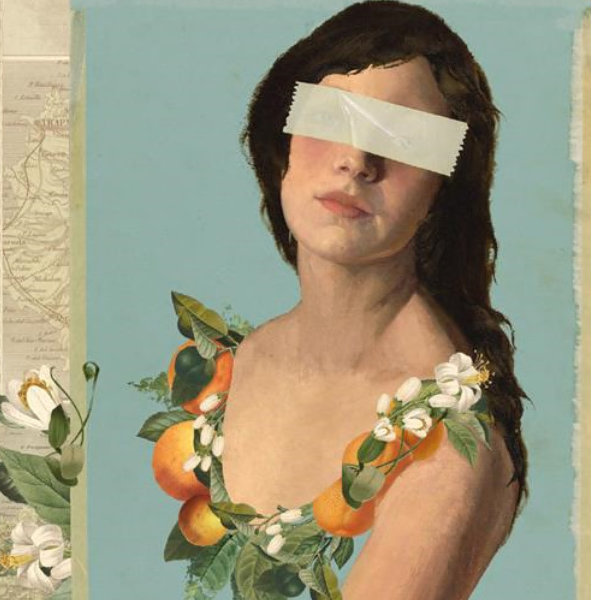
In that hybrid atlas that was Sicily in the early 1900s, The Orange Wrapper (Garzanti) by Barbara Bellomo from Catania puts two women at the center of the narrative, one fictional, the sixteen-year-old Rosetta, from a humble family, the other who really existed, Concetta Campione, an entrepreneur with a printing company in Catania, a reality that gave work to many young women. On her skin, Rosetta, in a society where the differences between common people and “gentlemen” are clear, and between men and women, whatever class she belongs to, lives a destiny of oppression and violence which she escapes with courage and with her work as an orange wrapper in the Campione printing factory.
We are in the seaside village of Gioiosa Marea, in the province of Messina, in 1894, in the novel La malarema (Piemme) by Alessia Castellini from Palermo. There life flows around the tuna fishery: on one side the males, the tuna fishermen, on the other the women, netters and also gatherers of sea byssus, filaments that are obtained from a mollusc, and which with appropriate treatments by the expert hands of the women become an impalpable golden canvas. Since her mother died at sea, overwhelmed by the “malarema” of an unhappy existence, little Rossella, who has lost her voice due to the trauma, runs away from home and finds herself in a prison run by nuns who gather “wayward” women (which actually existed in Palermo, similar to the Irish Magdalene Houses) brought there to be domesticated. But it is precisely in the common female condition of suffering that Rossella finds the memory necessary to reconstruct the truth about her family.
A true family story in Soltanto il giorno (Giunti), by Santina Cosetta, written so that great-grandmother Marianna would not remain a “cosuzza”, as she was called since she was little. Avola, 1885, Marianna, without a family, was first entrusted to Lisetta, a sort of “stria” who knew the secrets of herbs, cooking and care, until at the age of seven she was sent into service, as was the practice for many orphans, in a baronial farm in Irminio in the Ragusa countryside. And here begins his journey of personal growth, through writing and reading, frequenting an aristocratic family, friendship and love. And when she leaves there because she is expecting a child that she will raise alone and returns to Avola, with pragmatism and courage she invents the profession of “cosaruciara”, an excellent pastry chef, which allows her to become independent.
A dignified poor life, with the dream of becoming a teacher, is that of Teresa, in Castellatani, a land of sulfur mines that consume and often swallow adults and carusi. Irene Di Liberto from Palermo tells it in La zolfatara (Piemme), starting from the memory of her paternal grandfather, owner of the Casteltermini zolfara, one of the largest in Europe. Where he works, and we are at the beginning of the 20th century, also Giovanni, a good match for Teresa who comes from a poor family and with an unfortunate father, and therefore with the urgent need to find a “settlement”: a love marriage and two children, Antonio and Carmelina, for whom Teresa ensures a dignified life and education, placing herself at the service of a generous noblewoman thanks to whom she learns many things, even how to read. But then fate gets in the way, but Teresa resists and adapts to the changes and betrayals of human beings, creating a better existence for her children.
Grazia from The Long Summer of Jasmine (North), by Licia Tumminello from Palermo, also dreamed of becoming a teacher. She went to school, learned to read, write and do arithmetic, but there, in Milazzo, in 1933, when she was only eleven years old, in order not to go fishing like her parents she became a jasmine farmer and every night she went to the plain, on the baron’s property, to pick those fragile flowers that would become precious essences. In the meantime, she got married and, against her husband’s wishes, she holds on to that job, even though she and the other workers experience the abuses of the gangmasters and the absence of measures to protect her health. Years pass and it is she who organizes, together with the other jasmine workers, the first women’s strike in Sicily, in August 1946, an event that actually happened just after the women’s vote. And together with the vote, Grazia also wins a sewing machine, an instrument of freedom with which to realize at least part of her dreams.
It is also a story of emancipation, not only from poverty but also from the trap of superstitions, Mavarìa (Einaudi), by the Syracuse-born Antonio Popolo Rubbio, where the rebel Brigida studied to free herself from her father’s fish shop and become a teacher, but then, as a young wife and mother, she must return to the chiseled space that was destined for her and adapt to being a hairdresser. But despite her daily battle to free herself from the curse of the Bonsangue family (which is that of her husband), she seems to succumb to grief and misfortune. And yet he does not give up, opening himself to modernity and science to help his son.