

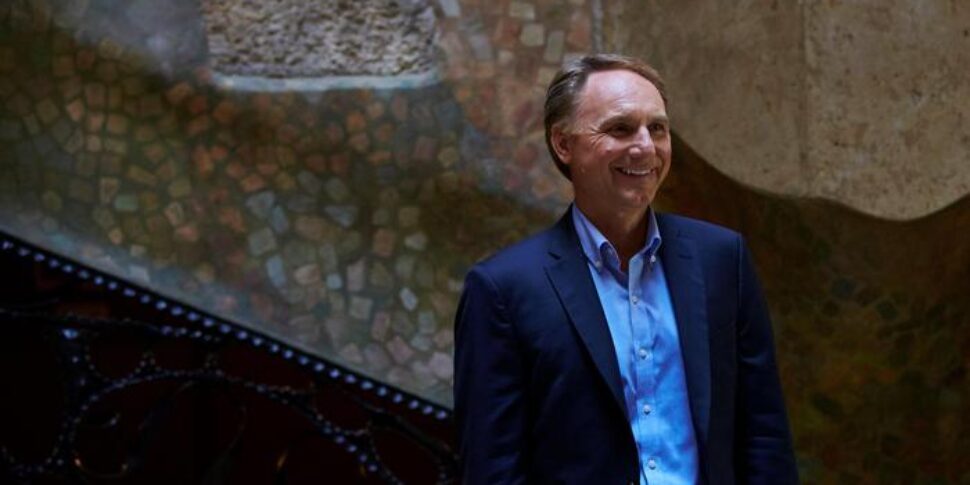
The esoteric capital of Europe, a novel that investigates our conscience and a great Netflix series on the way. Dan Brown, an American writer who has sold over 200 million copies, is back in bookstores with the highly anticipated «The Last Secret» (Rizzoli, tr. Annamaria Raffo and Roberta Scarabelli), immediately jumping to the top of the charts and outpacing even Ken Follett with his «The Circle of Days» (Mondadori).
Eight years after “Origin”, Brown signs the new adventure of Professor Robert Langdon – played on film by Tom Hanks in the bestselling triad “The Da Vinci Code”, “Angels and Demons”, “Inferno” – in a novel that mixes action, suspense and international conspiracies, calling into question the CIA and the implications of artificial intelligence, pushing well beyond the limits of neuroscience.
Alongside the scholar Katherine Solomon – an expert in noetics, already seen in the mysterious “The Lost Symbol” – Langdon arrives in Prague reeling off anecdotes about the Nazi domination and the architectural wonders of the city; for the first time we glimpse his emotions and his heart beating for a mature love that presents him to the reader in a renewed, decidedly more intimate guise (in view of the TV series, the author has already clarified that the production is evaluating new actors for his figure). But after just a few pages, the scenario changes drastically. A bomb scare causes panic, Katherine Solomon has disappeared. But who could want to harm a student of human consciousness? Suspicions quickly fall on the neuroscientist Brigita Gessner and on the fate of the unpublished manuscript that Solomon is about to publish, on the secret of secrets, or the final border between life and death. Along the lines of the Code, Brown alternates a second narrative flow featuring the Golem, the creature of Jewish tradition born from the mud who in these pages is a sort of dark guardian, bringing the action towards the Threshold, the borderland between science and the unknown, between reason and faith. The plot becomes more and more pressing even if the novel is at times verbose, as if it wanted to convince readers of the verisimilitude of the theses expressed. In fact, to the sound of flashbacks, we find ourselves facing the fundamental question: is consciousness biologically part of us and dies with the body or perhaps is everything found in the context that surrounds us?