The centre-right summit has been postponed to the next elections in Messina. The civic committees, meanwhile, are mobilizing and a joint press conference between the groups created by the lawyer is announced for Monday. Marcello Scurria (Civic Participation) and the engineer. Gaetano Sciacca (3 S Committee).
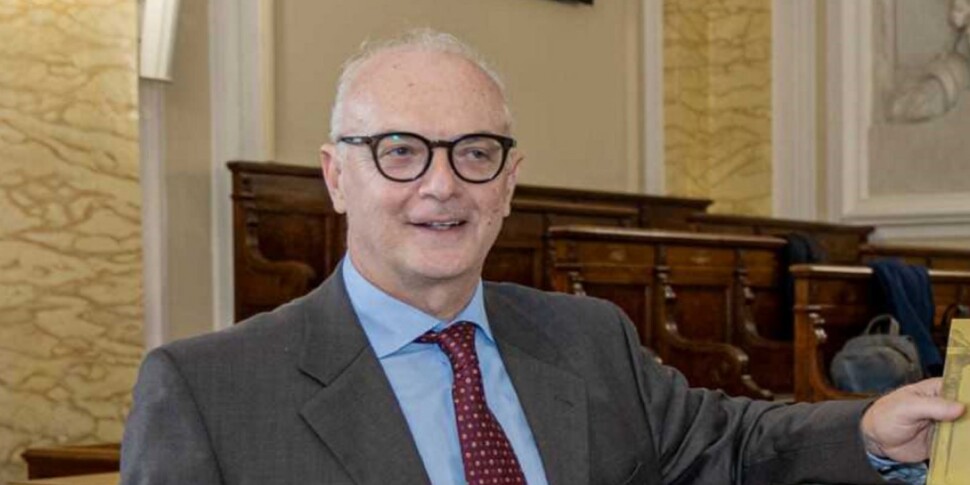
Convulsive days, for political forces and alignments, after the announcement of the mayor’s resignation. A gesture that is commented on by university professor Michele Limosani, who in recent weeks officially communicated his support for De Luca-Basile’s political-administrative project. “There is a subtle difference – states the UniMe economist – between the decline of an administrative experience and the deliberate choice to reset the system to avoid the eclipse. The resignation of Federico Basile, which fell into the city debate with the weight of a boulder, does not belong to the category of surrenders, but to that, rare in this land, of the attack strategy. Anyone who reduces this choice to a whim or an external diktat demonstrates that they have not understood the change of paradigm in place: Messina is no longer a fiefdom to be managed, but the bridgehead of a government model that aims to undermine regional balances. In his declarations on the resignation, Basile stated that the absence of a solid majority in the Council risks slowing down the Administration’s action in a phase of strategic relaunch which is felt to be needed. It is true that in the past the Council has in fact approved, between melines and exhausting negotiations, the vast majority of the measures advanced by the local government”. But it is equally true that the loaded gun is always on the bedside table, ready to be used, should regional and national political balances deem the time has come to cripple or put an end to the experience of autonomous and civic government in the city (see the threat of no confidence in the mayor). This is no longer sustainable. Basile could have continued by bringing home measures “with the lantern”. Instead, he chose the “covenant of truth”. By resigning – insists Limosani – the mayor defuses the potential weapon of blackmail: he takes away power from the traditional parties and returns it, intact, to the citizens. It is an act of democratic hygiene: better a short commissionership today than an administrative agony lasting more than a year. Basile’s resignation is, therefore, aimed first and foremost at protecting the future of Messina and asking citizens to choose, without filters, the speed with which this city must run. The city has undergone a profound change, undeniable, before everyone’s eyes, but which needs to be further extended, relaunched, reinvigorated, also in light of the new and exciting challenges that await us. An experience, again, that must be safeguarded in its essence, autonomous and civic.
Some have put forward the hypothesis that Messina is only a means for the regional ambitions of De Luca who presented and outlined the objectives of the “Ti Amo Sicilia” movement in Caltagirone last January 18th. The truth is the opposite. The project presented in Caltagirone – a civic, autonomous and progressive regional government – is the necessary shield for our city. Without a Region that changes gear, Messina will always remain an island within an island, held back by a Sicilian bureaucracy that does not belong to us. Bringing our “Messina model” to Palermo is the only way to give oxygen to the results achieved here. We need to overturn the perception that the resignation is a lack of interest for the city: we are asking Messina to become the engine of Sicily. If the model of good governance that we have built here wins forcefully again, we will no longer have to ask permission from Palermo or Rome, but they will have to follow our example. Voting today means giving Messina a political weight that it hasn’t had in the last 40 years. Of course – concludes the teacher – the path is risky. If Messina answers “present”, the experience of autonomist citizenship becomes an unstoppable wave ready to overwhelm the Region. If it fails, the project shuts down. But it is precisely in this risk that the magnitude of the bet lies: Basile does not play to stay afloat, he plays to change the rules of the game. Giving the people of Messina the floor again in advance is not an escape, it is a call to responsibility. It is the request for a full mandate to transform Messina from a laboratory to a model for all of Sicily. In a political landscape made up of “straw men” and glued armchairs, Basile’s choice smells of a freedom that, in these latitudes, we have not known for a long time.”