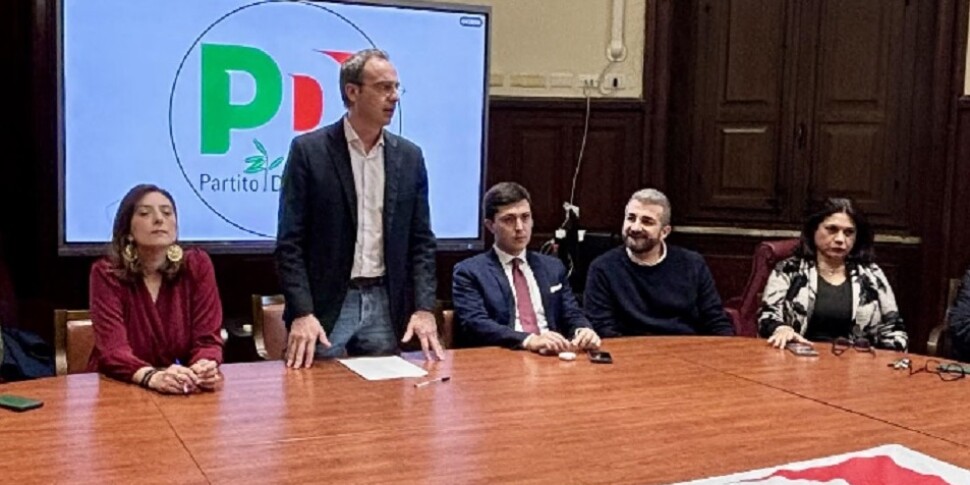
«It’s time to turn the page, we need a real political change based on work, development and social justice. The city deserves a leader capable of planning the future, not chasing consensus.” The Democratic Party is committed to the “battle for change”, as underlined by the provincial secretary Armando Hyerace, at the conclusion of the work of the party management. A meeting at the end of which a summary document of the work and political objectives for the short and medium term was unanimously approved, also in view of the upcoming local elections. According to the Democratic Party, «the De Luca and Basile Administrations have not managed to bring that necessary leap in quality to the city and the entire metropolitan area. The data speaks clearly: today Messina is poorer, more fragile and more unequal, despite the extraordinary opportunities offered by the Pnrr to build a true strategic growth project. Instead, ordinary management, at times welfare-based, was preferred, without a structural vision of development. In recent years, millions of euros have been invested in image operations, spot events and communication, rather than in stable jobs, support for businesses, strengthening social services and youth policies capable of creating lasting prospects, and not simple short-term interventions. Mayor Basile’s resignation represents yet another sign of a political system turned in on itself, more attentive to its own survival than to the future of the city.”
And so, the Democratic Party «proposes itself as the central force of a broad and inclusive coalition, an alternative to Deluchism and the Centre-Right, to build a government program that puts work, development, culture, sustainability and participation at the centre». A Democratic Party that would like the No Bridge movements to also join the “wide field” coalition. But it won’t be simple, given that the “nopontist” front is made up of many souls, often distinct and distant from each other. In any case, the “Bridge theme” will certainly be one of the hottest during the next electoral campaign (like many other previous ones…).
And in this regard, there is a note from one of the most active subjects, the “No Ponte Capo Peloro” Committee: «With the appointment of Commissioner Ciucci having been missed and the stakes that were wanted to be raised at the Court of Auditors having been missed, thanks to the intervention of the Quirinale, article 1 of the MIT decree on the Bridge has deflated, transforming in practice into a sort of memo, a post-it of the things to be done to resubmit the Cipess resolution to the Court of Auditors. But despite having failed the two main objectives of the decree – states the Committee – it did not want to miss the opportunity to insert a further forcing, yet another, into the project approval procedure: in point b-3) of art. 1 of the draft decree it is provided that the Higher Council of Public Works expresses itself not on the project as a whole, but only on the “technical profiles of particular complexity and relevance of the designer’s report”. In practice, the experts of the Superior Council cannot analyze the more than 10,000 documents of the bridge project but only the 500-page report of the designer himself. The reason would be that the Council had already expressed an opinion on the project, but it was 1997 and the project was very different, as the Court of Auditors itself highlighted. Suffice it to say that in the 1997 project the towers were 376 meters high and are now 399 metres, the anchor block on the Sicily side was moved by about ten meters with repercussions on the deck, there were various interferences on the Sicily side with pre-existing structures such as university ones, the Strait Metro was not planned, the Sicily side railway outlet was in the city center and not to the south in Contesse. But how long does the Ministry of Infrastructure give itself to do everything it hasn’t done in recent years? Just 4 months, with the aim of starting the implementation phase, as Ciucci states, even by the summer. Yet another announced deadline, yet another forcing, yet another arrogance that takes for granted the positive opinions of the CSLP, the European Commission and even the Court of Auditors.”
The conclusion is in the “refrain” that all the oppositions and No Bridge movements repeat daily (without questioning, however, the billions allocated for other large public works): «While Niscemi landslides day after day, while the damage from cyclone Harry is still being counted, we continue with this little theater. Let’s close the “Strait of Messina Spa” once and for all, let’s divert the money from the Bridge to deal with the consequences of Cyclone Harry and the Niscemi landslide, let’s invest in the real priorities of our territory.”