

Add the Gazzetta del Sud as a source
A council chamber profoundly marked by the electoral success of Pippo Midili and by a majority that is preparing to govern with very large numbers. The composition of the new city council clearly reflects the political weight of the victory obtained by the reconfirmed mayor, capable of dragging his coalition up to twenty seats out of twenty-four.
A result that captures a very broad consensus and gives the administration a numerical stability rarely seen in the recent history of the city. The minority has just four seats left, in a chamber inevitably destined to have a strong political center of gravity around Midili’s administrative project.
The most voted list was “Città Futura”, which with 2421 votes won four city councilors and confirmed itself as the cornerstone of the mayor’s coalition. A result that certifies the rooting of the civic component close to the mayor and which represents one of the most significant political data of the entire electoral round. Four seats also for Forza Italia, which consolidates its presence in the council chamber, confirming itself among the strongest parties in the majority. The result of the Azzurri takes on particular importance especially in light of the weight it had during the electoral campaign and the party’s ability to maintain a stable consensus in the area. Excellent success also for Fratelli d’Italia, which also brings home four councilors. The party thus continues its growth at a local level, confirming the positive trend that has already emerged in the latest national and European electoral competitions. Three seats instead go to the “Cambiamente” list, another significant component of the Midili coalition, while “Milazzo 2026” obtains three councilors, confirming a result considered important within the balance of the majority.
Two seats each for “Prima Milazzo” and for the “Lorenzo Italiano mayor” list. The latter will represent the main nucleus of the opposition within the chamber. However, the most politically relevant data concerns the defeated mayoral candidate, who will not enter the City Council. Having not exceeded the threshold of 20 percent of the consensus required by law, the second place winner remains excluded from the city meeting.
An element that also significantly changes the balance of the opposition, deprived of the direct presence of Midili’s main challenger during the electoral campaign.
Finally, one councilor each for the South calls the North and for the Democratic Party. For the Democratic Party it is a presence reduced to a minimum in the chamber, a snapshot of a complex electoral result and lower than expectations on the eve of the election.
But alongside the political balance, the vote also reshapes the faces of the new city council. There are fourteen outgoing councilors who manage to obtain reconfirmation, a sign of strong continuity compared to the previous legislature and of the ability of several administrators to maintain a consolidated relationship with their electorate.
Among the data that make the most noise, however, there are excellent exclusions. Outside the new municipal council remains the outgoing president of the chamber, Alessandro Oliva, one of the best-known names of the past council. A failure to be reconfirmed will inevitably open up political reflections within the balance of the majority.
Not even Valentina Cocuzza, Peppe Stagno, Nino Italiano, Alessio Andaloro, Damiano Maisano and Antonio Amato are able to return to the courtroom. Exclusions that mark one of the main elements of renewal of the future city council.
The picture that emerges from the polls is that of a large, compact majority strongly driven by the Midili effect. The reconfirmed mayor will be able to count on very solid numbers to face the second administrative mandate and carry forward the program announced during the electoral campaign.
On the opposite front, however, the opposition will have to start again from a numerically reduced representation and from the absence in the chamber of the mayoral candidate who came second. A condition that will inevitably make the political work of minorities within the new city council more complex.
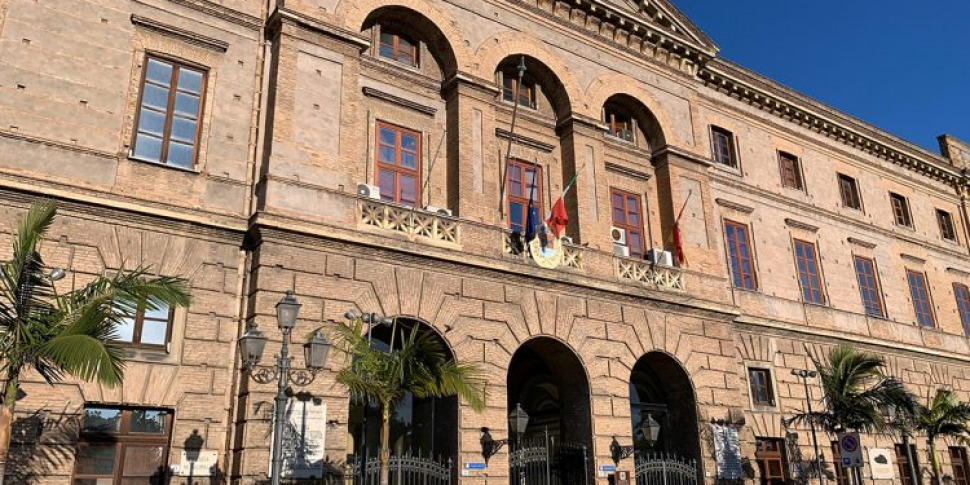
The new political geography of Palazzo dell’Aquila therefore appears already outlined: a dominant majority and a chamber profoundly marked by the historic result obtained by Pippo Midili, the first mayor reconfirmed in the recent history of the city.