

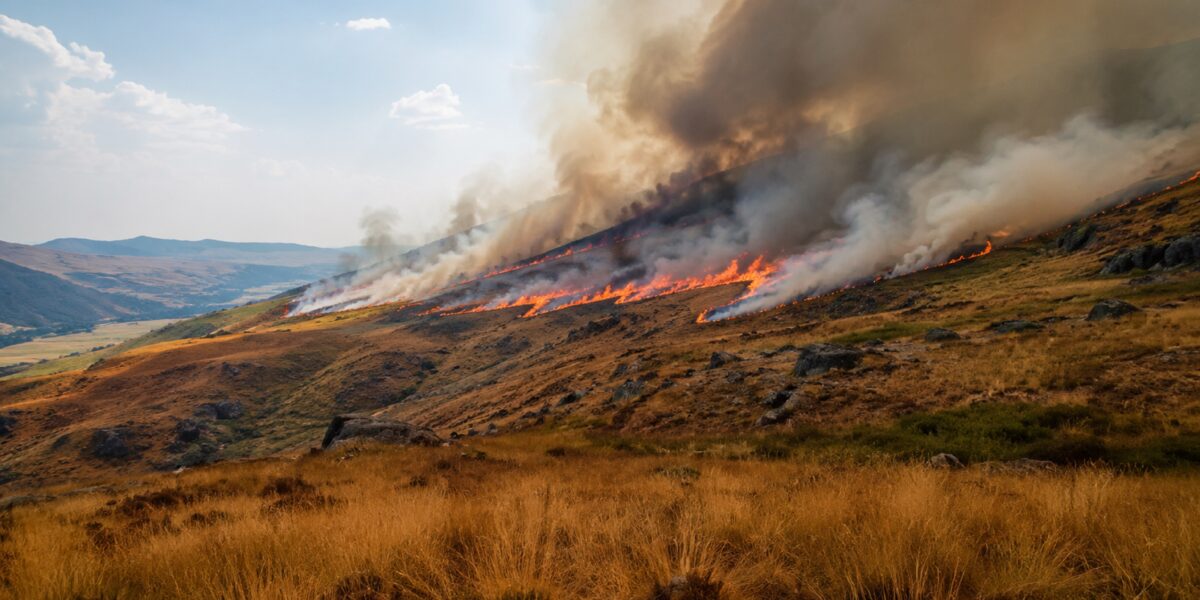
The alert linked to the third extreme heat wave of this year, which has been underway on the island for a week now in parallel with what is happening in other European countries, has extended to almost all of England and Wales. The phenomenon, according to the Met Office, is destined to continue for much of this week and to extend to a greater number of regions with maximum temperatures above 30 degrees.
The fires, the largest in Wales
The climate is also helping to fuel a series of fires: the largest has been raging since yesterday in the hilly area of Conwy, in north Wales, where a few hundred people have been evacuated from isolated local rural communities. While more limited episodes have been reported from north to south of England in the regions of Greater Manchester, Hampshire, County Durham, Derbyshire, East Sussex, West Sussex, Devon and Somerset, as well as in a peripheral area east of London.
The count of the two previous waves
Meanwhile, the direct or indirect consequences of the two previous waves of heat – well above the local averages – in May and especially in June are being reckoned with, when unprecedented heat peaks were reached for those months in over a century of meteorological measurements (up to the record of over 37 degrees at the end of June). Conditions which, according to calculations by specialists from the Met Office, Imperial College London and the London School of Hygiene and Tropical Medicine, have contributed to an increase in mortality estimated at more than 2,700 victims above the norm between England and Wales.
The study estimates that about 42% of those deaths were attributable to additional heat produced by anthropogenic climate change – 59% in the May wave, 38% in the June wave. According to researchers, daytime highs in England and Wales today are 3-4 degrees higher than they would be without human influence on the climate. Estimated victims are around 550 for the wave of 21-29 May and around 2,200 for that of 18-28 June.