

Add the Gazzetta del Sud as a source
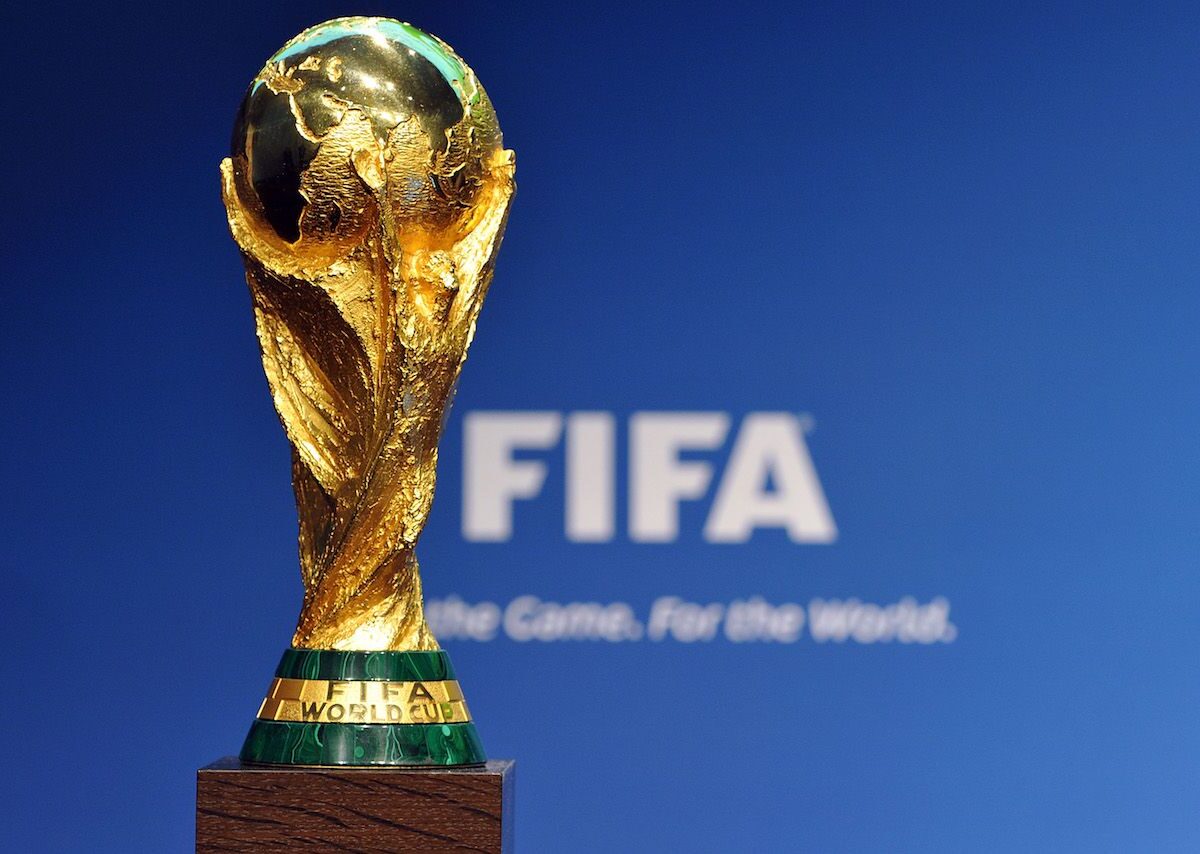
There had already been a World Cup in two countries, at the time of Korea-Japan in 2002; the expanded World Cup is even earlier, it arrived with the 32 teams of France ’98. But a World Cup spread over three countries, each almost as large as a continent, and with 48 national teams competing for the title, has by its very nature reasons of interest equal to its dimensions: extra large. What begins on June 11th in Mexico City with the match between the hosts and South Africa is the 23rd edition of the event, a huge UFO that hovers over geopolitics and sport, never before intertwined as in this case.
The numbers and the controversies
Sixteen stadiums, twelve groups, for the first time also the round of 32. One hundred and four races spread between Canada, Mexico and the United States, with the latter leading the way even beyond what was expected: in terms of communication, in the lead-up to the World Cup, two people, US President Donald Trump and Fifa number one Gianni Infantino, made it a continuous personal red carpet, leaving in the background those who will inevitably be the protagonists, the champions. The axis of the strange Trump-Infantino couple has bonded over the last year, between paradoxical mutual assistance: on the one hand the presence of the football chief in the Board of Peace and in numerous international summits, on the other the “Fifa Peace Prize” awarded to the commander-in-chief. Also for this reason, it is a tournament intertwined with geopolitics like few other times in history, the tournament of doubts about Iran, causing war and diplomatic incidents with the United States. Solution envisaged on a sporting level: the Tehran national team will be based in Mexico while still playing in the USA.
The last dance
The third consecutive World Cup without Italy – now a bitter habit – and many historic debuts: teams made up of diasporas such as Curacao and Cape Verde, the very poor and tormented Haiti, Uzbekistan led by Fabio Cannavaro with an all-blue staff stand out. The opportunity for various “small” teams to shine, to go further than ever thanks to a formula that allows 32 national teams to pass the group stage. The first time at court for many, therefore, but also the last dance in the competition for the two stars who marked the 2000s: the now Arab Cristiano Ronaldo and the acquired American Lionel Messi, fresh from the triumph in Qatar 2022. Two who embody the history of football as well as the arena from which we will start, that Mexico City Stadium which is none other than the Azteca, already the scene of two other editions and the match of the century, Italy-Germany 4-3, in 1970. The United States, on the other hand, looks more at the present and less at history: in the metropolitan area of Los Angeles, outside the Rose Bowl in Pasadena – where the ghosts of the penalties of Italy-Brazil in ’94 still linger – in favor of the brand new SoFi Stadium in Inglewood.
The final, this time, however, will be in the most prestigious setting of the Big Apple. The New York prosecutor’s office has set its sights on the MetLife Stadium – and the cost of its tickets – while Mayor Mamdani managed to obtain small packages at popular prices (60 dollars). Accessibility, in terms of prices and also visas (denied to people of various nationalities, from Iran to Haiti), is one of the themes of the tournament: the Scottish coach Clarke, for example, had made an appeal to his fans not to go into debt to follow them; in the USA, they are now realizing that demand is well below expectations – and it will be one of the aspects to evaluate in view of the next big event, the Los Angeles 2028 Games. It will then be the time zone world cup. From the Atlantic to the Pacific, games will be played at all hours, from midday to nine in the evening (therefore with frequent night-time episodes in Europe), with the unknown of the heat – now increasingly the protagonist of sporting events, from tennis to cycling – hovering over many matches. The other is linked to the length of the tournament, at the end of an already full season: the work of the trainers will be fundamental, to manage peaks in form and injuries – with various players who are already not at their best. Above all, Lamine Yamal, a leading candidate for the world championship already on his debut, has just recovered from a hamstring injury that kept him out of action in the last few of the Liga. With a thousand variables at play it is too early to talk about technical values, but the bookmakers give his Spain as the favorite in a head-to-head with France – whose lineup of excluded players caused a sensation, revealing against the light a movement capable of churning out talent in industrial quantities. Then there is Kane’s England, 60 years after their only triumph, and there are the two greats of South America, Messi’s Argentina, reigning champions, and Carlo Ancelotti’s Brazil, who have not played since 2002. And there are 43 other teams, with their respective nations on their shoulders, ready to suffer, despair and rejoice together in their homes and in the streets. Because despite the barriers that – especially this time – increasingly stand between football and people, there is only one World Cup every four years, and when it arrives there is nothing to do: the desire to party takes over everyone, especially those who aren’t there.