

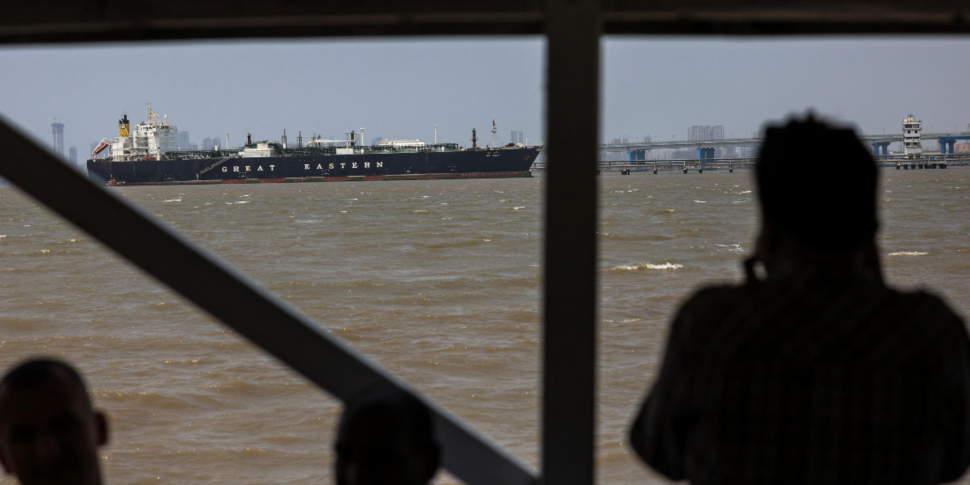
The hope of a return to normality in the Strait of Hormuz, a strategic hub for global energy traffic, lasted a few hours. US President Donald Trump’s overnight announcement of a two-week ceasefire with Iran, linked to the reopening of the passage, had initially revived expectations, with some ships managing to transit without incident.
But the succession of declarations and denials, together with Tehran’s propaganda which once again evokes a possible closure of the strait due to the Israeli escalation in Lebanon, has brought uncertainty back to the scenario. What is clear is that Hormuz remains a central point of the conflict and diplomatic attempts to resolve it.
Reduced traffic and blocked ships
From Washington there has been an increase in traffic in the last few hours, but the numbers remain far from normal. The first vessels to take advantage of the ceasefire were the Greek bulk carrier NJ Earth and the Liberian-flagged Daytona Beach, according to MarineTraffic data.
However, these are isolated cases. According to Kpler, between March 1 and April 7 an average of eight ships per day crossed the strait, around 95% less than in the period before the conflict. Of the 307 transits recorded, 199 involved oil and gas tankers, mostly headed eastwards, in the Gulf of Oman. Six out of ten were linked to Iran, a percentage that rises to eight out of ten considering only oil tankers.
Meanwhile, around 800 ships have been stranded in the Gulf since the end of February. There are a total of 172 million barrels of crude oil and refined products at sea, distributed across approximately 187 oil tankers.
The crux of control and the risk of tolls
Among the requests made by Tehran, the desire to maintain control of the strait through a transit system regulated by its armed forces emerges. According to rumors, the aim is also to formalize a toll system, already applied informally in recent weeks, which could be requested in cryptocurrencies.
A prospect that raises strong doubts among analysts and international law experts. The introduction of a toll would represent an unprecedented precedent and could conflict with the UN Convention on the Law of the Sea, as well as exposing shipowners to possible sanctions.
Threats and military presence
The Iranian Navy has meanwhile warned that any ship transiting without authorization will be “targeted and destroyed”. At the same time, French President Emmanuel Macron reported that around 15 countries are involved in a “strictly defensive” mission to ensure security in the area.
On the American side, Defense Secretary Pete Hegseth assured that US forces will remain in the region during the ceasefire to ensure the safety of the passage.
Despite the openings, the situation in the Strait of Hormuz remains unstable and far from a definitive solution.
Vance’s words
It is up to Iran to decide “whether to blow up” the truce because of Lebanon. US Vice President JD Vance told Tehran to “take the next step” towards peace, otherwise the United States will evaluate “many options” to return to war. «I believe President Trump got a good deal for the American people. But fundamentally, the Iranians have to take the next step, otherwise the president has many options to go back to war,” Vance added.